
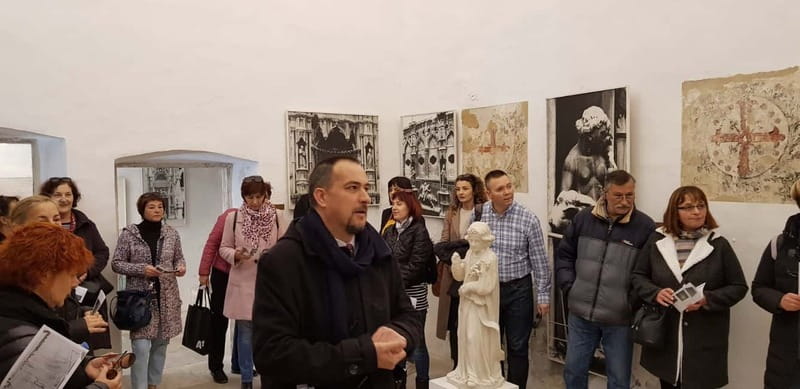
Reviewed · WALKING TOURS
Šibenik: Medieval Night Walking Tour
Šibenik feels different after dark. This one-hour walk takes you through streets more than 600 years old, past the Cathedral of St. James, hidden passageways, old churches, and a medieval cistern. I like the setting most: narrow lanes that once went unlit at night make the city feel close to its medieval past. I also like the focus on small details, from the pillar of shame to the first public lighting lamp installed in 1895.
The main consideration is time. One hour goes quickly, especially with so many stories packed into the route. You will see important places from the outside and hear about churches, monasteries, and the cathedral, but this is not a museum visit or an interior tour. The $49 price is fair if you value a strong local guide and an atmospheric introduction, though it is high for a short walking tour.
In This Review
- Five details that make this night walk different
- Why Šibenik works so well at night
- Starting at the west portal of St. James Cathedral
- Through the oldest street and the narrow lanes
- The Four Wells and the problem of water
- St. Lawrence Monastery, the cave, and quiet religious corners
- Local customs, plague, bells, and city memory
- What to expect from Dario Mikulandra
- Is $49 a fair price for one hour?
- Timing, meeting details, and practical advice
- Who should book this Šibenik night walk?
- Should you book the Šibenik Medieval Night Walking Tour?
- FAQ
- Where does the Šibenik Medieval Night Walking Tour begin?
- Where does the tour end?
- How long does the tour last?
- What is the price?
- Which languages are available?
- Is a professional guide included?
- Are church or museum entrance fees included?
- Do I receive any written information?
- Can I cancel or pay later?
Five details that make this night walk different

- The cathedral meeting point is easy to identify: Meet at the cathedral’s west-facing main portal, opposite the statue of sculptor Juraj Dalmatinac. Do not use the cathedral doors with the lions.
- The medieval cistern is a real highlight: The Four Wells site explains how water was collected and what the cistern looked like inside.
- A cave sits beside St. Lawrence Monastery: This unusual old-town stop adds a touch of mystery to a route already filled with churches and passageways.
- Dario Mikulandra leads the experience: He is a member of a medieval brotherhood and is praised for his English, humor, passion, and ability to answer questions.
- The tour ends where it begins: You return to the cathedral square, making it easy to continue with dinner or an evening walk.
Why Šibenik works so well at night
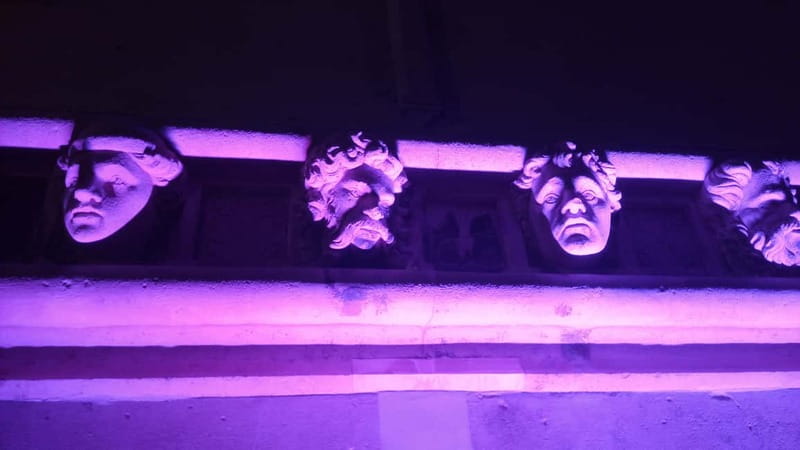
Šibenik is one of Dalmatia’s oldest major towns, and its old center is built for walking rather than quick sightseeing. Stone stairs, tight lanes, covered passages, and small squares connect the main sights. In daylight, you notice the architecture first. At night, you notice the shape of the streets and the sense of how people once moved through them.
That change in light is the point of this tour. The medieval streets were not lit as they are today, so the route uses darkness as part of the story. You walk through places that feel quieter and more enclosed than they do during the day. The effect is not a theatrical ghost tour. It is a history walk with an atmospheric setting.
I like that the tour does not treat Šibenik as just a stop for one famous building. The city has more than 30 churches, and the guide connects the cathedral to the smaller religious buildings, monasteries, chapels, and streets around it. You get a sense of a city shaped by faith, trade, water, disease, craft, and local customs.
More Walking Tours in Sibenik
- Private Sibenik Walking Historical Morning or Evening Tour
★ 5.0 · 93 reviews - Sibenik: Guided Evening Walking Tour
★ 4.9 · 62 reviews - From Sibenik: Private Walking Sibenik Sightseeing Tour
★ 4.9 · 15 reviews
Starting at the west portal of St. James Cathedral
Your meeting point is the main entrance portal of the cathedral, facing west. It is opposite the statue of Juraj Dalmatinac, the sculptor associated with the cathedral. This detail matters because the cathedral has more than one prominent entrance. Use the west-facing portal, not the doors with the lions.
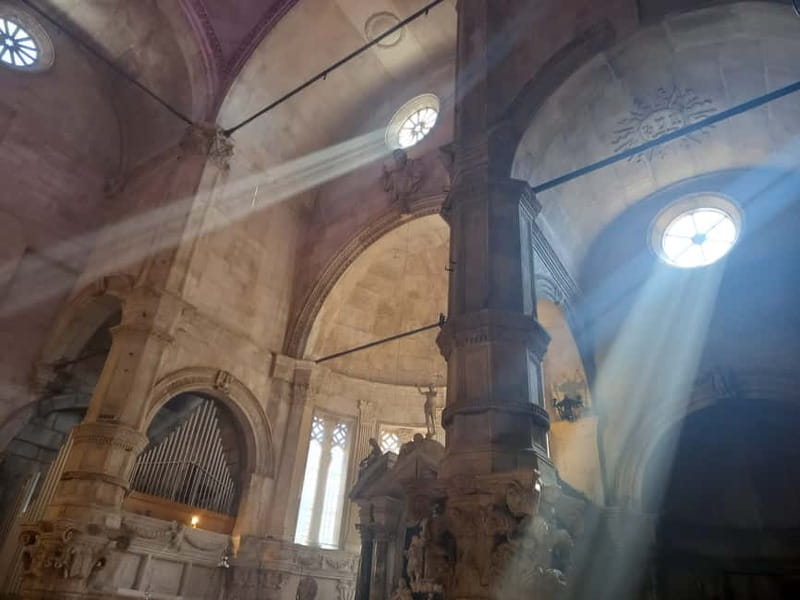
The opening story concerns the construction of the Cathedral of St. James, presented here as the most beautiful Croatian cathedral. The guide explains what building it meant to the people of Šibenik and how the light influenced the cathedral’s design. That is a useful angle because it moves beyond dates and names. You hear about the building as a civic statement, not only as a religious monument.
You also hear whether the cathedral took a long time to build or was completed unusually quickly. The supplied description does not give the answer, so the value is in the explanation you receive on the spot. The tour also covers the meaning of December 17 at midnight, when all 72 city bells rang. It is the kind of local detail that gives the cathedral a place in Šibenik’s calendar and identity.
At night, you should expect to appreciate the cathedral from the square rather than enter it. No church or museum admission is included, and the tour does not promise interior visits. If you want to study the cathedral’s interior, plan a separate daytime visit.
Through the oldest street and the narrow lanes
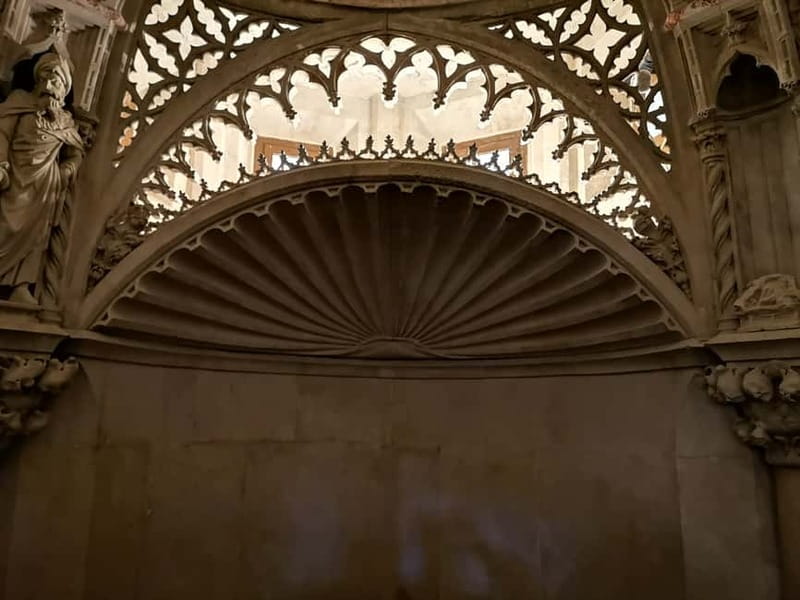
From the cathedral area, the route moves into the older parts of Šibenik. You visit the oldest street in the city and walk along narrow lanes with many stairs. This is where practical footwear matters. The walk lasts only an hour, but the old center’s steps and uneven stone surfaces make comfortable shoes a good idea.
The guide also points out covered passageways and tunnels. These spaces help you understand how the old town was built around its tight footprint. Houses were constructed inside the old city core, and the tour explains why they took that form. You are not simply looking at pretty stone walls. You are learning how limited space affected daily life and urban design.
One unusual detail is the medieval sign connected with the Šibenik subway. The wording is unusual, but it is part of the town’s local craft and old-town story. The route also includes the town’s crafts, showing that Šibenik’s medieval identity was tied to work and trade as much as to churches and palaces.
The walk includes the former location of the pillar of shame. That stop gives the tour a more human edge. Medieval towns were not only places of worship and impressive construction. They also had public punishment, social rules, markets, and ways to deal with cheating. You hear where people who cheated at the medieval fair escaped, which brings a small street corner to life without needing a staged performance.
The Four Wells and the problem of water
The medieval cistern known as the Four Wells is one of the strongest stops on the route. Water is easy to overlook when you admire stone churches and palaces, but it was a basic concern for every old settlement. Here, the guide explains how water was collected and what the cistern looked like inside.
That practical focus makes the stop valuable. You begin to see the old town as a working place, not just a historic backdrop. A cistern tells you about planning, survival, and the daily effort needed to support a city before modern water systems.
This is also one of the places where the short format has a limit. You receive an explanation and a visit to the site, but you should not expect a long technical presentation. The guide has to keep moving to fit the cathedral, streets, churches, monastery, cave, and other points into one hour.
Still Sibenik, at a slower pace:
- From Split: Krka National Park Tour
★ 4.7 · 2,359 reviews - Vodice: Krka Waterfalls National Park Boat Tour
★ 4.6 · 250 reviews - Split: Krka Waterfalls Guided Day Trip with Swim & Boat Tour
★ 4.5 · 170 reviews - Split: Krka National Park Full-Day Tour with Wine Tasting
★ 4.9 · 142 reviews
St. Lawrence Monastery, the cave, and quiet religious corners
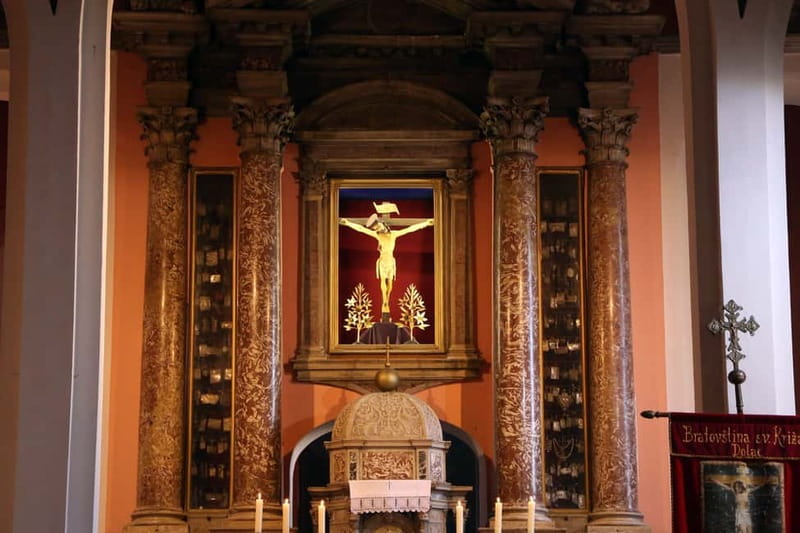
The route continues to the Monastery of St. Lawrence, next to a cave in the old town. That combination is one of the tour’s most unusual details. You get a religious site and a natural feature close together, both tucked into the dense historic center.
The walk also tells you about nuns who prayed for the city in darkened monasteries. This gives the religious buildings a more personal role. Instead of treating them only as architecture, the tour considers the people who lived, worked, and prayed inside them.
The city’s churches appear throughout the story. You see the Church of St. John and its reliefs, along with other religious buildings in the cathedral area. You also visit the chapel of Šibenik’s first doctor, dating from 1419. That stop widens the story beyond bishops and builders. It points to medicine, local service, and the people responsible for caring for the town.
You will not enter every church or chapel. Since this is a night walk, church and museum entrance fees are not included. That is not a fault if you want atmosphere and local history, but it matters if your main goal is art, sculpture, or interior architecture.
Local customs, plague, bells, and city memory
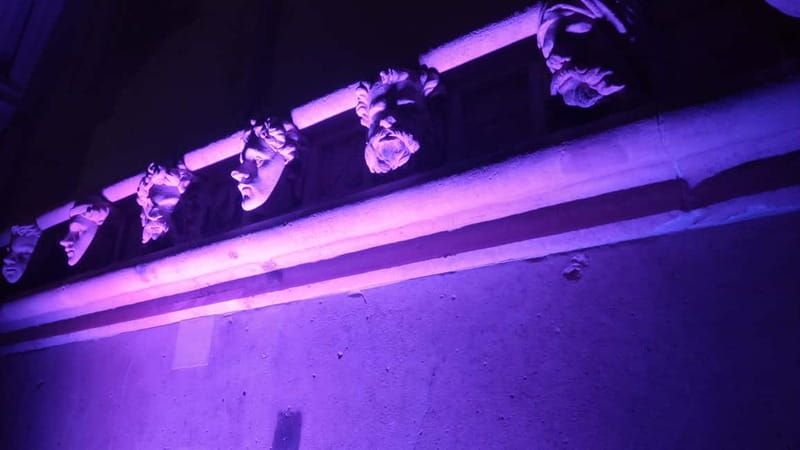
The best parts of a short town walk are often the details you would not find by simply following a map. This tour asks why there are no weddings in Šibenik during May. It also explains how the plague nearly destroyed the city in 1649.
These stories show how local customs can grow from old fears, beliefs, or events. The tour does not present Šibenik as a frozen medieval display. It connects the old streets to habits and memories that still help define the city.
The story of the 72 bells is another memorable moment. The tour explains why they rang together at midnight on December 17. You also hear about the first public lighting lamp from 1895. Put beside the unlit medieval streets, that lamp marks a clear shift in city life. Šibenik moved from darkness, candles, and church bells toward modern public services.
I appreciate this blend of large and small subjects. The cathedral gives you scale. The cistern gives you practical history. The pillar of shame and the wedding custom give you local color. The old lamp shows change. In one hour, the route tries to make all of those pieces fit.
What to expect from Dario Mikulandra
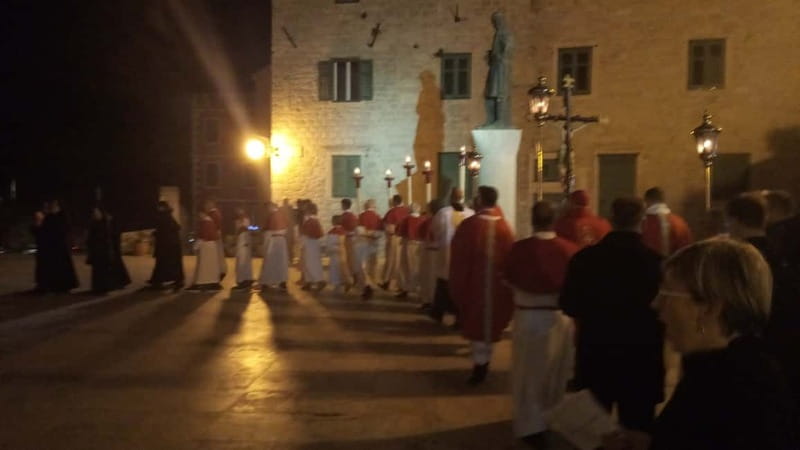
The guide is Dario Mikulandra, owner of Magnificat. He is described as a specially trained guide and a member of one of Šibenik’s medieval brotherhoods. That background fits the subject well, particularly when the tour moves from well-known monuments to local customs and lesser-known corners.
Dario receives especially strong praise for his English, humor, enthusiasm, and ability to explain history in an engaging way. He is also noted for answering questions, which is important on a compact walking tour. A good guide can adjust the emphasis when you want more about the cathedral, medieval daily life, or the city’s surrounding area.
The strongest praise centers on his passion for Šibenik. That matters here because the tour depends heavily on storytelling. The old streets are attractive on their own, but the experience becomes more useful when the guide explains why they were built that way and what happened in them.
The tour also works for families. A family with two young children enjoyed the walk, and the mix of stairs, tunnels, a cave, bells, and unusual town stories gives younger children several things to notice. Still, the route is history-focused, so children who need constant action may find the lecture portions less exciting.
Is $49 a fair price for one hour?
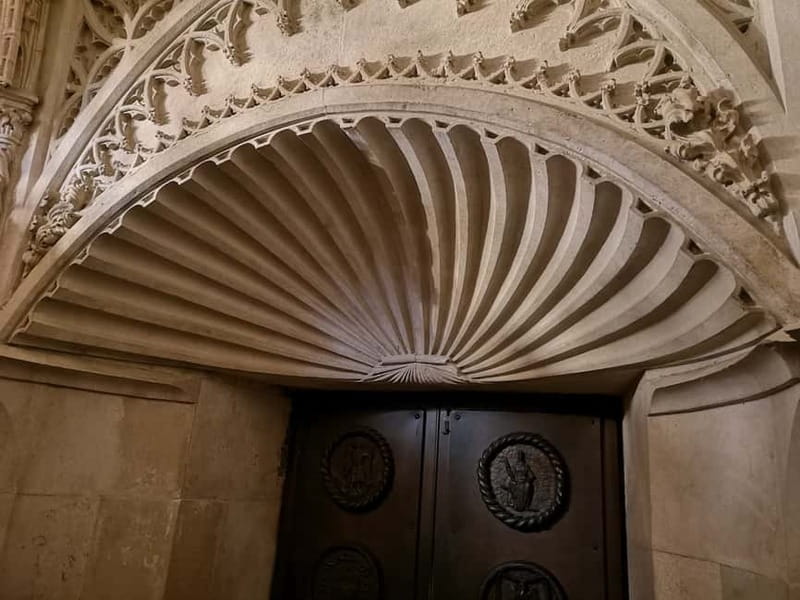
At $49 per person, this is not a bargain if you judge a tour only by minutes. One hour is brief, and no museum or church admission is included. You are paying for a private-feeling introduction to Šibenik’s medieval core, a professional guide, and a route built around local stories rather than a basic list of sights.
The price makes more sense if you are staying in Šibenik and want a clear orientation early in your visit. You receive maps and brochures in your own language, and the tour ends back at the cathedral. You can then return to places that caught your attention, such as the cathedral, St. Lawrence Monastery gardens, or the city museum.
That follow-up use is a real part of the value. One couple returned the next morning to revisit the medieval gardens of St. Lawrence and the Cathedral of St. James, and also found the city museum worth visiting. The night tour is better seen as a guided introduction than as a complete visit to Šibenik’s monuments.
If you want a longer walk, extensive interior access, or a low-cost overview, $49 may feel steep. If you prefer a small, focused route led by someone who can explain local history with feeling, the cost is easier to justify.
Timing, meeting details, and practical advice

The tour lasts one hour, with starting times shown when you check availability. Evening and night are the heart of the experience, so a daytime booking would not offer the same atmosphere.
The tour begins and ends at the main entrance portal of the cathedral. If hotel pickup is needed, the guide can wait at your hotel reception. The stated meeting point remains the main cathedral entrance and the square in front of the cathedral.
English, Croatian, and Serbo-Croatian are available. You receive a city map and brochures in your own language. Cancellation is free up to 24 hours before the tour for a full refund, and you can reserve while paying later, which helps if your Dalmatian schedule is still changing.
Wear shoes suited to stairs and old stone streets. Bring enough attention for a fast hour. The route includes many subjects, and you will get more from it if you listen for the connections between water, religion, public punishment, disease, trade, lighting, and the shape of the old town.
Who should book this Šibenik night walk?
I would choose this tour if you want a first look at Šibenik that feels local and story-led. It suits couples, families with children, history fans, and anyone who prefers a cool evening walk to sightseeing under the midday sun.
It is especially useful on your first evening in town. The cathedral square, old lanes, cistern, monastery, cave, and city viewpoints give you a useful mental map. You can then decide which places deserve a slower daytime visit.
I would skip it if you want substantial time inside churches and museums, or if you dislike stairs and a quick pace. You should also know that the tour covers a lot in 60 minutes, so it favors variety over long stops.
Should you book the Šibenik Medieval Night Walking Tour?
Book it if the idea of seeing Šibenik through its dark lanes, old water system, bells, chapels, and local customs appeals to you. Dario Mikulandra’s strong command of English, humor, and personal enthusiasm add real value to a route that could otherwise feel like a standard old-town walk.
The best plan is to take the tour early in your stay, then return in daylight to the cathedral, St. Lawrence gardens, and city museum. At $49, it is not the cheapest hour in Dalmatia, but it offers a focused introduction with unusual details you are unlikely to pick up by wandering alone.
FAQ
Where does the Šibenik Medieval Night Walking Tour begin?
It begins at the main entrance portal of the Cathedral of St. James, facing west, opposite the statue of sculptor Juraj Dalmatinac. Do not meet at the cathedral doors with the lions.
Where does the tour end?
The tour ends back at the cathedral meeting point.
How long does the tour last?
The walking tour lasts one hour. Starting times depend on availability.
What is the price?
The listed price is $49 per person.
Which languages are available?
The tour is offered in English, Croatian, and Serbo-Croatian.
Is a professional guide included?
Yes. The tour includes a professional guide, and the experience provider is Magnificat, owned by Dario Mikulandra.
Are church or museum entrance fees included?
No entrance fees are included. Because this is a night walking tour, the route focuses on outdoor locations and explanations rather than church and museum admissions.
Do I receive any written information?
Yes. You receive city maps and brochures in your own language.
Can I cancel or pay later?
You can cancel up to 24 hours in advance for a full refund. You can also reserve now and pay later.
Just added around Sibenik
- The beauty of the Middle Ages-Šibenik★ 4.7 · 7 reviews
- Šibenik : Zipline Šibenik – Čikola Canyon★ 5.0 · 3 reviews
- Sibenik: Guided Walking Tour★ 5.0 · 8 reviews
- Šibenik walking tour in one hour!★ 5.0 · 6 reviews
- Sibenik: Full-Day Kornati National Park Boat Tour★ 5.0 · 19 reviews
- RIVIERA TOUR FROM ŠIBENIK, ZLARIN, PRVIĆ AND TIJAT★ 4.6 · 14 reviews
- Private Krka Waterfalls Tour from Split with stop in Trogir★ 5.0 · 5 reviews
- Panorama & Wine tour – Eco City Tour Šibenik★ 5.0 · 4 reviews
Walking Tours, compared.
Walking Tour of Split and Diocletian’s Palace
Read our review →

Krka Waterfalls tour with Trogir Walking tour and Krka panoramic boat cruise
Read our review →
City Walls Early Morning or Sunset Walking Tour
Read our review →Browse the lists this tour appears in