
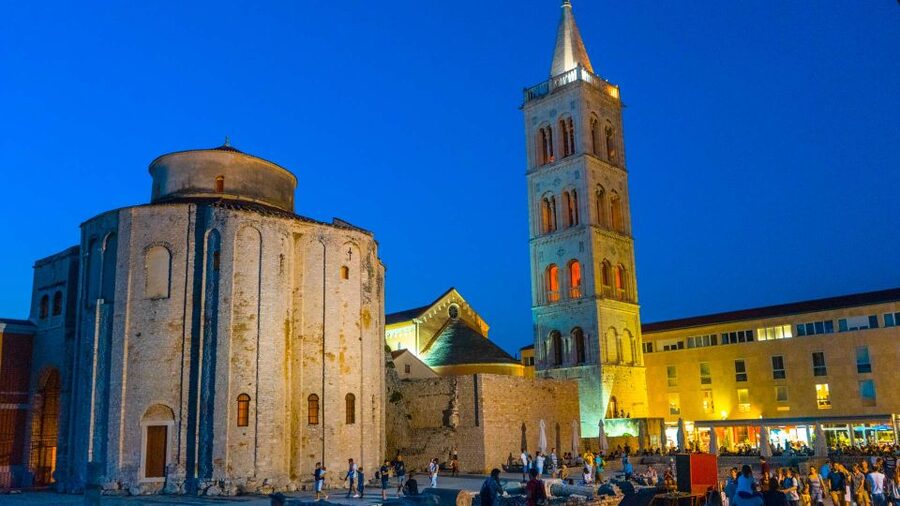
Reviewed · OLD TOWN TOURS
Zadar: Evening Walking Tour of the Old Town
Zadar sounds best at sunset. This 70-minute walk gives you a clear introduction to the Old Town, from Pet Bunara Square to the Roman Forum, Kalelarga, historic churches, and the remarkable Sea Organ. I like the way the tour joins major sights with local stories instead of treating the town as a string of photo stops.
I especially like the evening timing, which can bring softer light, cooler streets, and a chance to hear the Sea Organ as boats pass. I also like the English-speaking guides, with Jasmina, Marija, and Marina singled out for their clear delivery, energy, and storytelling. The main consideration is time: 70 minutes is enough for orientation, but not enough for long visits inside museums or churches.
In This Review
- Five useful things to know before you go
- Starting at Five Wells Square
- Following Kalelarga through the Old Town
- The Forum and St. Donatus Church
- People’s Square and the city at street level
- St. Anastasia’s Cathedral and Zadar’s religious landmarks
- The Sea Organ: where the Adriatic becomes music
- How much can you see in 70 minutes?
- Guide quality and what the price buys you
- Who should book this Zadar walk?
- Should you book this evening tour?
- FAQ
- Where does the Zadar walking tour meet?
- How long does the tour last?
- What language is the tour conducted in?
- How much does the tour cost?
- Which Zadar sights are included?
- Is the Sea Organ part of the tour?
- Who designed the Sea Organ?
- Can I swim at the Sea Organ?
- Can I cancel the booking for a refund?
Five useful things to know before you go
- Start at Pet Bunara Square: The meeting point is Trg Pet Bunara, also called Five Wells Square, inside Zadar’s Old Town.
- Hear the Sea Organ: The tour reaches Nikola Bašić’s unusual waterfront installation, where seawater pushes air through pipes beneath the stone steps.
- Walk Kalelarga: Zadar’s best-known street helps connect the town’s daily life with its older landmarks.
- See the main sights quickly: The route includes the Forum, People’s Square, St. Donatus Church, St. Anastasia’s Cathedral, city walls, and more.
- English only: The live guide speaks English, so this tour suits you best if you are comfortable following spoken explanations.
- Allow for an evening finish: An afternoon or late tour may give you a chance to catch sunset and hear the Sea Organ in cooler, softer conditions.
Starting at Five Wells Square
You meet your guide at Trg Pet Bunara, or Five Wells Square. This is a practical starting point because it places you inside the Old Town, on the peninsula that forms Zadar’s historic core.
The opening introduction gives you a sense of how the city is arranged. Zadar’s Old Town is surrounded by parks and city walls, with restaurants, cafes, museums, shops, and monuments packed into a walkable area. That setting makes a guided start useful. Instead of guessing which lane leads where, you get a quick map in your head before the landmarks begin.
Five Wells Square also gives the tour a strong visual opening. The name comes from the historic wells built to help supply the city with water. You should listen closely here, since the guide’s opening explanation helps connect the square to Zadar’s past as a fortified coastal city.
The meeting point is easy to state but worth checking carefully when you book. The activity information uses both Five Wells Square and Pet Bunara Square, but they refer to the same place. Look for Trg Pet Bunara rather than expecting a separate location called Five Wells Square.
More Old Town Tours in Zadar
- Zadar: Plitvice Lakes with Boat Ride and Zadar Old Town Tour
★ 4.9 · 1,368 reviews - From Zadar: Plitvice Lakes with Boat Ride & Zadar Old town tour
★ 5.0 · 1,129 reviews - Krka Waterfalls, Food & Wine Tasting, Boat Ride & Zadar Old Town
★ 5.0 · 420 reviews
Following Kalelarga through the Old Town
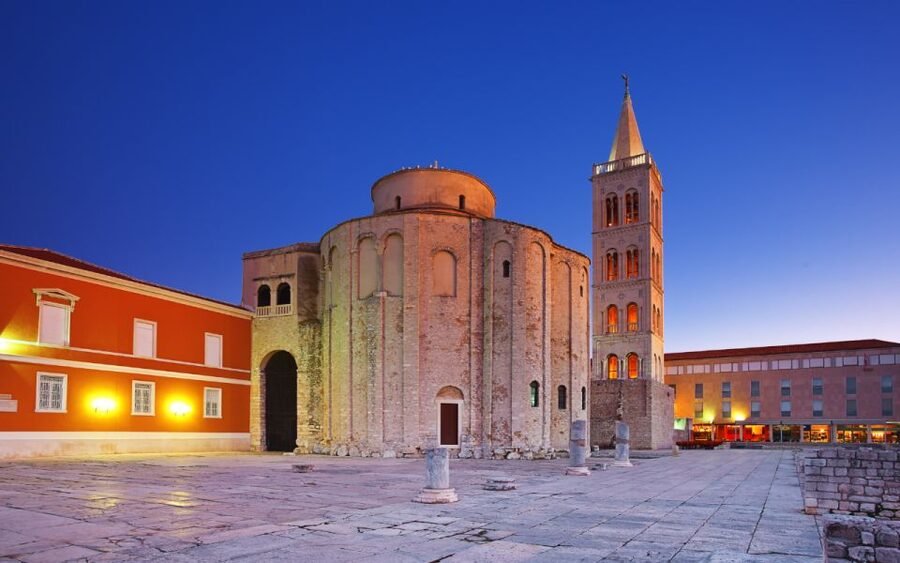
Kalelarga is Zadar’s best-known street and one of the natural anchors of the walk. Its name is commonly linked with the idea of the wide street, though the route itself is not simply a broad modern avenue. It is part of the Old Town’s pedestrian network, where shops, cafes, stone buildings, and historic traces sit close together.
I like this part of the tour because it gives you more than isolated monuments. You see how Zadar works as a living town. The cafes and shops matter here. They show that the peninsula is not only an open-air museum, but also a place where people meet, eat, shop, and go about ordinary business.
A guide can also point out details you might pass without noticing. The supplied tour information promises stories about Zadar’s history, and the strongest praise for the guides focuses on facts that are easy to miss when walking alone. That is the real value of a short city walk: not more stops, but better attention.
Do not expect a long, leisurely pause on every street. With only 70 minutes, the group must keep moving. If Kalelarga catches your interest, mark it as a place to revisit later for a slower walk or a cafe stop.
The Forum and St. Donatus Church
The Roman Forum is one of the key stops. This open area gives you a direct look at Zadar’s ancient center, with surviving stone remains set among later buildings. The Forum works especially well with a guide because the scattered ruins do not always explain themselves. A short story can turn a few columns and stones into a readable plan of the old city.
Nearby, St. Donatus Church brings a very different shape to the scene. Its round form is one of Zadar’s most recognizable architectural features. The church is closely tied to the Forum area, so you can see layers of the city in one compact part of the route: Roman remains, an early medieval church, and the later urban fabric around them.
The tour includes the church as a major sight, but the information provided does not promise an interior visit. Plan on seeing and discussing it from the route unless your guide says otherwise. That distinction matters if you are hoping to spend time examining the inside or learning about specific artwork.
I find this portion most useful for first-time visitors who want a framework. You may not leave with every date memorized, but you should understand why Zadar feels older and more layered than its modest size suggests.
People’s Square and the city at street level
People’s Square adds another side of Zadar. This is a central public space where the Old Town’s social life comes into view. It helps balance the ancient Forum and religious buildings with a sense of the city as it exists now.
The route includes numerous restaurants, cafes, museums, and shops around the peninsula. That makes the tour useful early in your stay. You can note places you want to return to, then use the guide’s comments to choose a cafe, museum, or street for independent exploring.
The walk also includes parts of Zadar’s city walls. The walls help explain the peninsula’s defensive character and the way the Old Town is physically separated from the newer parts of the city. The exact amount of time spent there is not specified, so think of the walls as part of the guided route rather than a dedicated fortification tour.
One advantage of an evening outing is the atmosphere. The heat may be less tiring than during the middle of the day, and the changing light can make the stone streets and walls more appealing. The tradeoff is that visibility can become less useful for small architectural details as darkness arrives.
More Walking Tours in Zadar
- Zadar: Guided Walking Tour
★ 4.8 · 445 reviews - Zadar City Tour 120min Walk
★ 5.0 · 203 reviews - Zadar: Culinary Walking Tour with Food Tastings
★ 4.8 · 63 reviews - Zadar: Old Town Walking Tour
★ 4.8 · 59 reviews
St. Anastasia’s Cathedral and Zadar’s religious landmarks
St. Anastasia’s Cathedral is another major stop. Along with St. Donatus Church, it shows how much religious architecture is concentrated in the Old Town.
The cathedral gives the guide a chance to explain a different period and purpose from the Roman Forum. The Forum speaks to public life in antiquity. St. Donatus reflects early medieval building, while the cathedral adds another major chapter to Zadar’s religious and civic story.
Again, the tour information confirms that the cathedral is covered, but it does not promise entry or a long interior explanation. If you want to visit inside, check opening arrangements separately and allow time beyond the walking tour.
This is a good reminder of how to use the outing. I would treat it as a well-paced introduction, not a substitute for every museum, church, or archaeological site in Zadar. The guide helps you decide what deserves a second look.
The Sea Organ: where the Adriatic becomes music
The Sea Organ is the tour’s most unusual stop. Designed by local architect Nikola Bašić, it is built into the perforated stone steps that descend toward the water.
Beneath the steps is a system of pipes and whistles. As the sea pushes air through them, the installation produces long, wistful tones. The sound changes with the movement of the water, and a passing boat or ferry can make it louder.
This is not a performance with a fixed schedule. The sea provides the music, so the result changes from moment to moment. That makes the stop far more interesting than a standard monument visit. You are looking at architecture, listening to the water, and watching the waterfront at the same time.
The stone steps also serve as a place where you can swim from the promenade while listening to the organ. The tour is not presented as a swimming outing, so do not plan on changing clothes or stopping for a swim during the 70-minute walk. Still, the detail tells you something important about Zadar: the waterfront is designed for sitting, listening, and spending time, not only for taking a quick photograph.
The Sea Organ is particularly well suited to an evening tour. The sound can feel more striking when the waterfront is cooler and the sky is changing color. One particularly useful tip is to choose a later departure if you want a chance at sunset, though the exact light depends on the time of year and the starting time available.
How much can you see in 70 minutes?
The activity is described as both one hour and 70 minutes. In practice, you should plan for roughly 70 minutes, while allowing a little flexibility for the meeting, introductions, group pace, and final stop.
The route covers a lot: Five Wells Square, the Forum, Kalelarga, People’s Square, St. Donatus Church, St. Anastasia’s Cathedral, the Sea Organ, city walls, and additional Old Town sights. That is a strong list for a short orientation walk.
The pace will likely feel active rather than slow. You should wear comfortable shoes, since the route takes place through historic streets and public squares. The supplied information does not give a group-size limit, so you should not assume a private or small-group format.
This length works well if you have just arrived in Zadar, have one evening free, or want a quick sense of direction before exploring on your own. It is less suitable if you prefer long photography stops, detailed church visits, or extended time at each archaeological site.
Guide quality and what the price buys you
At $28 per person, the main purchase is not transportation or admission tickets. It is a live explanation of Zadar’s Old Town in English, delivered while you move between the main sights.
That can be good value if you are new to the city. A guide helps you connect the Forum, churches, squares, walls, and waterfront instead of seeing them as unrelated points. The price is easier to justify if you plan to revisit one or two places after the tour.
The strongest praise goes to the guides’ presentation. Jasmina is described as captivating, while Marija is praised for her friendly manner and clear English pronunciation. Marina is singled out for enthusiasm and strong explanations. Those details matter because a one-hour city walk depends heavily on the person leading it.
The rating is 4.8 from 25 reviews, which supports a generally dependable experience, though no short tour can guarantee that every guide will suit every person. If you enjoy lively storytelling, the format should work well. If you prefer silent sightseeing or a very academic lecture, it may feel more conversational and fast-moving than you want.
Who should book this Zadar walk?
I would recommend it most strongly to first-time visitors, couples, solo visitors, and anyone with limited time in Zadar. It is also useful if you arrive late in the day and want to see the Old Town before choosing where to spend the rest of your evening.
Families with older children may also find the Sea Organ and city walls more engaging than a long indoor museum visit. The tour keeps moving and includes a strange, memorable sound installation that gives younger participants something concrete to notice.
You should be comfortable walking for about 70 minutes and following an English-speaking guide. The route includes historic streets and public spaces, but the information provided does not give specific accessibility details, so ask the provider if you have mobility concerns.
Book it early in your stay if possible. The best benefit comes when you use the tour as a starting point, then return to Kalelarga, People’s Square, the Forum, or the waterfront at your own pace.
Should you book this evening tour?
Book it if you want a short, focused introduction to Zadar with a strong mix of ancient ruins, churches, city walls, local streets, and the Sea Organ. The $28 price is fair for a live English guide, especially when you value context and want to make better use of the rest of your time in town.
Choose a later departure if sunset and the Sea Organ are your priorities. Skip it if you want extensive interior visits, a private guide, or a slow archaeological tour. For most first visits, though, this is a practical way to get oriented and hear the city explained by someone who knows how to make its stories stick.
FAQ
Where does the Zadar walking tour meet?
The meeting point is Trg Pet Bunara, also called Pet Bunara Square or Five Wells Square, in Zadar’s Old Town.
How long does the tour last?
The walking tour lasts 70 minutes. The activity information also describes the duration as one hour.
What language is the tour conducted in?
The live tour guide speaks English.
How much does the tour cost?
The listed price is $28 per person.
Which Zadar sights are included?
The route covers the Old Town’s main sights, including Five Wells Square, the Forum, Kalelarga, People’s Square, St. Donatus Church, St. Anastasia’s Cathedral, the Sea Organ, city walls, and additional sights.
Is the Sea Organ part of the tour?
Yes. The tour includes a visit to Zadar’s Sea Organ on the waterfront.
Who designed the Sea Organ?
The Sea Organ was designed by local architect Nikola Bašić.
Can I swim at the Sea Organ?
You can swim from the steps off the promenade while listening to the Sea Organ. The walking tour itself is not described as a swimming activity.
Can I cancel the booking for a refund?
You can cancel up to 24 hours in advance for a full refund. The reserve-now, pay-later option allows you to hold a place without paying immediately.
Just added around Zadar
- SURPRISE TOUR KORNATI & TELASCICA Boat Tour★ 4.5 · 11 reviews
- Zadar: Sunset Eco Tuk Tuk Tour★ 4.7 · 3 reviews
- Zadar: Sunset Fishing Half-Day Guided Boat Trip★ 5.0 · 14 reviews
- Zadar: Sunset boat tour with champagne★ 5.0 · 6 reviews
- Romantic Sunset Cruise from Zadar by Speedboat★ 4.9 · 60 reviews
- Romantic Sunset tour around Zadar with Drinks★ 4.9 · 35 reviews
- Plitvice Lakes National Park: Private Tour from Zadar★ 5.0 · 11 reviews
- Zadar Islands: Private Hidden Treasures Speedboat Tour★ 4.9 · 27 reviews
Old Town Tours, compared.


Plitvice Lakes with Boat Ride and Zadar Old Town Tour
Read our review →
Plitvice Lakes with Boat Ride & Zadar Old town tour
Read our review →
Dubrovnik Combo: Old Town & Ancient City Walls
Read our review →
Browse the lists this tour appears in