
Reviewed · WALKING TOURS
Rovinj walking tours
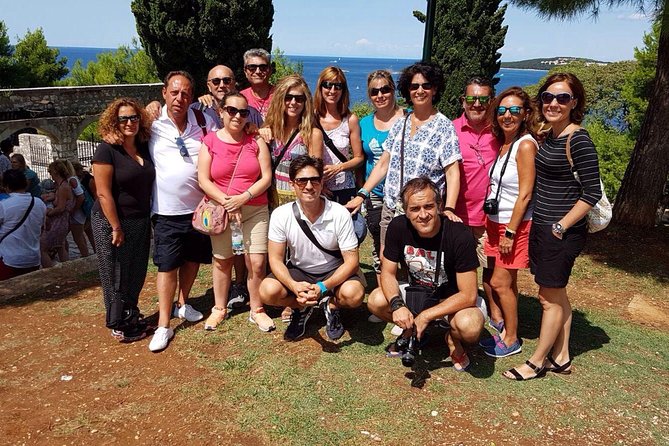
Rovinj reveals itself one uphill street at a time. This 90-minute evening walk turns the old town into a readable story, moving from the port through the lower town and up to Saint Euphemia Church. I like the small-group limit of 12, which keeps the walk personal, and I like the local advice on coffee, cakes, gelato, fruit, vegetables, and places to eat. Guide Goran is especially praised for mixing facts with humor and personal stories.
The main consideration is pace. You cover a lot in an hour and a half, but the route includes plenty of stops for explanation, so it is more an orientation walk than a full tour of every corner. If you prefer quiet exploration with little talking, this may feel too focused on commentary. For most people, though, it is a smart first evening in Rovinj.
In This Review
- Key points to know before booking
- Starting beside Rovinj’s port
- Moving from the lower town to the upper town
- The value of a guide born in Rovinj
- History explained with humor and personal stories
- Finishing at Saint Euphemia Church
- Why the 6:30 pm start works
- Is $33.86 a fair price?
- Who will enjoy this Rovinj walk most?
- Small group, simple meeting point, and cancellation terms
- Should you book Rovinj Walking Tours?
- FAQ
- How long does the Rovinj walking tour last?
- Where does the tour begin?
- Where does the tour finish?
- What time does the tour start?
- How many people can join the tour?
- What happens if bad weather cancels the tour?
Key points to know before booking
- A local view of Rovinj: Guides such as Goran and Maslinka add personal stories, current information, and practical advice that a guidebook cannot provide.
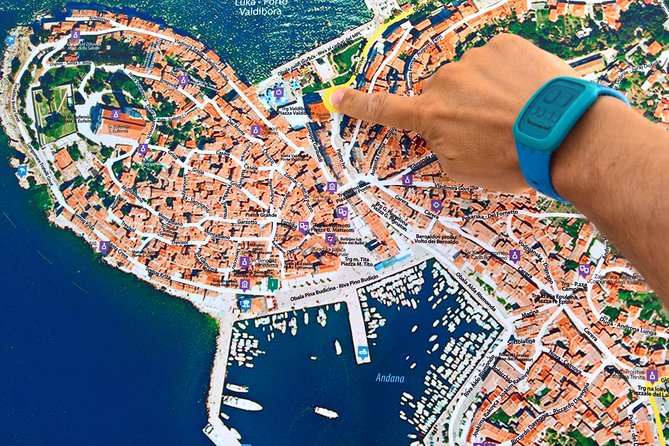
- A useful uphill route: The walk begins near the port and finishes at Saint Euphemia Church, following the basic shape of the old town.
- A compact 90-minute introduction: You get the city’s main historical and cultural context without giving up an entire afternoon.
- A maximum of 12 people: The small group makes it easier to ask questions and hear the guide in narrow streets.
- A 6:30 pm start: Evening light and the later timing can make this a pleasant way to begin a stay in Rovinj.
- Good value at $33.86: The price is reasonable if you want history, orientation, and local food advice in one short walk.
Starting beside Rovinj’s port
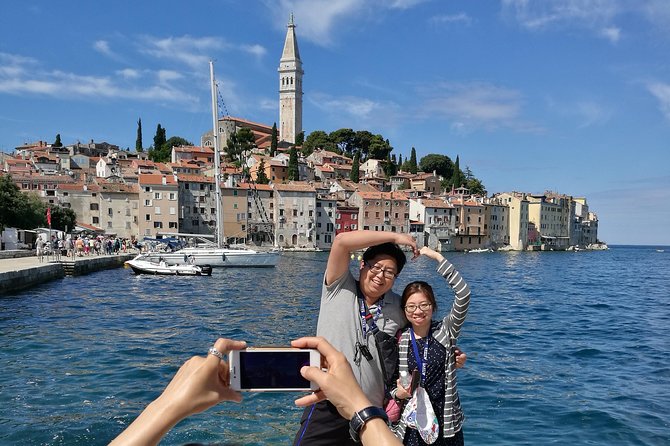
The tour begins at Ulica Pietra Ive, close to the central port area. That is a useful meeting point because the port is one of the easiest places to locate in Rovinj, and it places you right beside the old town.
The opening idea is simple but important: Rovinj grew from an unusual historical situation and became one of medieval Istria’s largest and most prosperous towns. You are not simply shown attractive streets. You are given a reason for the town’s shape and importance.
That context matters in Rovinj. The old center rises toward Saint Euphemia Church, and its streets can feel like a maze if you arrive without a plan. The guide helps you see the town as a settlement that developed over time, not just as a collection of pretty stone lanes.
I would book this walk early in your stay, ideally on your first or second day. Several people found that the tour made later independent walks easier because they understood how the old center was laid out. You can then return to places that caught your attention, this time with a better sense of what you are seeing.
More Walking Tours in Istria
- Rovinj: Guided Walking Tour
★ 4.8 · 113 reviews - Romantic Rovinj – a private walking tour
★ 5.0 · 8 reviews - Pula: Historic Walking Tour with Local Guide & City Views
★ 4.8 · 143 reviews
Moving from the lower town to the upper town
The route gradually climbs from the lower town toward the upper town. That sounds modest, but Rovinj’s old center is built on a hill, and the walk involves uneven historic streets and an uphill finish.
The route follows the direction of the old Holy Week procession toward Saint Euphemia. That detail gives the climb a sense of purpose. You are not simply walking uphill because the church happens to be higher. You are following a route shaped by religious practice and local tradition.
At each stopping point, the guide explains how Rovinj developed and how its streets, buildings, and public spaces fit together. The historical focus includes Rovinj, Istria, and the wider story of Croatia and Yugoslavia. That broader setting is one of the tour’s strengths. Rovinj’s past is not isolated from the political changes around it.
You should expect a stop-and-talk format rather than a fast march. The guide walks a short stretch, pauses to explain something, then continues. One person found that the walk covered only a few streets and included a lot of standing while the guide spoke. That is a fair warning if you want maximum ground covered.
Still, the pauses are what make the tour useful. You have time to ask questions, and a small group means the guide can adjust the conversation. Goran is described as welcoming, funny, professional, and willing to answer questions throughout the 90 minutes.
The value of a guide born in Rovinj
The strongest feature here is the local perspective. The guides are not presenting only dates and architectural labels. They talk about what life in Rovinj is like and connect the city’s past with its present.
Goran is a lifelong local, and his family experiences sometimes help explain the city’s history. That kind of detail can make a familiar subject easier to understand. Instead of hearing only that the city changed over the centuries, you get a sense of how those changes affect people who live there.
The tour also includes current information. That helps balance older historical material with practical advice for your stay. You may hear where the guide would buy fruit and vegetables, where coffee is prepared well, and which places are known for cakes or gelato.
Those tips are not a minor extra. Rovinj is a place where you can spend too much simply by choosing the first attractive restaurant or cafe you pass. Local guidance can help you make better choices, especially if you are staying several days.
The food advice is also more useful than a generic list. It is tied to the guide’s own habits and preferences, so you get a local point of view rather than a formal dining guide. You should still treat recommendations as suggestions, not guarantees. Tastes change, businesses change, and the tour does not include food or drink.
History explained with humor and personal stories
The tone is one of the reasons this walk earns such strong marks. The guide explains the recorded history, then adds local lore, humor, and personal observations.
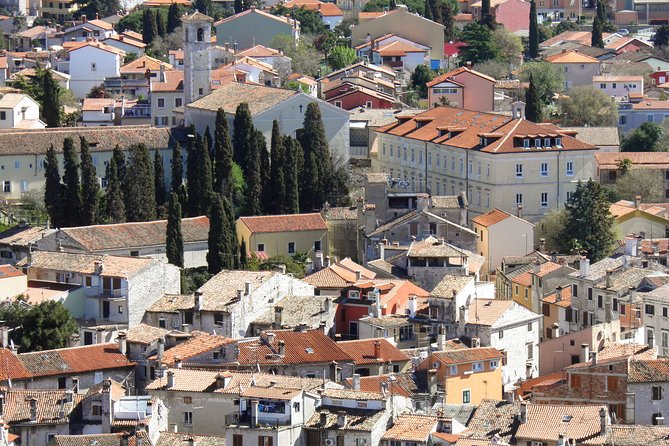
That mix prevents the tour from becoming a string of dates. You get the setting of medieval Rovinj, the development of the old town, the history of Istria, and the more recent Croatian and Yugoslav context. The guides also connect that information to the streets you are walking through.
Goran is repeatedly praised for keeping the group engaged for the full 90 minutes. His English is described as excellent, and he is comfortable answering questions. Maslinka is also praised for presenting the history of Rovinj, Istria, and Yugoslavia in a clear way.
I would choose this tour if you enjoy learning through conversation. It is not designed as a silent audio-style walk. The best experience comes when you ask questions and respond to the guide’s explanations.
The small group helps. With no more than 12 people, you are less likely to disappear at the back of the pack. The guide can hear questions, and you can hear the answers. That matters in narrow streets where sound can bounce around and larger groups can become difficult to manage.
More Walking Tours in Rovinj:
- Dubrovnik: Old Town Walking Tour
★ 4.8 · 5,174 reviews - Split: Old Town and Diocletian Palace Walking Tour
★ 4.9 · 4,727 reviews - Dubrovnik Discovery Old Town Walking Tour
★ 5.0 · 4,458 reviews - Walking Tour of Split and Diocletian’s Palace
★ 5.0 · 2,588 reviews
Finishing at Saint Euphemia Church
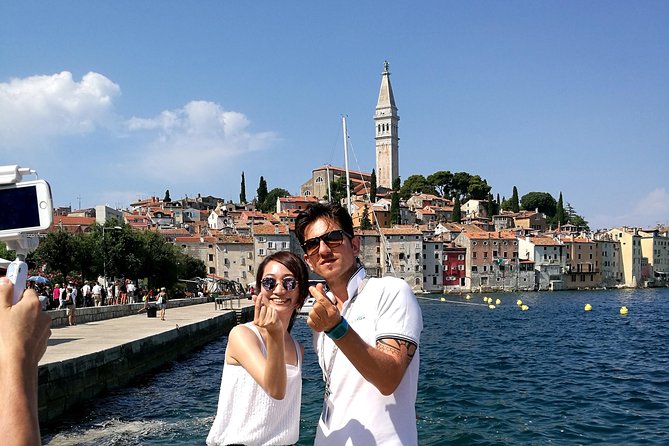
The walk ends in front of the Church of Saint Euphemia at Trg Sv. Eufemije, at the top of the hill. This is a strong finish because the church is one of Rovinj’s major landmarks and gives you a clear endpoint.
You do not finish somewhere vague or far from the center. Instead, you end at a place you can easily recognize and revisit. From here, you can continue exploring the upper town, walk back through the lanes, or use the guide’s food and shopping suggestions to plan the rest of your evening.
The route also gives the tour a natural arc. You begin near the water, where Rovinj’s lower town opens out, then work upward through the historic center to a major local landmark. That makes the city easier to picture after the walk.
The church is not presented as a separate long visit in the information provided, so you should not book this expecting an extended interior tour. The key benefit is reaching the landmark with a better understanding of its place in the town.
Why the 6:30 pm start works
The tour starts at 6:30 pm. That timing suits people who want to avoid the hottest part of the day and see Rovinj as the evening begins.
One particularly appealing detail is the chance to enjoy sunset light while the guide tells the story of the city. The walk is not marketed as a dedicated sunset tour, so exact conditions will depend on the date and weather. Still, the evening start can add atmosphere without requiring a late night.
It also fits well into a travel day. You can spend the afternoon arriving, settling in, or exploring independently, then use the walk to organize what you have seen. If you are staying in Rovinj for only a short time, the tour gives you useful context without taking over your schedule.
The main practical issue is weather. This experience requires good weather, so a poor forecast can lead to a different date or a full refund. Comfortable shoes are sensible because the route climbs through old streets, though the provided information does not describe the exact paving or grade.
Is $33.86 a fair price?
At $33.86 per person, this is not the cheapest way to stroll around Rovinj. You can walk the old town for free. The question is what the guide adds.
For that price, you receive about 90 minutes with a local guide, historical context, answers to questions, and advice on eating, shopping, coffee, cakes, and gelato. The maximum group size of 12 also gives the experience more personal attention than a large city walk.
I consider it good value for a first visit, especially if you normally spend time trying to work out where you are and what you are looking at. The guide helps you avoid that early confusion.
The value is lower if you have already taken another detailed tour of Rovinj or if you prefer to research the city independently. It is also less suited to anyone who wants a long route covering many parts of town. One four-star assessment described it as a good overview but noted that the tour stayed within a limited area and spent plenty of time talking.
That is the tradeoff: better understanding rather than greater distance. You are paying for interpretation and local conversation, not transportation, meals, entrance fees, or a long list of attractions.
Who will enjoy this Rovinj walk most?
I would recommend it to first-time visitors, couples, families with older children, and solo explorers who want an easy introduction before setting off alone.
It is particularly useful if you want:
- A clear explanation of Rovinj’s layout
- A guide who can discuss local life as well as older history
- Practical suggestions for food, coffee, shopping, and gelato
- A small group where questions are welcome
- An evening activity lasting only 90 minutes
The tour also suits people interested in the complicated story of Istria and the former Yugoslavia. You will get more than postcard views. The guide places the town in a wider regional and national setting.
I would think twice if you have difficulty with uphill walking or standing for repeated explanations. Most people can participate, and service animals are allowed, but the route rises to the church and the tour is built around walking through the old town.
It may also disappoint you if you want to enter several buildings. The supplied details focus on the streets, the town’s development, local life, and the church as the final landmark. This is an outdoor orientation walk.
Small group, simple meeting point, and cancellation terms
The meeting point is on Ulica Pietra Ive in central Rovinj, and the finish is at Saint Euphemia Church. You receive confirmation when you book, and the tour is offered in English.
The maximum is 12 people. That is small enough to make the guide’s stories feel conversational, while still allowing the tour to run as a regular scheduled experience. Goran’s style appears especially suited to this format because he asks what people have already seen or done in Rovinj and then makes the discussion more personal.
The tour is near public transportation, and most people can participate. No special transport is included, so plan to arrive at the meeting point under your own arrangements.
You can cancel for a full refund up to 24 hours before the start time. Changes or cancellations made inside that 24-hour window are not accepted for a refund. Since weather can affect the experience, poor conditions may lead to another date or a full refund.
Should you book Rovinj Walking Tours?
Book it if you want a well-paced first look at Rovinj with a real local voice. The best reasons are the compact small group, the route from the port to Saint Euphemia Church, and the useful advice about everyday places to eat and drink.
Goran receives especially warm praise for being funny, clear, professional, and generous with local knowledge. Maslinka is also praised for making the history of Rovinj, Istria, and Yugoslavia understandable. Those qualities make the tour more than a basic checklist of landmarks.
Skip it if you have already explored Rovinj with a guide, dislike frequent stops, or want to cover a wide area quickly. At $33.86, you are paying for insight and orientation rather than admission to attractions.
For a first or second evening in town, I would book it. You finish at one of Rovinj’s key landmarks, leave with a clearer sense of the old center, and have practical ideas for how to spend the rest of your stay.
FAQ
How long does the Rovinj walking tour last?
The tour lasts approximately 1 hour and 30 minutes.
Where does the tour begin?
The meeting point is on Ulica Pietra Ive in Rovinj, Croatia.
Where does the tour finish?
The walk ends in front of the Church of Saint Euphemia at Trg Sv. Eufemije, at the top of the hill.
What time does the tour start?
The scheduled start time is 6:30 pm.
How many people can join the tour?
The tour has a maximum of 12 participants.
What happens if bad weather cancels the tour?
If poor weather causes the experience to be canceled, you will be offered a different date or a full refund. Free cancellation is also available up to 24 hours before the start time.
Just added around Rovinj
- Rovinj: Shared Dolphin and Sunset Tour with Drinks★ 4.9 · 18 reviews
- Rovinj Sunset kayaking tour★ 4.9 · 8 reviews
- Rovinj: Rovinj Archipelago and South Coves Speedboat Tour★ 5.0 · 7 reviews
- Rovinj: Sunrise Dolphins & Fishermen at Work Speedboat Tour★ 4.8 · 32 reviews
- Rovinj or Vrsar: Lim Fjord & Rovinj islands Speedboat Tour★ 4.9 · 10 reviews
- Rovinj: Luxury Island Hopping with Swimming & Snorkeling★ 4.8 · 25 reviews
- Rovinj: Lim Fjord and Pirate Cave Boat Tour★ 4.5 · 133 reviews
- Rovinj Islands Boat Tour with Swimming★ 4.8 · 164 reviews
Walking Tours, compared.
Walking Tour of Split and Diocletian’s Palace
Read our review →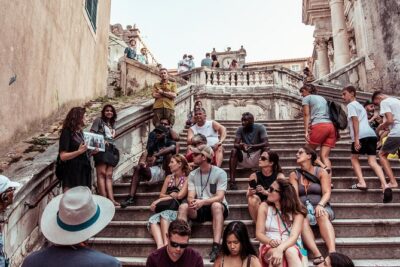
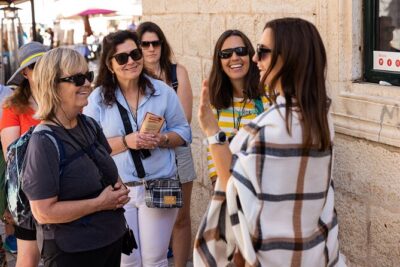
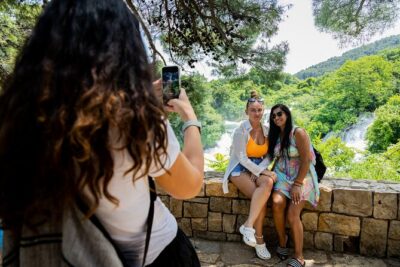
Krka Waterfalls tour with Trogir Walking tour and Krka panoramic boat cruise
Read our review →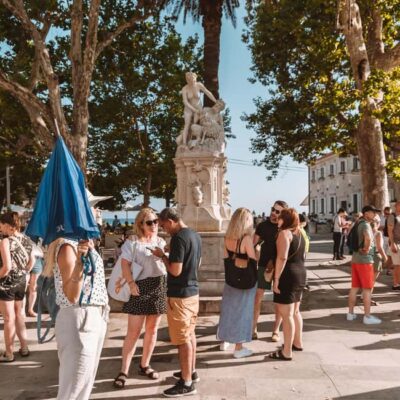
City Walls Early Morning or Sunset Walking Tour
Read our review →Browse the lists this tour appears in