
Reviewed · CITY TOURS
Dubrovnik Old City Private Tour
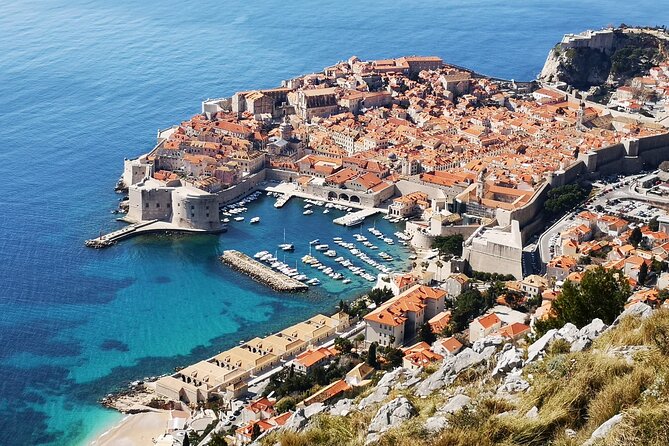
Dubrovnik’s walls tell only part of the story. This 2.5-hour private walk brings the city’s main sights into focus, from the Pile Gate and Stradun to the Rector’s Palace, cathedral, harbor, and the shelling of Dubrovnik in the 1990s. I like the private format, which lets your guide adjust the pace and answer your questions. I also like the mix of grand monuments and small lanes, where the city feels more personal.
The main drawback is the price: $133.03 per person is a serious outlay for a walking tour, especially for solo visitors or couples. Still, the value improves for families or friends who can share the private experience, and the guide can help you make sense of a city that is easy to admire but harder to understand on your own.
In This Review
- Key points to know before booking
- Starting at Nautika and Kolorina Bay
- Pile Gate and the first look at the walls
- Franciscan Monastery and the old pharmacy
- Stradun, Onofrio’s Fountain, and the city’s main axis
- Jesuit steps and Gundulić Square
- Cathedral and Treasury of the Republic
- Rector’s Palace and the republic’s government
- City Harbor, Lazareti, and the eastern defenses
- Luža Square and the final cluster of sights
- How the private format affects the value
- The guides and the personal side of Dubrovnik
- Who should book this Dubrovnik walk?
- Should you book the Dubrovnik Old City Private Tour?
- FAQ
- How long does the Dubrovnik Old City Private Tour last?
- What is the price of the tour?
- Where does the tour start and end?
- Are museum admissions included?
- Is the tour offered in English?
- What is the cancellation policy?
Key points to know before booking
- Private guiding for your group: You do not share the walk with strangers, so the pace and questions can be more personal.
- A strong first-day orientation: The route moves from Pile Gate to Luža Square and covers the central Old City.
- Two museum visits are included: Usually the Franciscan or Dominican Monastery Museum and the Cathedral Treasury, though the exact choice can change.
- History reaches into the 1990s: The tour covers Dubrovnik’s older republic, medieval life, and the city’s wartime experience.
- Expect steps and walking: Dubrovnik is hilly in places, and the route includes stairs, narrow lanes, and cobbled streets.
- Highly praised guiding: The experience has a 4.9 rating from 94 reviews, with 98 percent of visitors recommending it.
Starting at Nautika and Kolorina Bay
The meeting point is outside Nautika at Brsalje ul. 3, near the western approach to the Old City. This is a practical place to begin because the area leads directly toward Pile Gate and the historic center.
The first stop, Nautika, is mainly an introduction. Your guide welcomes you to Dubrovnik, explains how the walk will run, and sets the historical scene. It takes about 10 minutes, but that opening matters. Dubrovnik can feel like a picture set at first, with polished stone, red roofs, and fortifications everywhere. A good explanation gives those sights meaning.
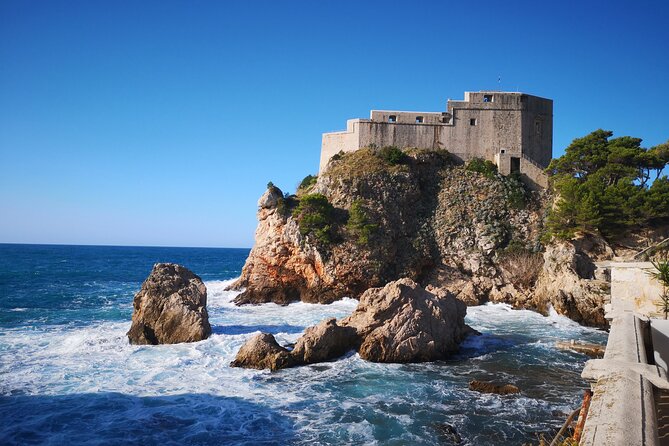
The group then pauses at Kolorina Bay, St. Lawrence Fortress, and the area around the Pile entrance. This is a useful early look at Dubrovnik’s defensive position. The bay and fortress help explain why the city was so difficult to attack from the sea, while the approach to Pile shows how carefully access to the Old City was controlled.
You spend about 15 minutes here. That is enough for orientation and photographs, but not enough for a detailed fortress visit. If you want to tour St. Lawrence Fortress inside, you should ask your guide whether that can be added or handled separately. The advertised walk focuses on seeing the setting rather than providing a full fortress exploration.
A few more Dubrovnik trips worth comparing
- Blue Cave Small-Group Boat Tour from Dubrovnik
★ 5.0 · 9,360 reviews - Full-Day Dubrovnik Elaphite Islands Cruise with Lunch and Drinks
★ 5.0 · 8,823 reviews - Dubrovnik: Epic Game of Thrones Tour + Lokrum & Saver Option
★ 4.9 · 5,995 reviews
Pile Gate and the first look at the walls
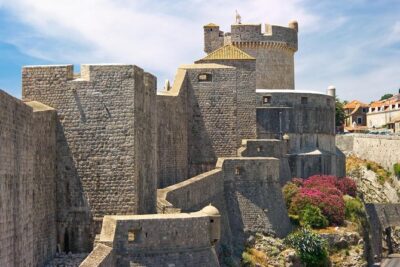
Pile Gate is the classic entrance to Dubrovnik’s Old City. It brings you beneath the walls and into the compact stone streets, while the nearby fortifications and the Tower of Minčeta provide an immediate sense of the city’s military strength.
The tour allows about 10 minutes at the gate and walls. That may sound brief, but the guide’s explanation is more important than a long stop here. You will learn how the western entrance worked and how the walls protected the republic.
The Tower of Minčeta is also familiar to Game of Thrones fans, and the guides sometimes connect the real site with its television appearance. The strongest part of this stop, though, is the contrast between screen fantasy and Dubrovnik’s actual past. The city’s defensive buildings were not decorative backdrops. They protected a small maritime republic that survived by diplomacy, trade, and careful defense.
Pile Gate is also where the walking conditions become clear. The streets are paved, and the Old City is pedestrian-friendly, but you should wear solid shoes. There are steps, uneven surfaces, and plenty of standing while listening.
Franciscan Monastery and the old pharmacy
The Franciscan Church and Monastery is one of the tour’s most rewarding indoor stops. The visit usually includes the monastery museum and old pharmacy, with around 20 minutes set aside.
The pharmacy gives the tour a human scale. Instead of hearing only about rulers, walls, and wars, you get a glimpse of daily life and medical practice in Dubrovnik. The monastery also helps show how religious institutions shaped the city’s education, care, and civic life.
Admission is not normally a separate extra because two museum entrance fees are included in the tour. The exact museums can change. In general, the Franciscan or Dominican Monastery Museum and the Cathedral Treasury are included, depending on the date, time of year, and opening conditions.
That flexibility is useful, but you should not assume every named museum will be open. If museums close for any reason, the entrance funds are refunded. The walking tour itself can continue, with the guide adjusting the route if needed.
Stradun, Onofrio’s Fountain, and the city’s main axis
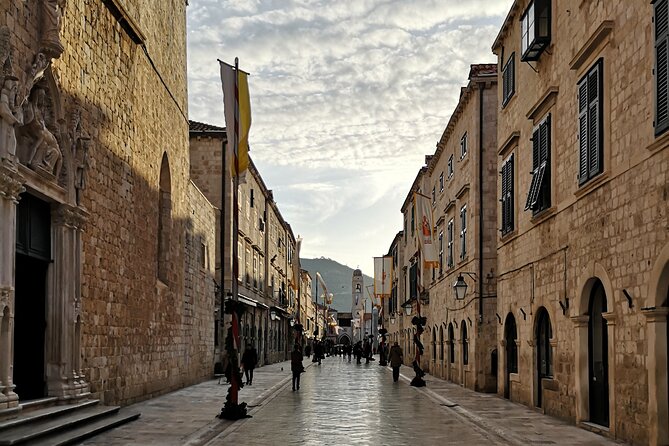
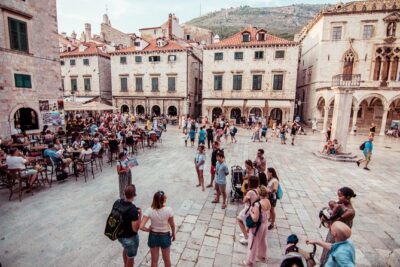
Stradun is Dubrovnik’s main street and the natural spine of the Old City. The broad stone avenue runs between the western and eastern gates, lined with shops, churches, and polished facades.
The tour spends about 15 minutes here, including the large Onofrio’s Fountain and the Church of the Holy Saviour. The fountain was an important public water source, and it remains one of the easiest places to appreciate how practical Dubrovnik’s public works were.
I like this section because it helps you get your bearings quickly. Once you understand Stradun, the rest of the Old City becomes easier to read. Side lanes lead uphill from the main street, while important public buildings and squares sit along or near the central route.
The limitation is that Stradun can be busy, especially when several groups arrive at once. The private format helps because your guide can pause in a quieter spot and keep the explanation audible. One guide also adjusted the walk to keep an older group in the shade and away from the thickest crowds. That kind of small adjustment is one of the clearest benefits of booking privately.
Still Dubrovnik, at a slower pace:
- Dubrovnik: Elaphiti Islands Full-Day Cruise with Lunch
★ 5.0 · 5,938 reviews - Dubrovnik: Old Town Walking Tour
★ 4.8 · 5,174 reviews - Dubrovnik: The Original Game of Thrones Tour & Lokrum Option
★ 4.8 · 5,064 reviews - Dubrovnik Game of Thrones Tour & Optional Lokrum Island Visit
★ 5.0 · 4,702 reviews
Jesuit steps and Gundulić Square
Next, the route leaves the main street for narrower lanes and the area around the Church of St. Ignatius of Loyola. You also see the Great Granary, the Jesuit church and stairway, and the Square of Ivan Gundulić.
This is one of the better parts of the walk for seeing how Dubrovnik changes from formal public spaces to quieter residential corners. The Jesuit stairway is a notable architectural feature, while Gundulić Square gives the route room to pause and take in the surrounding buildings.
The stop lasts about 15 minutes. You should expect a walking explanation rather than long interior visits at each site. The value is in the connections your guide makes between religion, food storage, public life, and the city’s compact design.
This section also includes steps, so it may be less comfortable for anyone who has difficulty with hills or uneven paving. Most visitors can take part, but the tour is not a flat promenade. If you need a slower pace, say so at the beginning. The guides have shown a willingness to adapt the walk for older guests and mixed-age families.
Cathedral and Treasury of the Republic
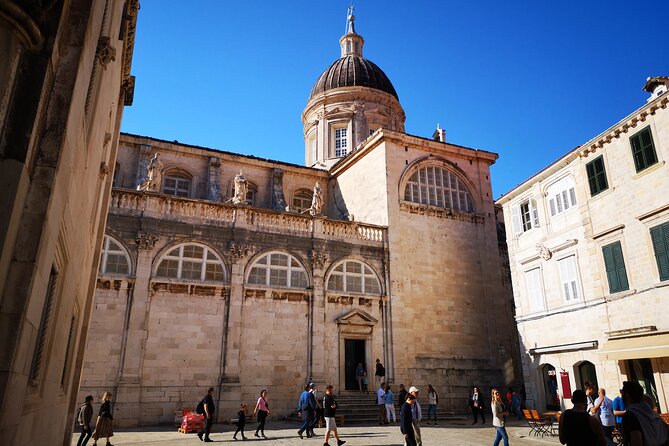
The Cathedral of the Assumption of the Virgin Mary is scheduled for about 20 minutes. The adjoining Treasury of the Republic is usually one of the two included museum visits.
This stop adds ceremony and wealth to the story of Dubrovnik. The cathedral reflects the city’s Catholic traditions, while the Treasury points to the resources gathered and protected by the republic. Your guide can place both within the larger story of a city that had to balance religion, commerce, diplomacy, and defense.
The Treasury visit is especially useful if you want more than exterior photographs. It provides a closer look at the objects and institutions that supported Dubrovnik’s public and religious life. Since access depends on opening times and the season, the exact museum arrangement may change.
The schedule allows 20 minutes, which keeps the tour moving but does not leave much time for a slow, independent look. If you enjoy museums and want to examine every display, you may want to return later on your own.
Rector’s Palace and the republic’s government
Rector’s Palace was the seat of government for the Republic of Dubrovnik. The group spends around 10 minutes here, enough to understand why this building matters and how power worked in the city.
The palace is a key stop because it shifts the focus from monuments to government. Dubrovnik was not simply a fortified town. It had its own political system, officials, laws, and diplomatic ambitions. The rector’s role and the palace itself help explain the careful balance between public authority and the interests of a trading state.
The short stop is a strength and a weakness. It keeps the overall walk from becoming exhausting, but it does not allow a detailed palace visit. The listed tour includes entrance fees for two museums, and the palace admission is not separately listed as an included interior visit. Ask your guide what can be entered on your date.
City Harbor, Lazareti, and the eastern defenses
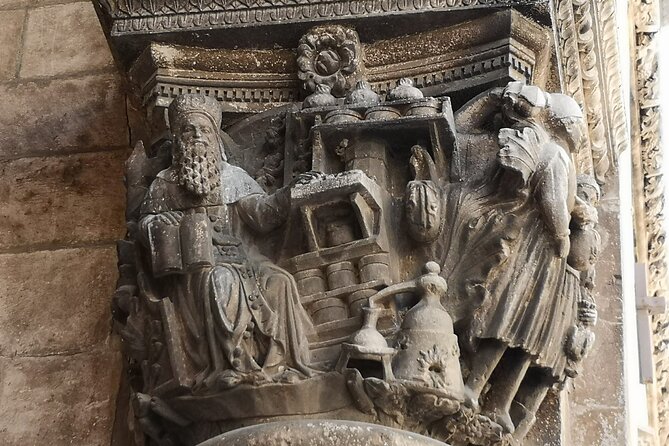
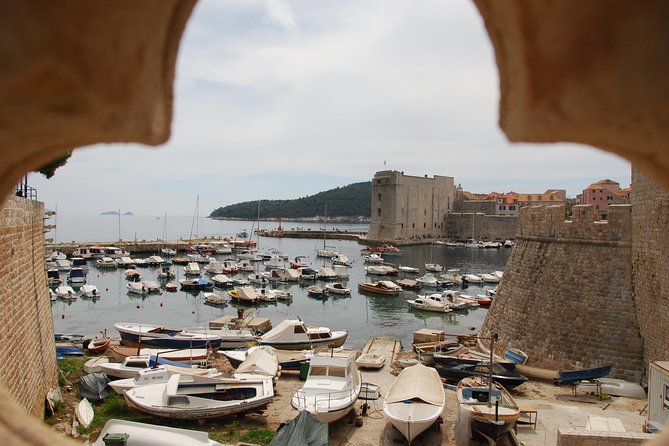
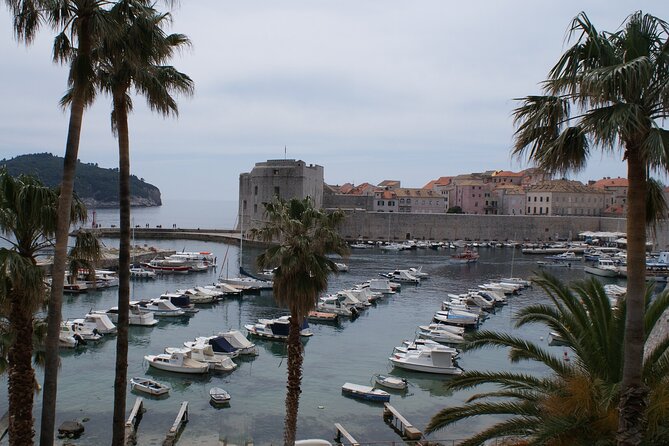
The route continues toward the City Harbor, with views of St. John Fortress, the Lazareti quarantine buildings, St. Luke’s fortifications, Revelin Fortress, the Ploče Gate, and the Dominican Monastery.
This is a particularly useful stretch for understanding Dubrovnik as a port. The harbor was tied to trade, defense, disease control, and contact with the wider Adriatic world. The Lazareti buildings show how seriously the republic treated quarantine, while the fortresses reveal the constant need to protect the eastern approach.
About 15 minutes are allotted here, so the guide will point out the main features rather than lead long visits inside them. You get a broad picture of the harbor district and the defensive chain around it.
This is also one of the places where weather and crowds can affect the experience. The route may change because of events, heavy foot traffic, or other conditions that would reduce the quality of the walk. That is sensible in a compact city where a single blocked lane can alter the flow.
Luža Square and the final cluster of sights
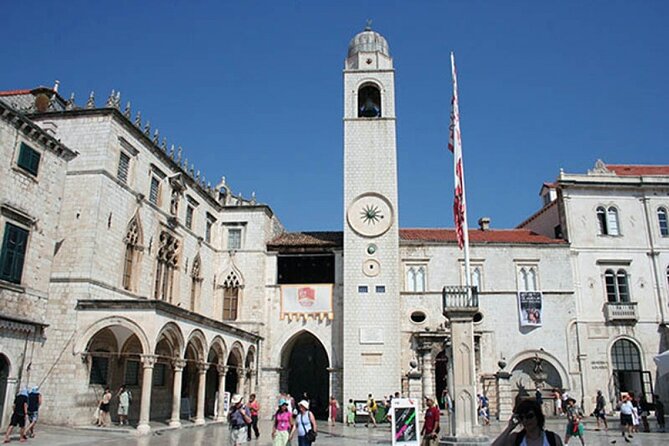
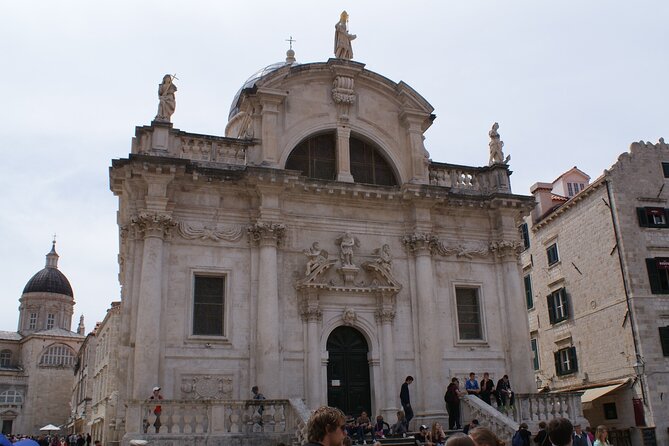
The tour ends at Luža Square, near the Church of St. Blaise at the eastern end of Stradun. The final 20 minutes cover Sponza Palace, the Clock Tower, the Small Onofrio’s Fountain, City Hall, and St. Blaise’s Church.
This is a strong ending because Luža gathers several of Dubrovnik’s most important civic buildings in one place. Sponza Palace reflects the city’s commercial and administrative life, while the clock tower and fountain show how the square served as a practical center for public movement.
The Church of St. Blaise is one of the square’s main visual anchors. Ending here gives you a useful place to continue exploring. You are already near the eastern gate, the harbor, and several restaurants and shops.
The tour’s stated duration is about 2 hours and 30 minutes, but some groups have taken closer to three hours. That is not necessarily a problem. The extra time can come from questions, photographs, a slower pace, or a guide pointing out local shops and food options. Still, do not schedule a tight transfer immediately after the walk.
How the private format affects the value
At $133.03 per person, the cost is high for a short walking experience. The price makes the most sense when several people share the booking, since the guide is reserved for your group and the route can be adjusted around your interests.
The private setup is especially helpful for families. Guides have handled groups with children and teenagers, mixing history with humor and, when useful, Game of Thrones references. It also suits older visitors who may need more shade, slower walking, or extra pauses.
I would be less enthusiastic about the price for a solo visitor unless personal guiding is a priority. A couple may still find it worthwhile if they want detailed answers and a flexible pace, but budget-minded visitors should compare it with a shared group walk.
The two museum admissions add real value, although the exact museums can change. Food, drinks, shopping, and personal expenses are not included. Gratuities are also not included, so budget separately if you want to thank your guide.
The guides and the personal side of Dubrovnik
The strongest praise goes to the guides rather than to the route alone. Vlaho is repeatedly described as warm, clear, and deeply connected to Dubrovnik. He grew up in the Old City and has shared personal stories, local recommendations, Game of Thrones information, and suggestions for places to eat.
Antun is praised for an easy-going manner, careful explanations, and a good balance between history and humor. Paula has been especially effective at explaining the 1991 siege alongside stories from growing up in Dubrovnik. Tea is another guide specifically praised for making the walk clear and enjoyable.
Guide assignments can change, so you should not book solely because you hope for one particular person. Still, the pattern is encouraging. The experience seems to depend on local perspective, not just memorized dates.
The best guides also make the recent past part of the tour. Dubrovnik’s history does not stop with medieval walls or the old republic. The 1990s conflict affected residents directly, and a guide with personal ties to that period can explain it with more feeling than a standard monument talk.
Who should book this Dubrovnik walk?
I would choose this tour if you are visiting Dubrovnik for the first time and want a clear introduction before exploring alone. It is also a good fit if you care about context, prefer asking questions, or want a guide who can adjust the pace.
Families, small friend groups, and visitors with limited time are likely to get the most value. The route covers the major Old City sights without trying to include every possible museum or wall section.
You should think twice if you dislike stairs, want a completely leisurely pace, or are mainly interested in walking the city walls. The walls are part of the visual setting, but this is not presented as a dedicated wall walk. You should also reconsider if $133.03 per person strains your budget.
Free cancellation is available up to 24 hours before the start time. Changes or cancellations inside that window are not refunded, and poor weather can lead to a new date or a full refund.
Should you book the Dubrovnik Old City Private Tour?
Book it if you want history with local character, not just a checklist of pretty buildings. The route covers Pile Gate, Stradun, the Franciscan Monastery, cathedral, Rector’s Palace, harbor, and Luža Square, while the guide adds stories about daily life, the republic, local food, and the 1990s conflict.
The price is easier to justify for a family or group of friends. For a couple, it depends on how much you value a private guide. For a solo visitor, I would consider a shared walk unless you strongly prefer personal attention.
Ask for a slower pace if needed, confirm which two museums are planned, and leave room after the tour in case it runs nearer three hours. If you do that, this is a strong way to get your bearings and see Dubrovnik as a lived-in city, not merely a beautiful wall around a postcard.
FAQ
How long does the Dubrovnik Old City Private Tour last?
The tour lasts approximately 2 hours and 30 minutes. Some groups have taken about three hours, so you should allow a little extra time.
What is the price of the tour?
The listed price is $133.03 per person. Group discounts are available, and the activity is private for your group.
Where does the tour start and end?
It starts at Nautika, Brsalje ul. 3, in Dubrovnik. It ends at Luža Square, near the Church of St. Blaise at the eastern end of Stradun.
Are museum admissions included?
Two museum entrance fees are included. In general, these are the Franciscan or Dominican Monastery Museum and the Cathedral Treasury, but the exact museums can change based on the date, season, and opening conditions.
Is the tour offered in English?
Yes. The tour is offered in English and includes professional tour guidance.
What is the cancellation policy?
You can cancel up to 24 hours before the experience starts for a full refund. Cancellations or changes made less than 24 hours before the start time are not refunded or accepted. If poor weather causes the tour to be canceled, you will be offered another date or a full refund.
Just added around Dubrovnik
- Elaphiti Islands Private Dubrovnik Boat Unique Experience★ 5.0 · 10 reviews
- Full- Day Private Speedboat Tour in Dubrovnik on Elaphiti Islands★ 5.0 · 21 reviews
- PRIVATE Wine Tour to Konavle country side★ 5.0 · 11 reviews
- Wine Lover’s Tour of Peljesac Peninsula★ 5.0 · 150 reviews
- Wine tour peninsula Pelješac★ 5.0 · 3 reviews
- Parasailing in Cavtat★ 5.0 · 62 reviews
- Welcome to Dubrovnik Walking Tour★ 5.0 · 36 reviews
- Dubrovnik at War 1991-1992 Private Walking Tour★ 5.0 · 4 reviews
City Tours, compared.

City Walls Early Morning or Sunset Walking Tour
Read our review →
Dubrovnik Combo: Old Town & Ancient City Walls
Read our review →
Small Group Walking Tour City Center and WW2 Tunnels
Read our review →
Hop On Hop Off Panoramic bus – Zagreb City Tour
Read our review →
Browse the lists this tour appears in