
Reviewed · WALKING TOURS
A walk through life in communist Yugoslavia
History can feel surprisingly personal. At Dubrovnik’s Red History Museum, you step into everyday life under communist Yugoslavia through room sets, period objects, music, and interactive displays. I like the museum’s clear focus on ordinary people, and I like that it covers art, design, politics, secret agencies, and Yugoslavia’s Non-Aligned position rather than offering only a political timeline. The main drawback is its size, and the country’s final years and breakup could use more attention.
This is a quirky, compact museum in a 300-square-meter space, with an expected visit of about 1 hour and 30 minutes. I also like the prepaid entry, which lets you choose your day and avoid buying a ticket at the counter, though the listed price of $211 makes this feel expensive if you are visiting alone for a short museum stop.
In This Review
- Key points to know before you go
- Why communist Yugoslavia belongs on your Dubrovnik itinerary
- At Ul. Svetog Križa 3, the story starts with everyday life
- Room sets turn an abstract era into a daily routine
- Art, design, music, and the Non-Aligned world
- The secret police display adds a darker edge
- The missing piece: Yugoslavia’s final years
- How the $211 price affects the value
- Who will get the most from this museum?
- Practical timing, entry, and cancellation
- Should you book the Red History Museum?
- FAQ
- Where is the Red History Museum located?
- How long does the museum visit last?
- What does admission include?
- Is the ticket available on a mobile device?
- Can I choose my visit date in advance?
- Does the booking help you avoid ticket-counter lines?
- What subjects does the museum cover?
- Are service animals allowed?
- Is the museum near public transportation?
- What is the cancellation policy?
Key points to know before you go
- A 300-square-meter time capsule: Room sets and everyday objects make Yugoslav history feel close and familiar.
- More than political history: Exhibits cover music, design, art, government, secret agencies, and daily life.
- A useful stop for first-time learners: The museum gives clear background on Croatia’s communist period and Yugoslavia as a whole.
- Plan for about 90 minutes: The stated duration ranges from 50 minutes to 1 hour and 35 minutes, with the main visit listed at 1 hour and 30 minutes.
- A small museum with broad ambitions: Its compact size is easy to manage, but the treatment of the regime’s final years may feel brief.
- High marks for value and clarity: The experience has a 4.9 rating from 187 reviews, with 98 percent recommending it.
Why communist Yugoslavia belongs on your Dubrovnik itinerary
Dubrovnik is famous for medieval walls, stone lanes, and Adriatic views. Those sights are essential, but they tell only part of the city’s story. The Red History Museum gives you a look at a much more recent period, when Croatia was part of socialist Yugoslavia and daily life unfolded under the control of the Communist Party.
That recentness matters. You are not looking at a distant kingdom or an ancient ruin. You are looking at the political system that shaped the lives of parents, grandparents, and many people still living in Croatia today. The museum’s focus on household objects and personal routines helps you understand the period without requiring a background in Balkan politics.
I find this kind of museum especially useful early in a Croatia trip. Once you have seen the displays, references to Yugoslavia, socialism, the secret police, or the country’s international position are easier to place. You begin to see that Croatian history did not move directly from medieval Dubrovnik to modern tourism. The 20th century left its own strong mark.
The experience is also a good change of pace from Dubrovnik’s outdoor sights. You can visit it in poor weather, during the hottest part of the day, or when you simply need an hour indoors. It is not a huge institution that demands half a day. That makes it easy to fit around other plans.
More Walking Tours in Dubrovnik
- Dubrovnik: Old Town Walking Tour
★ 4.8 · 5,174 reviews - Dubrovnik Discovery Old Town Walking Tour
★ 5.0 · 4,458 reviews - Dubrovnik: Game of Thrones Walking Tour
★ 5.0 · 1,732 reviews
At Ul. Svetog Križa 3, the story starts with everyday life
The museum is at Ul. Svetog Križa 3, 20000 Dubrovnik, and the activity begins and ends there. Since there is no separate walking tour or transport segment, you are responsible for reaching the museum and then exploring the exhibits inside.
The location is near public transportation, which is useful if you are not staying close by. The provided information does not specify a particular bus route, travel time, or parking arrangement, so check your own map and local transport before setting out. A mobile ticket is provided, and confirmation arrives at booking.
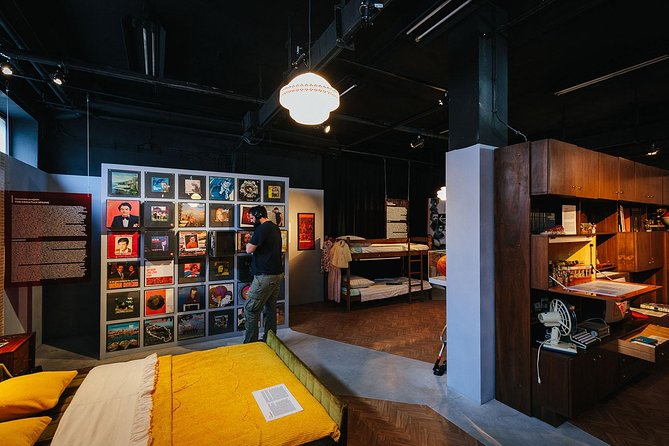
Once inside, the museum is designed as an interactive experience rather than a line of glass cases. You move through room sets and displays that recreate aspects of life in communist Yugoslavia. The aim is not just to tell you what the government believed. It is to show how the system appeared in homes, culture, public life, and personal behavior.
That approach is one of the museum’s strongest features. A political timeline can tell you when events happened. A recreated room or familiar household object can suggest how those events affected the way people lived.
Room sets turn an abstract era into a daily routine
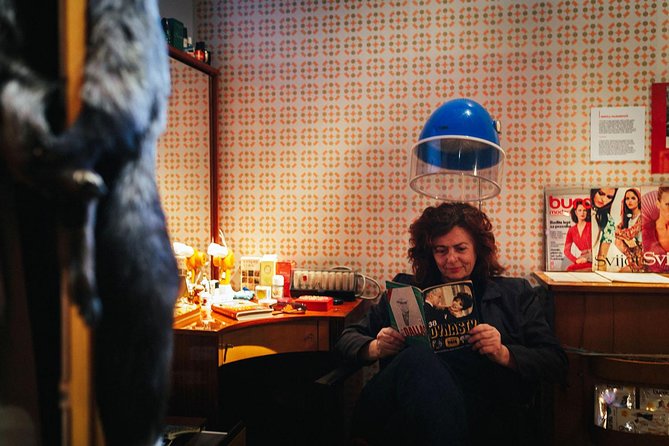
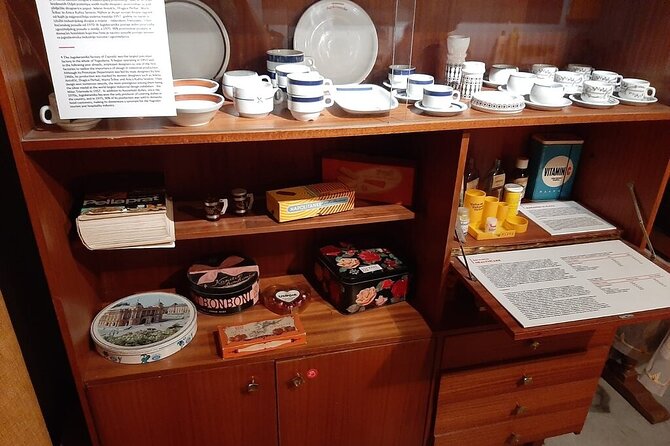
The museum’s room sets are the heart of the visit. You see objects from the 20th century and encounter a visual record of ordinary life. The exact objects and layout are not detailed in the available information, so you should think of this as a period setting rather than a guided tour with a fixed list of stops.
That distinction is useful. You will not simply read about government policy and move on. The museum asks you to notice how design, objects, music, and domestic settings can reveal a society’s values and limits. These small details often make the period easier to grasp than a page of dates.
The experience has been praised as a nice, small, and unusual museum, and that is a fair way to approach it. You will not find a giant collection here. Instead, you get a concentrated visit built around atmosphere, selected artifacts, and clear presentation.
I would allow the full 90 minutes if you like reading displays and taking time with the rooms. You may finish in closer to 50 minutes if you move quickly or already know the broad outline of Yugoslav history. The published duration spans 50 minutes to 1 hour and 35 minutes, while the main museum visit is listed at 1 hour and 30 minutes.
Art, design, music, and the Non-Aligned world
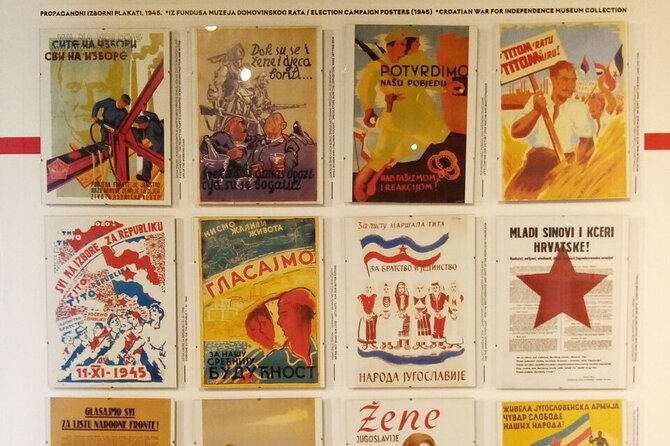
One welcome feature is the museum’s broad subject range. It covers art and design, not only party politics. That matters because culture can show what a government wanted to project, how people expressed themselves, and how public identity was shaped.
Music is part of the experience as well. You can listen to popular songs from the period, including the greatest hits of the time. This gives the visit a more human quality. Political history is easier to remember when it is connected to sound, style, and the routines of a generation.
The museum also explains Yugoslavia’s place in the Non-Aligned world. That is a useful subject because Yugoslavia did not fit neatly into the simple Cold War picture many people carry from school. The museum’s treatment of international politics helps show that the country had its own position and identity within the wider communist world.
The value here is context. You are not asked to treat Yugoslavia as a carbon copy of another communist state. The museum presents its own political and cultural setting, including the way the country worked and the way its people lived under that system.
Still Dubrovnik, at a slower pace:
- Blue Cave Small-Group Boat Tour from Dubrovnik
★ 5.0 · 9,360 reviews - Full-Day Dubrovnik Elaphite Islands Cruise with Lunch and Drinks
★ 5.0 · 8,823 reviews - Dubrovnik: Epic Game of Thrones Tour + Lokrum & Saver Option
★ 4.9 · 5,995 reviews - Dubrovnik: Elaphiti Islands Full-Day Cruise with Lunch
★ 5.0 · 5,938 reviews
The secret police display adds a darker edge
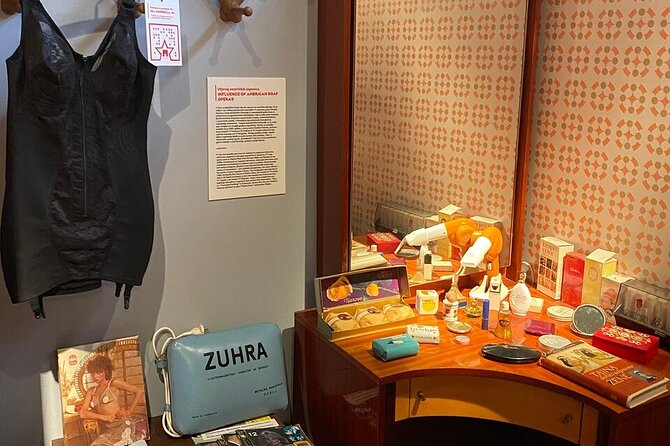
The experience also addresses secret agencies and the surveillance that came with a totalitarian society. This is an important counterweight to the room sets, music, and design. Without it, a museum about everyday life could accidentally make the period look merely nostalgic.
The displays about the secret police help explain the pressure beneath ordinary routines. The supplied description refers to people living under the watchful eye of the Communist Party. That phrase captures the museum’s balance: daily life could contain familiar pleasures and practical routines, while political control remained part of the system.
This section may be particularly valuable if you know little about the period. You get a sense that political history was not separate from home life. It affected what people said, what they trusted, and how they understood authority.
At the same time, the museum is compact. You should not expect a long academic treatment of surveillance, imprisonment, dissent, or every agency involved. The available information describes the subject as one part of a larger interactive visit. For a fuller study, you would need additional reading or another museum, but this visit gives you a useful starting point.
The missing piece: Yugoslavia’s final years
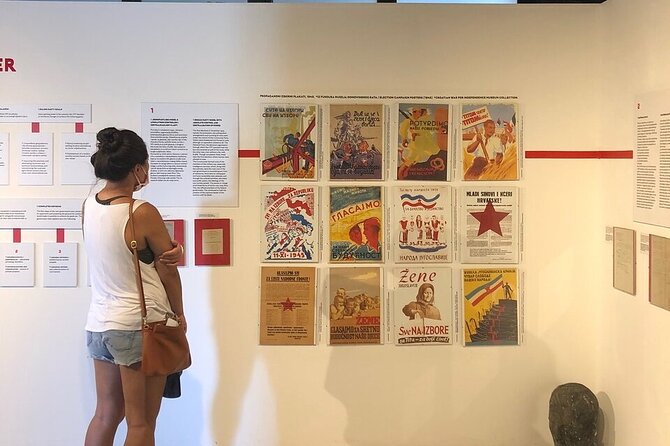
The clearest criticism is also the most specific one. The museum’s treatment of the final years, when the system began to break down, could be more developed.
That period is essential to understanding modern Croatia. The story does not end with everyday life under communist rule. You also need to consider the political and economic strain that followed, the collapse of Yugoslavia, and the transition into the country you see today.
The museum still charts communist Yugoslavia from beginning to end, but the final stage may feel less detailed than the earlier sections. If your main reason for visiting is to understand the breakup of Yugoslavia, keep your expectations in check. This is primarily a museum about life during the communist period, not a full account of every event that followed.
I see this as a limitation rather than a reason to skip the museum. The displays give you a base for understanding the period. Just remember that the visit may leave you wanting more on the late 1980s, the collapse of the system, and the wars that reshaped the region.
How the $211 price affects the value
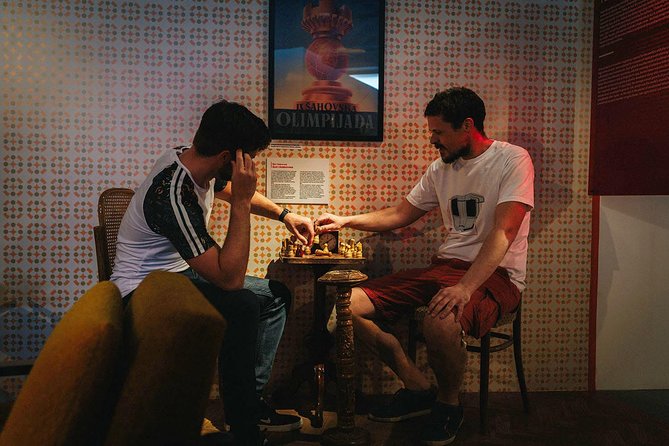
The listed price is $211, which deserves careful thought. For a museum visit lasting roughly an hour, that is a high amount, especially if the price applies to one person. The supplied information does not explain whether this is a per-person price, a group rate, or a booking platform price, so check the final cost before paying.
The prepaid admission does offer convenience. You select your day in advance, receive confirmation at booking, and can use a mobile ticket. You also avoid purchasing admission at the ticket counter. That is helpful during a tightly planned day, though it does not turn a short museum visit into a bargain.
The museum’s value depends on your interests. If you want a quick, accessible introduction to a period that shaped modern Croatia, the visit can be worthwhile. If you are comparing the cost with Dubrovnik’s many other attractions, you may find the price difficult to justify unless you are especially interested in Yugoslav history.
The strong rating helps confirm that the museum delivers a satisfying experience for many people. A 4.9 rating from 187 reviews and a 98 percent recommendation rate point to a well-received visit. Still, positive ratings do not erase the basic price and duration question. I would check whether the amount changes based on party size before booking.
Who will get the most from this museum?
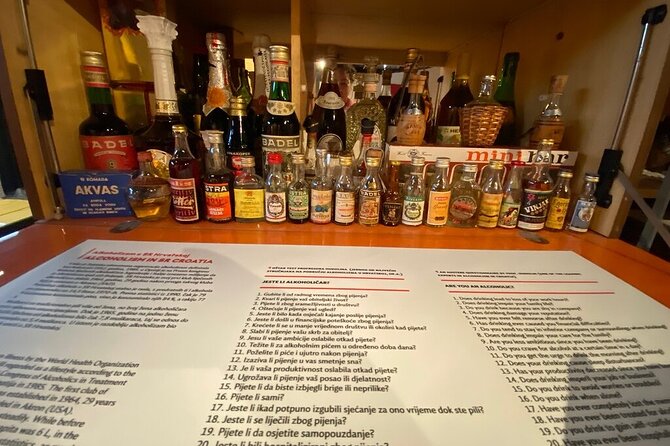
I would recommend the Red History Museum to you if you are unfamiliar with Croatia’s communist past. The displays offer a manageable introduction without requiring you to read a long historical work before arriving.
It also suits people who enjoy social history. If you want to know how politics reached into design, music, homes, public culture, and personal behavior, this museum offers more than a basic list of leaders and dates.
Families with older children may find the room sets and interactive features easier to follow than a traditional text-heavy museum. The available information says most people can participate, and service animals are allowed. No special physical demands are listed.
History specialists may find the visit too short for the scale of the subject. You could still enjoy the artifacts and presentation, but you may want more detail about the breakup of Yugoslavia, regional differences, and the last years of the regime.
Practical timing, entry, and cancellation
The museum is open to most participants, and the activity has a maximum capacity of 200 people. That is a large stated limit for a small museum, so the atmosphere could depend on how many people are inside at once. The information does not provide timed entry details beyond the selected day, so confirm your booking instructions carefully.
Your mobile ticket and booking confirmation should be ready when you arrive. The visit ends back at the starting point because there is no separate transport or walking route.
Free cancellation is available if you cancel at least 24 hours before the experience start time. Within 24 hours, you receive no refund, and changes made during that period are not accepted. The cut-off follows Dubrovnik local time.
Should you book the Red History Museum?
Book it if you want a concise and engaging look at how ordinary people lived under communist Yugoslavia. The room sets, period objects, music, and secret-police material give the subject a human scale, and the museum’s broad coverage makes it a useful stop for anyone new to this part of Croatian history.
Think twice if the $211 price is for one person, or if you mainly want a detailed account of Yugoslavia’s collapse and the wars that followed. The museum is compact, and its treatment of the final years may not answer every question.
My practical advice is to confirm the final price, allow 90 minutes, and visit with curiosity rather than expecting a full political archive. For the right audience, this is one of Dubrovnik’s more unusual history stops, a place that adds recent human context to a city best known for its medieval past.
FAQ
Where is the Red History Museum located?
It is located at Ul. Svetog Križa 3, 20000, Dubrovnik, Croatia.
How long does the museum visit last?
The stated duration ranges from 50 minutes to 1 hour and 35 minutes. The main visit is listed as approximately 1 hour and 30 minutes.
What does admission include?
Admission to the Red History Museum is included.
Is the ticket available on a mobile device?
Yes. The experience provides a mobile ticket.
Can I choose my visit date in advance?
Yes. Prepaid admission lets you secure entry for your chosen day.
Does the booking help you avoid ticket-counter lines?
Yes. Prepaid admission allows you to bypass ticket-purchase lines at the counter.
What subjects does the museum cover?
The museum covers everyday life, art, design, politics, secret agencies, music, and Yugoslavia’s position in the Non-Aligned world.
Are service animals allowed?
Yes. Service animals are allowed.
Is the museum near public transportation?
Yes. The museum is near public transportation.
What is the cancellation policy?
You can cancel for a full refund up to 24 hours before the experience start time. Cancellations or changes made within 24 hours are not accepted and are not refunded.
Just added around Dubrovnik
- Elaphiti Islands Private Dubrovnik Boat Unique Experience★ 5.0 · 10 reviews
- Full- Day Private Speedboat Tour in Dubrovnik on Elaphiti Islands★ 5.0 · 21 reviews
- PRIVATE Wine Tour to Konavle country side★ 5.0 · 11 reviews
- Wine Lover’s Tour of Peljesac Peninsula★ 5.0 · 150 reviews
- Wine tour peninsula Pelješac★ 5.0 · 3 reviews
- Parasailing in Cavtat★ 5.0 · 62 reviews
- Welcome to Dubrovnik Walking Tour★ 5.0 · 36 reviews
- Dubrovnik at War 1991-1992 Private Walking Tour★ 5.0 · 4 reviews
Walking Tours, compared.

Walking Tour of Split and Diocletian’s Palace
Read our review →


Krka Waterfalls tour with Trogir Walking tour and Krka panoramic boat cruise
Read our review →
City Walls Early Morning or Sunset Walking Tour
Read our review →Browse the lists this tour appears in