Reviewed · DUBROVNIK TOURS
Small Group Tour; Balkans & Central Europe – Dubrovnik to Vienna
Ten days, six countries, countless border crossings. This journey links Dubrovnik with Vienna through Mostar, Sarajevo, Belgrade, Budapest, Bratislava, and several smaller Central European towns. I like the small maximum of 10 people and the range of included transport, hotels, breakfasts, entry tickets, road costs, and a tour leader. I also like the mix of major capitals and less-visited stops such as Zvornik, Sremski Karlovci, Subotica, and Győr. The big consideration is a serious mismatch: the overview promises Komani Lake and Valbona Valley in northern Albania, but the day-by-day program does not visit Albania at all.
You should also note that this is mainly a sightseeing and road tour, not an Albanian Alps hiking trip. The days include walking on cobblestones, uneven ground, fortress hills, and old-town streets, but no formal two-day hike appears in the detailed schedule. At $3,773.83 per person, the price can offer fair value for a 10-day, multi-country trip, especially with a private hotel drop-off in Vienna, but only if the actual route matches what you want.
In This Review
- Key Things to Know Before You Book
- Day 1: Mostar, Stari Most, and Blagaj
- Day 2: Sarajevo and the Story of the Latin Bridge
- Day 3: Zvornik and Belgrade Fortress
- Day 4: Sremski Karlovci and Serbian Wine Country
- Day 5: Novi Sad and Petrovaradin Fortress
- Day 6: Subotica and the Border to Budapest
- Day 7: Budapest From Buda Castle to the Danube
- Day 8: Győr and the Road to Bratislava
- Day 9: Bratislava Old Town and Castle Views
- Day 10: Hotel Drop-Off in Vienna
- What the $3,773.83 Price Covers
- Who Will Enjoy This Fast-Moving Route
- Should You Book This Dubrovnik to Vienna Tour?
- FAQ
- Where does the tour begin?
- Where does the tour end?
- How long is the tour?
- What is the maximum group size?
- What accommodation is included?
- Is breakfast included?
- Are lunch and dinner included?
- Are entry tickets included?
- Is hotel pickup available?
- Is the tour physically demanding?
Key Things to Know Before You Book
- The route covers Dubrovnik to Vienna in 10 days: You pass through Croatia, Bosnia and Herzegovina, Serbia, Hungary, Slovakia, and Austria.
- The group is capped at 10 people: That is a useful size for border crossings, guided walks, and personal help from the tour leader.
- Northern Albania is missing from the detailed schedule: Komani Lake and Valbona Valley appear in the promotional description, but not in Days 1 through 10.
- Breakfast and three-star hotels are included: Lunch, dinner, drinks, snacks, and personal purchases are not included.
- Several excellent historic centers are included: Mostar, Sarajevo, Belgrade, Budapest, Novi Sad, and Bratislava each bring a different chapter of Balkan and Central European history.
- The tour begins early: Hotel pickup in Dubrovnik is scheduled for 7:00 am, and border delays can affect the day.
Day 1: Mostar, Stari Most, and Blagaj
Your first day begins with a 7:00 am pickup at your Dubrovnik hotel. A local driver takes you to the border, where you meet the tour leader. This split arrangement is worth understanding in advance: you are not simply collected by one guide in Dubrovnik and driven all the way through.
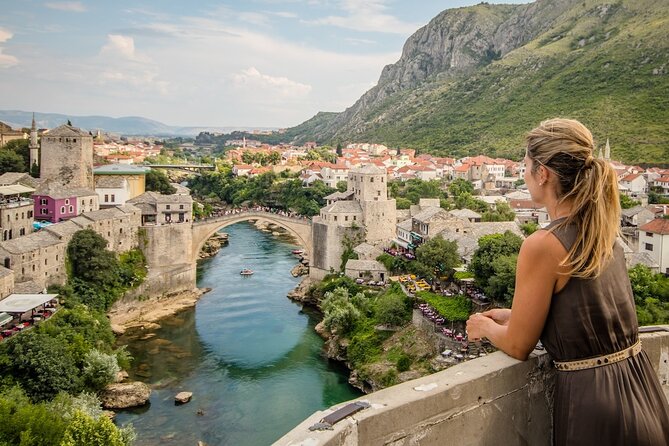
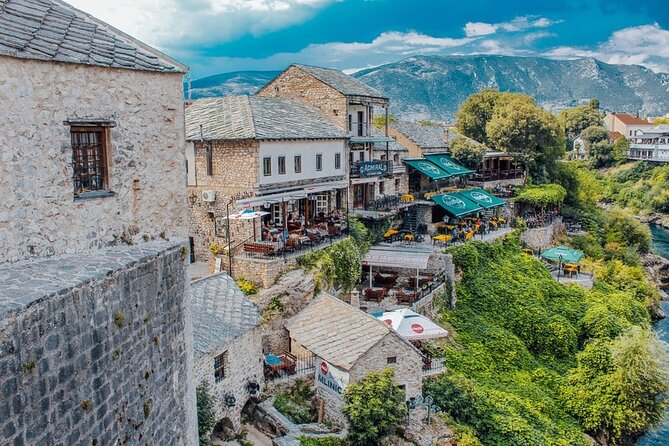
The first major stop is Mostar in Bosnia and Herzegovina. The famous Stari Most, or Old Bridge, is the visual centerpiece. Built in the 16th century in an Islamic architectural style, it spans the Neretva River and forms part of the UNESCO-listed old town.
You have about an hour at the bridge, followed by another hour in the Old Bazaar. The pleasure here is simply walking. Cobblestone lanes, old mosques, small shops, and Ottoman-era buildings give Mostar a feel quite unlike Dubrovnik. Stones marked with Don’t Forget recall the city’s wartime damage and loss, so this is not just a pretty stop for photographs.
The afternoon visit to Blagaj adds a quieter note. The Blagaj tekija, a historic monastery beside the Buna River spring, sits below a cliff with blue-green water in front. You receive about an hour there, then return to Mostar for another short period of free time.
The schedule gives you a useful first taste, but it is brisk. If you prefer long museum visits or slow café afternoons, you may find the time tight. If you want a broad introduction to Herzegovina without arranging transport yourself, it works well.
A few more Dubrovnik trips worth comparing
- Blue Cave Small-Group Boat Tour from Dubrovnik
★ 5.0 · 9,360 reviews - Full-Day Dubrovnik Elaphite Islands Cruise with Lunch and Drinks
★ 5.0 · 8,823 reviews - Dubrovnik: Epic Game of Thrones Tour + Lokrum & Saver Option
★ 4.9 · 5,995 reviews
Day 2: Sarajevo and the Story of the Latin Bridge
After breakfast, you drive to Sarajevo, the capital of Bosnia and Herzegovina. The guided walk covers the Ottoman and Austro-Hungarian sections of the city, along with markets, mosques, churches, and synagogues.
Sarajevo is a city where different faiths and imperial influences sit close together. The tour also points out bullet holes, cannon marks, and other reminders of the Yugoslav War. That context matters because Sarajevo can otherwise be reduced to its cafés and handsome old streets.
The Latin Bridge receives special attention. Here you learn how the assassination of Archduke Franz Ferdinand helped trigger World War I. The bridge itself is modest, but the story attached to it changed Europe.
You have free time for traditional meat dishes and desserts after the guided portion. The total listed time at the Sarajevo stops is short, so I would treat this as an introduction rather than a full city visit. If Sarajevo is a priority, consider adding extra nights before or after the tour.
Walking comfort matters here. The program specifically warns about uneven ground, especially around wartime ruins. Good shoes are more useful than stylish luggage.
Day 3: Zvornik and Belgrade Fortress
Day 3 takes you toward Belgrade, with a stop in Zvornik on the Drina River. This is a smaller, calmer break from the capital cities. You have time for lunch or a walk through town, though the stop is only about an hour.
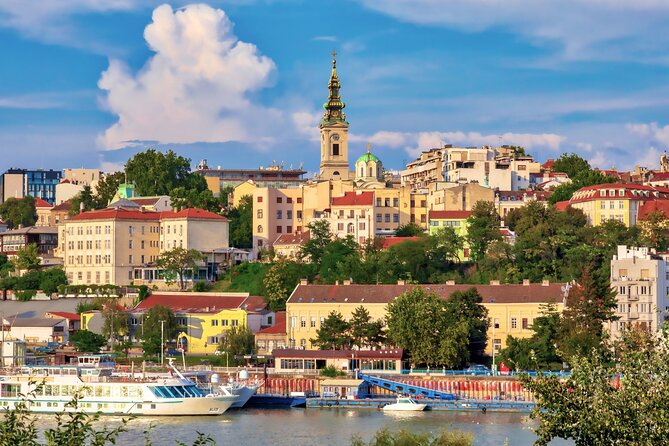
The main destination is Belgrade, Serbia’s capital. The tour visits Belgrade Fortress and Kalemegdan Park at the meeting point of the Sava and Danube rivers. The views from the fortress are one of the strongest scenic moments of the trip.
You also see the Pobednik monument in the Upper Town, then walk through Knez Mihailova, the main pedestrian and social street, toward Republic Square. Two hours is enough for an overview, but Belgrade deserves more time if you want museums, nightlife, or a closer look at its neighborhoods.
The useful feature here is orientation. You get the fortress, the river junction, the central pedestrian route, and the main square in one guided visit. The tradeoff is that the tour keeps moving, so you will need to choose carefully how to spend your free time.
Day 4: Sremski Karlovci and Serbian Wine Country
Sremski Karlovci is one of the most distinctive stops on the route. This small Baroque town was a center of Serbian culture in the 18th century and remains known for wine cellars and religious institutions.
The three-hour visit gives the town more breathing room than some of the capital-city stops. You can walk among the old buildings, hear local stories, and spend free time tasting regional wines if you choose.
A local legend says that drinking from the Four Lions fountain means you will return to Karlovci and marry there. You do not need to test the legend, of course, but the fountain gives the town a bit of character beyond its formal architecture.
This stop is especially good for people who enjoy smaller places and local food traditions. Wine tasting costs may not be included, so keep some spending money available. The tour lists admission to the town itself as free.
Still Dubrovnik, at a slower pace:
- Dubrovnik: Elaphiti Islands Full-Day Cruise with Lunch
★ 5.0 · 5,938 reviews - Dubrovnik: Old Town Walking Tour
★ 4.8 · 5,174 reviews - Dubrovnik: The Original Game of Thrones Tour & Lokrum Option
★ 4.8 · 5,064 reviews - Dubrovnik Game of Thrones Tour & Optional Lokrum Island Visit
★ 5.0 · 4,702 reviews
Day 5: Novi Sad and Petrovaradin Fortress
After breakfast, you explore Novi Sad, northern Serbia’s cultural center. The city reflects its position between the former Ottoman and Austro-Hungarian worlds, with Baroque buildings and a broad pedestrian center.
The walking tour follows streets such as Zmaj Jovina and Dunavska. The major sight is Petrovaradin Fortress, often called the Gibraltar on the Danube because of its large hilltop position above the river.
You receive about three hours, including guided sightseeing and free time. That is enough to see the central streets without rushing quite as much as in Sarajevo or Belgrade. You spend the night in Novi Sad, which makes this day less exhausting than a quick stop followed by another long transfer.
The main limitation is that the schedule does not detail how much time is inside the fortress compared with the old town. Ask your tour leader on the day if you have a particular interest in the fortress.
Day 6: Subotica and the Border to Budapest
Subotica offers a change in tone. Its colorful Austro-Hungarian buildings, City Hall, fountains, and open square create a relaxed city-center visit. The tour also includes the Cathedral of St. Teresa of Avila and the synagogue.
The City Hall is the visual anchor rather than a cathedral. That gives Subotica a different civic feel from many European cities, where a church dominates the main square. You have about three hours to walk, take a coffee break, sample local food, and explore independently.
Later, the group crosses into Hungary and continues to Budapest. The border transfer is listed at about 30 minutes, but actual crossing time can vary. Keep your passport easy to reach and avoid packing anything you may need in the vehicle’s luggage area.
Day 7: Budapest From Buda Castle to the Danube
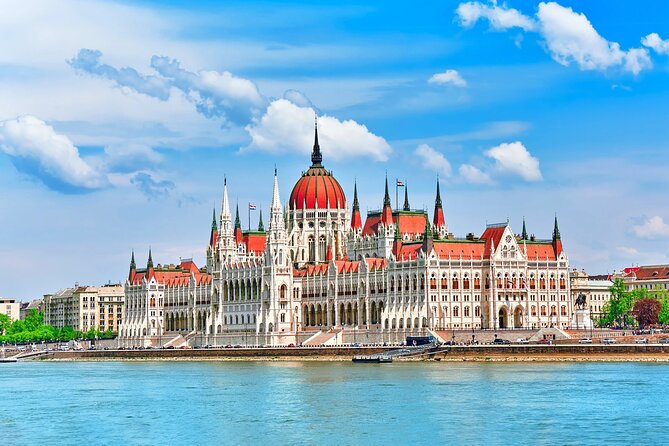
Budapest receives a broad city introduction. You pass St. Stephen’s Basilica, the Opera, Parliament, Heroes’ Square, and Fisherman’s Bastion. The itinerary also includes Buda Castle, a UNESCO World Heritage Site and one of the city’s defining landmarks.
The division between Buda and Pest helps explain the city. Buda brings the castle hill and high views, while Pest offers broad boulevards, major civic buildings, cafés, and urban life along the river.
The schedule includes a free evening, which is valuable. Budapest changes mood after dark, and you can choose your own meal or walk across one of the bridges. Since dinner is not included, this is also a chance to try something beyond the group’s usual arrangements.
The guided sightseeing is useful for a first visit, but two hours for the wider city and one hour at Buda Castle cannot cover everything. Think of this as a well-organized first look, not a complete Budapest stay.
Day 8: Győr and the Road to Bratislava
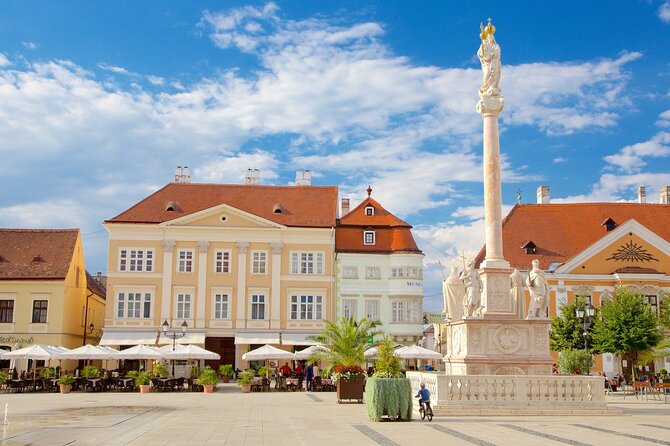
Győr, known as the City of Rivers, is a compact Hungarian stop with Baroque buildings, churches, and multicolored homes. The town visit includes the 59-meter Town Hall tower, the Cathedral of the Virgin Mary, and the old synagogue with its large gray dome.
The synagogue is a particularly interesting architectural stop because its design influenced other synagogues in Central Europe. You also walk along pedestrian-only Baross Gábor Way, lined with cafés, shops, bars, and restaurants.
The town stop lasts about three hours in total, including free time for Hungarian food and the locally mentioned blueberry beer. Since drinks are excluded, purchases here are your responsibility.
Later, the route continues to Bratislava. The short listed driving time between Győr and Bratislava makes this one of the easier transfer sections, at least on paper.
Day 9: Bratislava Old Town and Castle Views
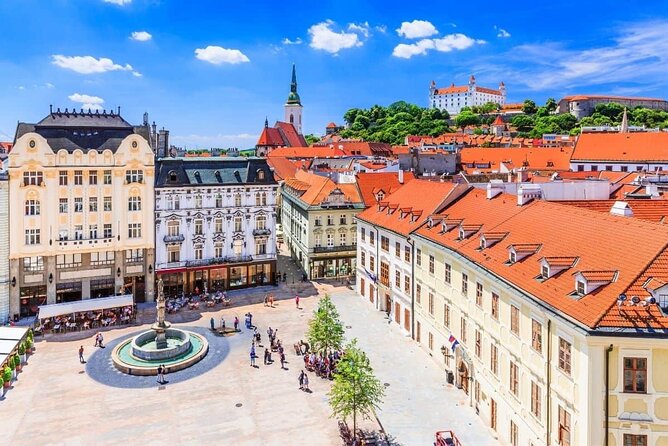
Bratislava is compact and easy to approach on foot. The morning visit includes the Old Town Hall, medieval streets, churches, cultural institutions, and foreign embassies.
Michael’s Gate is another key stop. It is the only surviving gate from the town’s medieval fortifications, making it a good marker of how the old city once fit within its defensive walls.
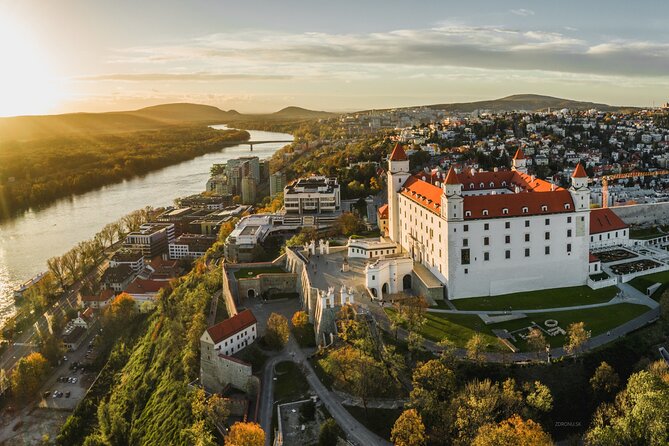
You then walk uphill to Bratislava Castle, which overlooks the Danube and the city. The climb is worth noting if you have limited mobility or dislike hills. The castle visit is included, and the view provides one of the clearest photo opportunities in Bratislava.
The afternoon returns you to the center for free time. Bratislava’s café culture gives you a pleasant way to slow down after several packed sightseeing days. The city is smaller than Budapest, but that is part of its appeal on a fast-moving tour.
Day 10: Hotel Drop-Off in Vienna
The final day is mainly a transfer. Your tour leader drops you at your hotel in Vienna, Austria, marking the end of the trip.
This hotel drop-off is a real convenience. You do not need to arrange a separate long-distance transfer from Bratislava, and you finish in a major European city with strong onward transport options.
The details do not state the exact departure time or how much time you will have in Vienna. Do not book an important Vienna attraction for the morning unless the operator confirms your arrival schedule.
What the $3,773.83 Price Covers
The price includes nine nights in three-star hotels based on double, twin, triple, or quadruple occupancy. Breakfast is included, along with a professional tour leader, Dubrovnik pickup, Vienna hotel drop-off, listed entry tickets, international car insurance, tourist taxes, road taxes, and petrol.
That package can be worthwhile because border crossings, parking, fuel, and intercity transport are complicated to arrange across several countries. A group capped at 10 also gives you a more personal setup than a large coach tour.
Still, the price does not cover lunch, dinner, drinks, snacks, souvenirs, or personal spending. You should budget separately for those costs. Single-room pricing is not provided, so ask before booking if you are not sharing accommodation.
The value depends heavily on the route being correct. The Albanian Alps material appears in the tour description, while the detailed 10-day route goes from Bosnia to Serbia, Hungary, Slovakia, and Austria. Get written confirmation of the exact countries, hotels, and sightseeing stops before paying, especially because the booking cannot be refunded or changed.
Who Will Enjoy This Fast-Moving Route
I would recommend this trip to you if you want a broad first look at the Balkans and Central Europe without handling every border, transfer, and hotel yourself. It suits people who enjoy city walks, historic sites, scenic viewpoints, and a changing daily setting.
It is less suitable if you want long stays in each city, relaxed mornings, extensive museum time, or a serious mountain hike. The program involves early starts, several road days, uneven surfaces, and frequent changes of hotel.
The guides are a major part of the experience. Bilbil is praised for being flexible and suggesting activities during free time. Mira is described as kind and helpful, while Sokol is praised for taking the group to beautiful places and sharing useful information. Armando is also credited with strong local knowledge and attentive service. These comments suggest that the company’s biggest strength is personal support from its staff, though your actual guide will depend on availability.
Should You Book This Dubrovnik to Vienna Tour?
Book it if you want a small-group introduction to six countries, value included transport and breakfasts, and are comfortable with a packed schedule. Mostar, Sarajevo, Belgrade, Budapest, and Bratislava are strong reasons to go, while Sremski Karlovci, Subotica, Győr, and Zvornik add variety.
Do not book until the Albania issue is cleared up. If Komani Lake and Valbona Valley are the main reason you are interested, this detailed route does not currently support that expectation. If the real plan is Dubrovnik to Vienna, the tour offers a useful route with strong guide support, but its value rests on confirming exactly what you are buying.
FAQ
Where does the tour begin?
The tour begins in Dubrovnik, Croatia, with hotel pickup scheduled for 7:00 am.
Where does the tour end?
The tour ends in Vienna, Austria. The tour leader drops you at your hotel in Vienna.
How long is the tour?
The experience lasts approximately 10 days.
What is the maximum group size?
The group has a maximum of 10 travelers.
What accommodation is included?
Accommodation is provided in three-star hotels. Prices are based on double, twin, triple, or quadruple room occupancy.
Is breakfast included?
Yes. Breakfast is included for the overnight stays.
Are lunch and dinner included?
No. Lunch, dinner, drinks, and snacks are not included.
Are entry tickets included?
Entry tickets for the listed sites to be visited are included. The schedule specifically lists included admission for Blagaj tekija, Buda Castle, and Bratislava Castle.
Is hotel pickup available?
Yes. Hotel pickup is included in Dubrovnik, and hotel drop-off is included in Vienna.
Is the tour physically demanding?
A moderate fitness level is recommended. The program includes walking on uneven terrain, cobbled streets, and uphill sections such as the route to Bratislava Castle.
Just added around Dubrovnik
- Elaphiti Islands Private Dubrovnik Boat Unique Experience★ 5.0 · 10 reviews
- Full- Day Private Speedboat Tour in Dubrovnik on Elaphiti Islands★ 5.0 · 21 reviews
- Wine Lover’s Tour of Peljesac Peninsula★ 5.0 · 150 reviews
- Wine tour peninsula Pelješac★ 5.0 · 3 reviews
- PRIVATE Wine Tour to Konavle country side★ 5.0 · 11 reviews
- Parasailing in Cavtat★ 5.0 · 62 reviews
- Welcome to Dubrovnik Walking Tour★ 5.0 · 36 reviews
- Dubrovnik at War 1991-1992 Private Walking Tour★ 5.0 · 4 reviews
Dubrovnik Tours, compared.
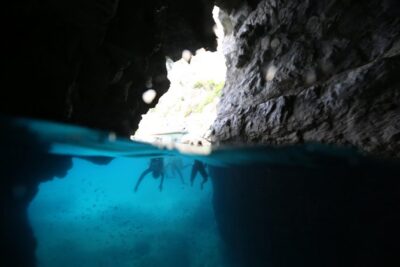
Blue Cave Small-Group Boat Tour from Dubrovnik
Read our review →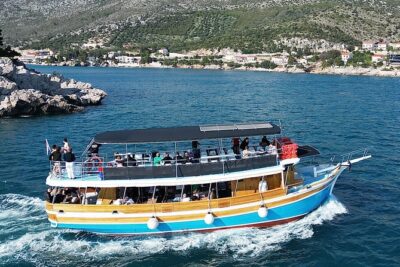
Full-Day Dubrovnik Elaphite Islands Cruise with Lunch and Drinks
Read our review →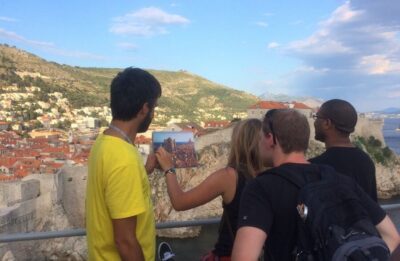
Epic Game of Thrones Tour + Lokrum & Saver Option
Read our review →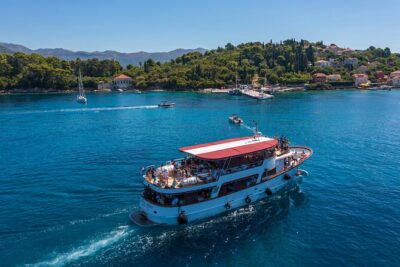
The Original Game of Thrones Tour & Lokrum Option
Read our review →
Dubrovnik Game of Thrones Tour & Optional Lokrum Island Visit
Read our review →