
Reviewed · KVARNER TOURS
Istria Highlights Tour from Rijeka or Pula
Small towns, big Istrian character. This seven-hour outing links Hum, Motovun, and Labin, three hill towns with very different personalities, while adding tastings of local food and wine. I like the mix of old stone streets and countryside driving, and I like that transportation, a guide, tastings, and insurance are included for $134.
The main caution is time. These towns are spread across Istria, so a ship docking late or a route change can cut visits short. Guide Dejan, along with guides Dean and Greg, has earned praise for clear local stories and good humor, but you should confirm the pickup time and exact stops before the day begins.
In This Review
- Key points to know before booking
- Why this tour works for seeing inland Istria
- Hum and the story of Istria in miniature
- Motovun above the Mirna River valley
- Labin, where medieval walls meet working artists
- The route is scenic, but seven hours goes quickly
- Food, wine, and Biska: what the tastings add
- The guides are an important part of the day
- Who should book this Istria day trip?
- Should you book the Istria Highlights Tour?
- FAQ
- Where does the Istria Highlights Tour depart from?
- How long does the tour last?
- Which towns are included?
- What is the price?
- What is included in the price?
- Is the tour offered in English?
- Is the tour wheelchair accessible?
- What should I bring?
- Is the tour suitable for pregnant women?
- Can I cancel for a full refund?
Key points to know before booking
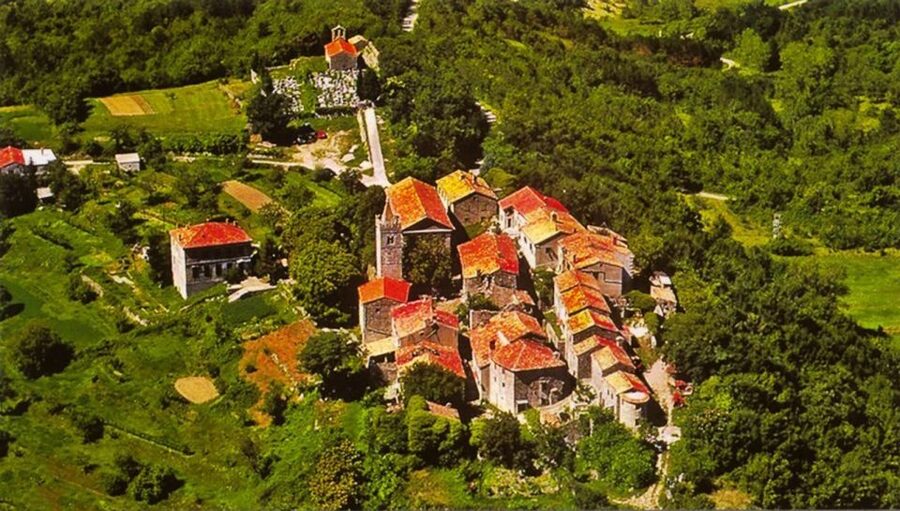
- Hum has fewer than 20 residents: You visit a tiny medieval settlement known as the smallest city in the world and the home of Biska, a mistletoe-spiced brandy.
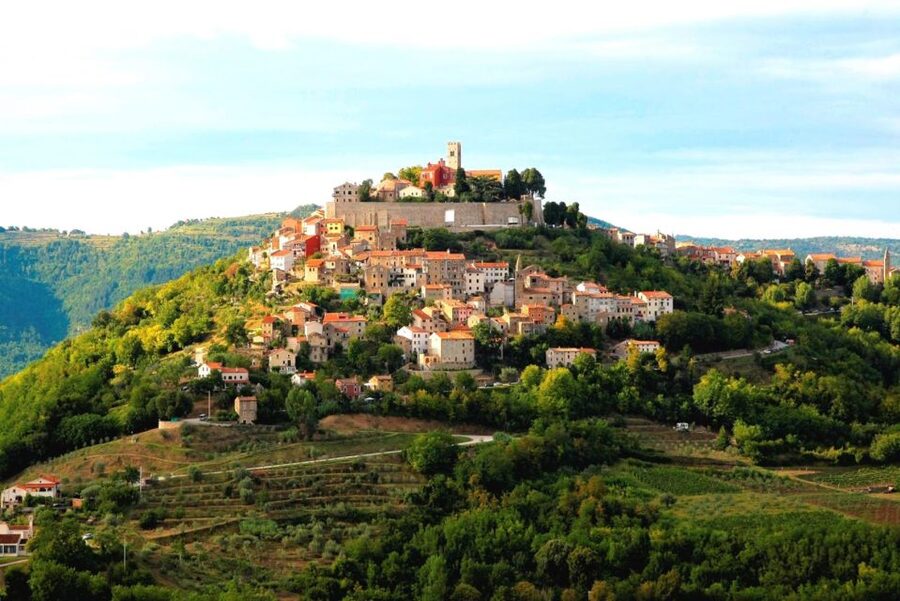
- Motovun gives you Istria’s classic hill-town view: The old town rises above the Mirna River valley, with medieval buildings, vineyards, and truffle country below.
- Labin adds art to the history: Its preserved old center includes galleries, artists’ studios, old gates, and a tower with a wide view.
- Food and wine are part of the price: Tastings include local delicacies and typical products, though the tasting quality may vary by personal taste.
- The seven-hour schedule is tight: Long drives and cruise-ship delays can reduce time in the towns.
- Pickup information may arrive late: One booking experience noted that the exact time and place were confirmed only the evening before.
Why this tour works for seeing inland Istria
Istria is easy to picture from its seaside towns, but its inland character is just as appealing. Stone villages sit on ridges, vineyards fill the lower ground, and old hilltop centers preserve the region’s medieval shape. This tour gives you a useful first look at that interior without asking you to arrange several separate bus rides or tastings.
At $134 per person, the value depends on what you want from the day. You are paying for a guide, private or arranged transportation, food and wine tastings, and insurance. That is reasonable if you want context and a fixed route. It is less attractive if you prefer long, slow visits or could easily drive between the towns yourself.
I would treat this as an efficient introduction rather than a relaxed, single-town visit. The guide helps explain what you are seeing, while the vehicle handles the distance between the three stops. The trade-off is that you may not have enough time to explore every lane, gallery, church, or viewpoint.
A few more Kvarner trips worth comparing
- Krk Island: Ziplining Tour
★ 4.8 · 522 reviews - Baška: Rab Island and Zavratnica Fjord Boat Tour with Lunch
★ 4.7 · 118 reviews - Opatija/Lovran: Boat Trip to Secluded Beaches on Island Cres
★ 4.9 · 114 reviews
Hum and the story of Istria in miniature
Hum is the smallest stop in population and perhaps the most unusual. Fewer than 20 people live there, yet the settlement has kept old civic customs alive. One of the most distinctive is the Election of the Prefect for a Year, when men from the parish gather at the Municipal Loggia and carve their votes into a wooden stick.
That detail gives Hum more personality than a simple photo stop. You are not just looking at stone walls. You are seeing a community that still connects its present life with an old village ritual.
Local legend says giants built the towns in the Mirna River valley and used leftover stones to build Hum. It is a charming story, especially when the surrounding hill towns are part of the same day. The legend also gives your guide a natural way to introduce the unusual shape of central Istria, where villages appear to grow from the high ground above the valley.
Hum is also associated with Biska, a brandy flavored with mistletoe and made from an old local recipe. The drink is one reason the town has gained attention beyond its tiny size. At the end of October, a Grappa festival brings producers from around Istria to the village.
The tasting portion may include local products and wine, but you should not expect a full food tour in every stop. One account found the tastings good but not exceptional. I would see them as a pleasant part of the outing and a way to sample regional flavors, not the main reason to book.
Motovun above the Mirna River valley
Motovun is the visual centerpiece of the route. Built high above the Mirna River, it has the classic Istrian hill-town profile: a fortified old center, stone buildings, and a road climbing toward the historic core.
The town’s 13th-century Romanesque-Gothic bell tower is next to the 17th-century parish church of St. Stephen. Its crenellated crown gives the skyline a strong medieval look. In the central square, the Romanesque Municipal Palace was once the largest secular building in Istria, an impressive claim for a town that now feels compact and walkable.
Your guide can help connect these buildings to the wider story of Istria. The value is not only in seeing an old church or palace, but in understanding how power, trade, and defense shaped hilltop towns. The old center is small enough to explore on foot, but the slopes and uneven stone surfaces are why comfortable shoes matter.
Motovun is also linked to two of Istria’s best-known products: truffles and wine. The forest below the town, reaching toward the Mirna valley, is known for truffles. White truffles are in season from September through December and are often compared with the finest examples from France and Italy.
Vineyards surround Motovun, producing Teran, a red wine, and Malvasia, a white. The area is also known for konobe, traditional restaurants serving local food. The tour may give you a taste of this food culture, though the seven-hour schedule does not leave room for a long, leisurely meal at every stop.
The strongest part of Motovun is the sense of place. From above the valley, you can see why inland Istria developed around fortified heights. The possible drawback is access and timing. You need to walk through an old hill town, and a delayed departure from Rijeka or a cruise terminal can make this stop feel rushed.
Labin, where medieval walls meet working artists
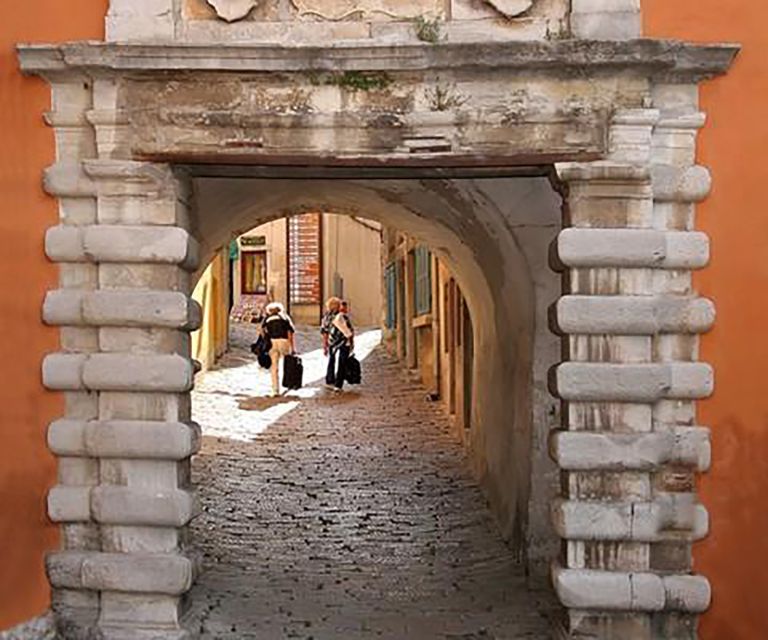
Labin offers a different mood from Motovun. The old town sits on a 320-meter hill, with the newer part below. Its historic center is described as the best-preserved acropolis in Istria, and the setting makes the distinction between old and new easy to understand.
You enter the old town through the Gate of St. Flor, built in 1587. Inside, cultural and historical monuments share space with galleries and artists’ studios. Around 30 artists live and work in Labin, giving the town a creative side that is not always present in medieval settlements.
A 17th-century tower provides a broad view. That viewpoint is one of the reasons Labin balances the route well. Hum is tiny and traditional. Motovun is the grand hilltop symbol. Labin adds art, urban history, and a larger old center.
Nearby Dubrova is home to the Sculpture Park, where an International Sculptors Symposium has taken place for about 40 years. In summer, the old center becomes the Art Republic, combining music, performance, and fine arts.
The schedule may not allow time for all of these cultural events or nearby sites. Think of Labin as a place where your guide points out the artistic identity and historic structure, rather than as a full museum visit. If you care especially about galleries or sculpture, ask how much time is planned there.
Still Kvarner, at a slower pace:
- Zipline Experience Krk
★ 4.5 · 102 reviews - Opatija: Cliffs and caves kayak adventure
★ 4.9 · 78 reviews - Sunset or Swim Ride Opatija on Madonnina Boat Tour
★ 4.8 · 72 reviews - Wild Bays of Krk Island: A private half day boat tour
★ 5.0 · 59 reviews
The route is scenic, but seven hours goes quickly
The tour lasts seven hours, and that includes driving between towns. You will cover a fair stretch of Istria, so the vehicle is a major part of the experience. One booking account specifically praised the beautiful countryside and the quality of the vehicle.
This format is useful if you are staying in Rijeka or arriving at the cruise terminal. Pickup is provided at your accommodation in Rijeka or at the cruise terminal. The activity is also marketed for departures from Pula, so if you are based there, confirm the exact pickup arrangement before paying.
Cruise passengers should be especially careful with the clock. A ship docking late caused one outing to lose time at several stops. That is not a small issue on this route. A delay at the start can mean shorter visits later, and you may not see all three towns as fully as planned.
The exact pickup time and location may be sent only the evening before. That can be awkward if you are arranging port plans, but it is a practical reason to keep your schedule open and check your messages before the tour date.
A route change is also possible. One outing replaced Labin with Rovinj, and another did not reach the final village. Since Rovinj is a major destination in its own right, a substitution is not automatically bad, but it should be announced clearly. If Hum, Motovun, and Labin are the reason you booked, confirm that those are the intended stops.
Food, wine, and Biska: what the tastings add
The included tastings help turn a sightseeing day into a regional introduction. You may sample local delicacies, typical products, and wine, with Biska providing a particularly local connection to Hum.
I like tastings on a route such as this because they give you a quick sense of how the region is used, not just how it looks. Teran and Malvasia connect Motovun to the vineyards around the valley. Biska connects Hum to a specific old recipe and a local festival. Truffles link Motovun to the forest below.
Still, keep expectations sensible. The tasting is included, but this is not presented as a specialist culinary tour. One experience found the food and drink good without finding them exceptional. Your enjoyment will depend on what is served and how much you already know about Istrian food and wine.
If you want a longer meal, a dedicated wine tour, or a serious truffle experience, you may prefer a different outing. If you want a few regional tastes alongside history and scenery, the inclusion makes the $134 price easier to justify.
The guides are an important part of the day
The best praise has gone to the guides. Dejan was singled out for local color and sightseeing, while Dean was described as patient, informative, and entertaining. Greg also received praise for making the day both informative and enjoyable.
That matters because the towns are small and the route is fast. Without a guide, you would see stone lanes, towers, and churches, but you could miss the customs, legends, wine traditions, and artistic connections that give each place meaning.
The guide also has to manage a difficult balance: explain enough, keep the group moving, and adjust when a ship arrives late or a stop changes. The available feedback suggests the guides handle this well, but the itinerary itself can still limit what they can show you.
I would ask questions during the drive. The long transfers are a good time to learn about Istria, the Mirna River valley, the hill towns, and the local products. The strongest guides on this route appear to make the vehicle time useful rather than treating it as dead time.
Who should book this Istria day trip?
This tour suits you if you:
- Want to see inland Istria from Rijeka or a cruise port
- Prefer a guided day to arranging several connections
- Enjoy medieval towns, viewpoints, local stories, and regional tastings
- Have only one day available
- Are happy with an active schedule and several short visits
- Want transportation and tastings included in one price
It may not suit you if you want to linger in one town, shop slowly, spend hours at galleries, or plan a long meal. Pregnant women are listed as not suitable for the activity. The tour is wheelchair accessible, but you should still consider that Hum, Motovun, and Labin are historic hill towns with old streets and slopes.
Bring a passport or ID card and comfortable shoes. English is the tour language, and the listed experience includes a live English-speaking guide.
Should you book the Istria Highlights Tour?
I would book this tour if my time in the region were short and I wanted a useful first look at inland Istria. Hum, Motovun, and Labin offer three distinct stops, the guides add much-needed context, and the included vehicle and tastings make the price reasonable for a full day of sightseeing.
I would be more cautious if I were arriving by cruise ship with a tight schedule. Ask how the operator handles late docking, confirm the planned towns, and find out when pickup details will arrive. The route can be excellent, but it works best when the day starts on time.
For independent explorers, the chief benefit is convenience. For history lovers, it is the commentary. For food fans, it is a sampler rather than a full culinary event. Book it for the combination of hill towns and local stories, not for a slow, deep visit to any one place.
FAQ
Where does the Istria Highlights Tour depart from?
Pickup is provided at your accommodation in Rijeka or at the cruise terminal. The experience is also offered from Pula, so confirm the exact meeting details if you are staying there.
How long does the tour last?
The tour lasts seven hours, including transportation between the Istrian towns.
Which towns are included?
The planned route includes Hum, Motovun, and Labin. A route change may occur, so confirm the stops before departure.
What is the price?
The listed price is $134 per person.
What is included in the price?
The price includes a guide, transportation, food and wine tastings, and insurance.
Is the tour offered in English?
Yes. The listed tour language is English, and it includes a live English-speaking guide.
Is the tour wheelchair accessible?
Yes, the activity is listed as wheelchair accessible.
What should I bring?
Bring a passport or ID card and comfortable shoes.
Is the tour suitable for pregnant women?
No. Pregnant women are listed under the groups not suitable for this activity.
Can I cancel for a full refund?
Yes. You can cancel up to 24 hours in advance for a full refund. You can also reserve now and pay later.
Just added around Kvarner
- Winery Tour and Tasting with the Sommelier in KRK★ 4.5 · 10 reviews
- Zipline Experience Krk★ 4.5 · 102 reviews
- Taxi boat Kormat★ 5.0 · 9 reviews
- Wild Bays of Krk Island: A private half day boat tour★ 5.0 · 5 reviews
- Half-Day Wakeboard or Waterski in Krk Croatia★ 4.5 · 9 reviews
- PUBLIC 5h Plavnik Island swimming & snorkeling Half-day Boat trip★ 5.0 · 5 reviews
- Swimming and Snorkeling on the Wild Bays 3.5 Hours (PUBLIC)★ 5.0 · 11 reviews
- Private 7,5h Plavnik Island & Wild Bays Full-day Boat Trip★ 5.0 · 13 reviews
Kvarner Tours, compared.

Rab Island and Zavratnica Fjord Boat Tour with Lunch
Read our review →
Opatija/Lovran: Boat Trip to Secluded Beaches on Island Cres
Read our review →
Sunset or Swim Ride Opatija on Madonnina Boat Tour
Read our review →
Wild Bays of Krk Island: A private half day boat tour
Read our review →
Rab & Pag Boat Trip with Swimming & City Tour with lunch
Read our review →Browse the lists this tour appears in