
Reviewed · OLD TOWN TOURS
Dubrovnik Old Town: Small-Group Walking Tour With A Local
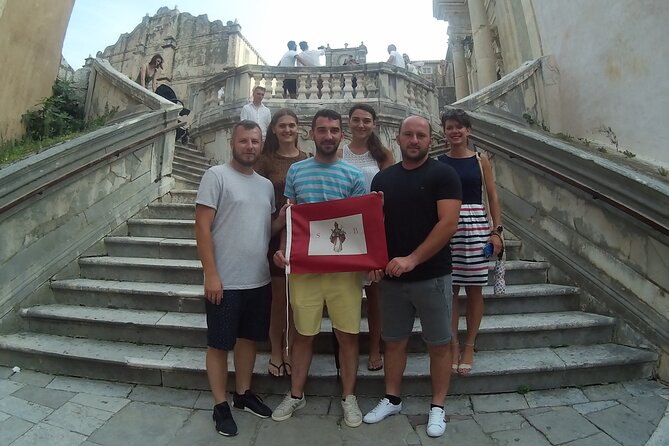
Dubrovnik makes a strong first impression. This compact walking tour helps you read the city beyond its polished stone streets, pairing the main sights with local stories, old legends, and small details you could easily miss alone. I especially like the maximum group size of eight, which gives you a real chance to hear the guide and ask questions. I also like the local focus, with stories about daily life, Dubrovnik’s Jewish community, its old pharmacy, and the city’s maritime past.
The route covers a lot in 90 minutes to two hours, from Ploče Gate to Pile Gate. The main drawback is that entrance fees are not included, and the tour does not go inside churches or museums that charge admission. You get an excellent outdoor introduction, but you will need a separate plan for the Rector’s Palace, cathedral interiors, city walls, or other paid sights.
In This Review
- Key points to know before booking
- Starting at Ploče Gate, Dubrovnik’s eastern doorway
- Dominican Monastery and the old city harbor
- Cathedral stories, Jesuit steps, and Gundulić Square
- Rector’s Palace and the politics of the Republic
- Sponza Palace, the Bell Tower, and Saint Blaise
- Dubrovnik’s Jewish community and the narrow streets beyond Stradun
- Onofrio’s Fountain and the Franciscan monastery
- Why the small group changes the experience
- Timing, weather, and what to bring
- Who should book this Dubrovnik walk?
- Should you book the small-group Old Town tour?
- FAQ
- How long does the Dubrovnik Old Town walking tour last?
- Where does the tour begin?
- Where does the tour end?
- How many people can join the tour?
- Are entrance fees included?
- What happens if the weather is poor?
Key points to know before booking
- Small groups make the history easier to follow: The tour is capped at eight people, and some departures have been as small as three or even one guest.
- The route crosses the entire Old Town: You begin at Ploče Gate on the eastern side and finish near the large Onofrio Fountain by Pile Gate.
- Local guides add personal detail: Guides such as Marko, Markus, and Lucy have been praised for mixing local knowledge with humor, questions, and stories about modern life.
- The tour stays outdoors: You see the Cathedral, Rector’s Palace, Sponza Palace, and monasteries, but paid interior admission is not part of the experience.
- A good first activity in Dubrovnik: The route gives you names, landmarks, and historical context that make later independent exploring easier.
- Book with the weather in mind: The experience requires good weather, and free cancellation is available up to 24 hours before the start time.
Starting at Ploče Gate, Dubrovnik’s eastern doorway
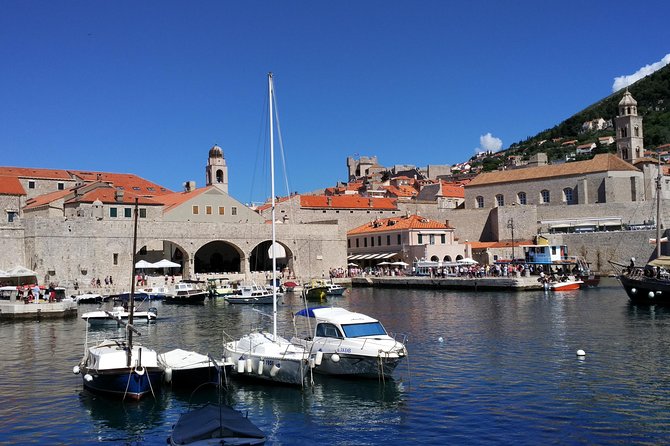
The meeting point is at the Harbour Viewpoint near Ploče Gate, the eastern entrance to the Old Town. This is a useful starting place because the guide can explain Dubrovnik before you are swept into its busiest streets.
Your introduction covers the beginnings and historical importance of the city. Dubrovnik was not simply a pretty Adriatic port. It developed as the Republic of Ragusa, a small maritime state that used trade, diplomacy, and careful political judgment to protect its independence.
That opening context matters. Without it, the Old Town can feel like a series of handsome buildings. With it, the gates, harbor, palaces, warehouses, churches, and public statues begin to fit together as parts of a working republic.
The group then moves into the Old Town streets. The pace is generally easy, and the route is designed to cover the essential sights rather than linger inside any one attraction. The guide’s job is to connect the buildings, not simply point at them.
More Old Town Tours in Dubrovnik
- Dubrovnik: Old Town Walking Tour
★ 4.8 · 5,174 reviews - Dubrovnik Discovery Old Town Walking Tour
★ 5.0 · 4,458 reviews - Dubrovnik Old Town History Walking Tour
★ 5.0 · 1,684 reviews
Dominican Monastery and the old city harbor
The Dominican Monastery is one of the first major stops. It is described as the oldest still-active monastery in Dubrovnik, giving you an early look at the religious institutions that shaped public life in the city.
You should not expect a full interior visit here. The tour does not include admission to sites that require a ticket, so the stop is mainly about the building, its place in the Old Town, and the role of the Dominican order.
From there, the route reaches the City Harbor. This was once the trade center of the Dubrovnik Republic, where wooden galleons were built and goods moved through the port. The harbor is a good place to hear about Dubrovnik as a sea power rather than as a sightseeing destination.
I find this part especially useful because it corrects a common modern impression. Dubrovnik’s polished streets and grand buildings were supported by commerce, shipbuilding, diplomacy, and a careful relationship with the sea. The harbor gives those facts a physical setting.
Cathedral stories, Jesuit steps, and Gundulić Square
The Cathedral of the Assumption of the Virgin Mary comes next. Its Baroque design is striking, but the guide also uses it to tell stories about the cathedral’s complicated past. The playful question of whether Dubrovnik has had one cathedral or three introduces layers of rebuilding and change without turning the stop into a lecture.
The cathedral interior is not included, so plan to return if you want to see it properly. The short outdoor explanation is best treated as an orientation, not a substitute for visiting the building.
The Church of St. Ignatius of Loyola brings a different subject: the Jesuits in Dubrovnik. You hear when this powerful Catholic order arrived and why it mattered. The guide also tells the story of a famous Jesuit from Dubrovnik whose name is linked to a crater on the Moon, an unusual detail that helps the stop stick in your memory.
At the Monument of Poet Ivan Gundulić, the tour reaches a market square associated with Dubrovnik’s most famous poet from the old republic. The point is not only the statue. You also get a sense of how this public space functioned as part of everyday city life.
Guides may use questions or a small scoring game along the route. Marko, in particular, has been praised for using friendly competition to keep people paying attention. That approach works well here. You are not simply listening to a string of dates. You are looking for details, recalling names, and taking part in the explanation.
Rector’s Palace and the politics of the Republic
Rector’s Palace is one of the most important stops on the walk. It once housed the supreme political institution of the Dubrovnik Republic, making it the natural place to discuss the old aristocracy, political judgment, and the curious rules that governed public life.
The guide focuses on stories rather than an extended architectural tour. You will hear about the people who held power and some of the stranger details connected with the palace. Those details are valuable because Dubrovnik’s political system can otherwise sound abstract.
Admission to the palace is not included. If you want to explore its rooms and collections, return later with a separate ticket. This walking tour gives you the framework first, which can make a later museum visit more rewarding.
Nearby, the statue of Renaissance playwright Marin Držić adds a lighter moment. His golden nose is polished by people touching it, and the guide explains both his life and the custom. It is an easy detail to remember, and it gives the route a bit of local humor.
More Walking Tours in Dubrovnik
- Dubrovnik: Game of Thrones Walking Tour
★ 5.0 · 1,732 reviews - Dubrovnik: City Walls Early Morning or Sunset Walking Tour
★ 4.8 · 1,523 reviews - Dubrovnik: Ancient City Walls & Wars Walking Tour
★ 5.0 · 1,270 reviews - Dubrovnik: Game of Thrones Walking Tour
★ 4.9 · 981 reviews
Sponza Palace, the Bell Tower, and Saint Blaise
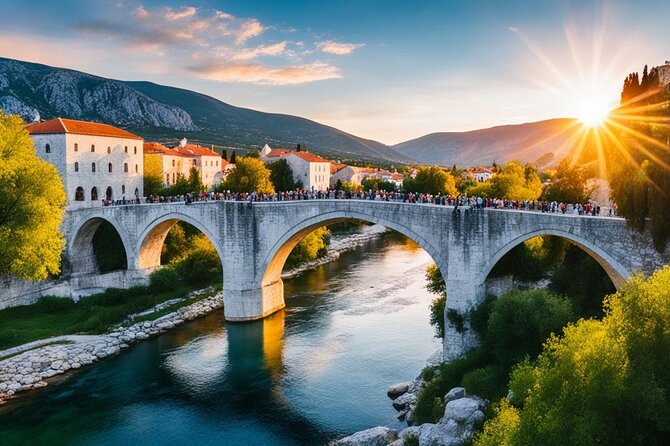
Sponza Palace once served as the customs house of the Dubrovnik Republic. Today it houses the historical archives, so the building links the city’s commercial past with the records that preserve it.
The guide explains why Sponza mattered and shares Latin proverbs associated with the palace. This is the kind of stop that benefits from a local guide. You can admire the stonework on your own, but you are unlikely to understand the building’s old purpose or the meaning behind its inscriptions without some help.
The Bell Tower follows. Its special features are explained briefly, and the stop keeps the route moving through the central part of the Old Town.
Then comes the Church of Saint Blaise, dedicated to Dubrovnik’s patron saint. Statues of Saint Blaise appear throughout the city, and the guide explains the legend as well as the historical account connected with him. I like this combination of legend and fact. It respects the city’s traditions while helping you separate religious storytelling from documented history.
The Orlando Column is another central landmark. The guide tells the story of the brave knight Orlando and explains how he became a symbol of the old Dubrovnik Republic. This is a short stop, but it helps you understand how public monuments once expressed the city’s identity and independence.
Dubrovnik’s Jewish community and the narrow streets beyond Stradun

The walk continues to the Dubrovnik Synagogue, where the subject shifts to the city’s Jewish community. You hear about its early days, periods of hardship, and continuing presence in Dubrovnik.
This is one of the more valuable stops because it broadens the usual Old Town story. Dubrovnik is often presented through walls, churches, palaces, and famous rulers. The synagogue introduces the people and communities who also formed the city’s social fabric.
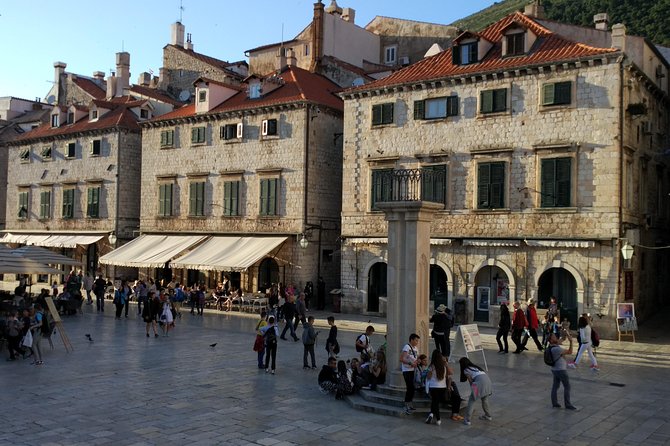
The tour then heads along Stradun, the bright limestone main street. This is Dubrovnik’s best-known public space, and walking its full length gives you a clear sense of the Old Town’s central axis.
Stradun is beautiful, but it is also the place where crowds can be most noticeable. A small group helps here. You can stay close to the guide without trying to hear a voice floating over a large crowd, and you can stop for a question without holding up dozens of people.
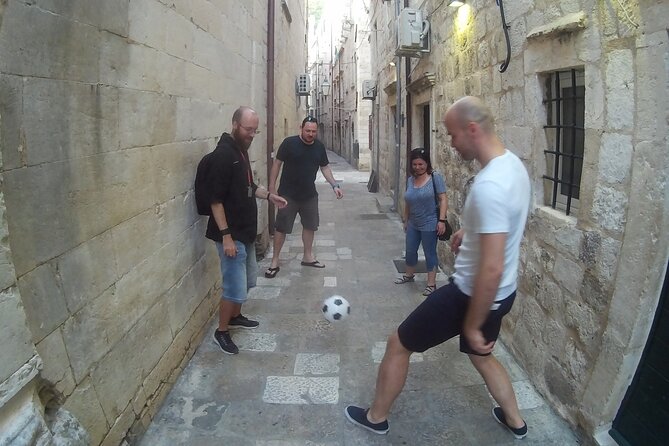
A turn toward the Church of St. Roch reveals a quieter corner. The guide points out old graffiti on the side wall and explains that children played football in front of the church in the 16th century. That small story is precisely the sort of detail I value in a walking tour. It moves the Old Town away from grand monuments and toward ordinary life.
Onofrio’s Fountain and the Franciscan monastery
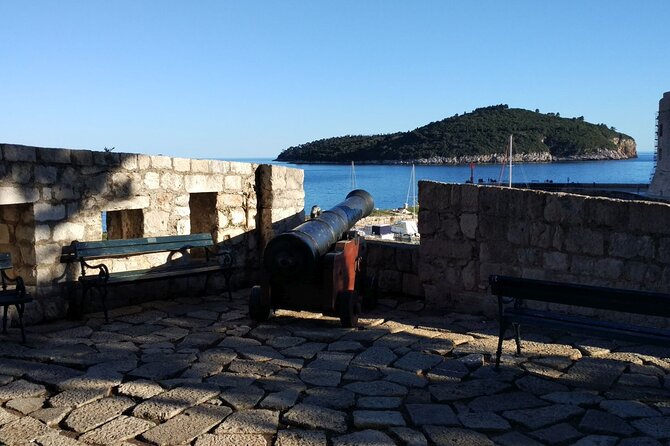
The Onofrian Fountain is tied to Dubrovnik’s 15th-century aqueduct. It marked the end point of the old water system, so the guide explains why the fountain mattered to the city.
The large fountain near Pile Gate is also where the tour ends. That makes the route easy to use for the rest of your day. You can continue toward Pile Gate, walk outside the walls, find a café, or begin another activity without needing to return to the eastern side of the Old Town.
Before the finish, the route includes the Franciscan Church and Monastery. The guide discusses the monastery’s pharmacy, described as the third-oldest in Europe by continuity of operation, along with the Franciscans’ contribution to Dubrovnik society.
Again, the tour does not include paid admission. You see the exterior and receive the historical explanation, then decide if the interior deserves a separate visit. If pharmacies, manuscripts, religious art, or monastic history interest you, this is one stop to mark for later.
Finally, at Pile Gate, the guide explains the end of the Dubrovnik Republic. Ending with that political turning point gives the walk a clear shape. You begin with the city’s origins and purpose, then finish by considering how the republic came to an end.
Why the small group changes the experience
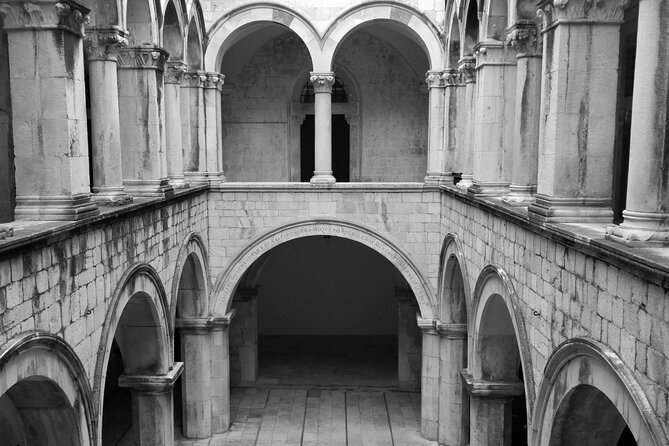
The $34.59 price is reasonable for a licensed guide and a route that covers nearly all of the Old Town’s major public sights. You are paying for explanation, pacing, and access to a local perspective, not for entry tickets.
The group limit is the strongest part of the value. A large walking group can make Dubrovnik’s narrow streets feel even more crowded, and it is hard to ask questions when the guide is addressing 30 or 40 people. With a maximum of eight, the tour feels more like a conversation.
The feedback gives particular credit to Marko for making history fun, using trivia, questions, and a simple contest. Markus is praised for being raised in the Old Town and offering practical tips suited to individual needs. Lucy and Lucia are also named in positive comments about friendly, attentive guiding.
Guide assignment can vary, so you should not book solely on the expectation of one person. The consistent feature is the small-group format and local guiding style.
The tour is offered in English and includes a mobile ticket. It is near public transportation, and service animals are allowed. Most people can participate, though you should remember that this is a walking route through an old stone city. One detailed account notes that the guide adjusted the pace for a guest with minor mobility issues, but that should be viewed as a good example of attentiveness, not a guarantee of a custom itinerary.
Timing, weather, and what to bring
Allow up to two hours, even though the advertised duration begins at 90 minutes. The stops themselves are short, often two to ten minutes, but the route includes many landmarks and time for walking, questions, and explanations.
I would schedule this early in your Dubrovnik visit. The walk gives you a map in your head and helps you recognize the Cathedral, Rector’s Palace, Sponza Palace, Stradun, Saint Blaise, and both city gates when you return on your own.
Wear comfortable shoes and bring water. The tour is outdoors, and Dubrovnik’s stone streets can be tiring even when the pace is easy. Since the experience requires good weather, keep a little flexibility in your schedule.
You can cancel for a full refund up to 24 hours before the start time. If poor weather cancels the tour, you are offered another date or a full refund. The same applies if the minimum number of participants is not reached.
Who should book this Dubrovnik walk?
I would recommend this tour to first-time visitors who want a clear introduction without committing to a long half-day program. It also suits couples, families, and solo visitors who prefer a small group and an active guide.
It is especially useful if you enjoy history presented through stories. The golden nose of Marin Držić, old football graffiti, Latin proverbs, the Moon crater connection, and the Saint Blaise legends give you memorable hooks instead of a list of dates.
You may want something else if your main goal is to visit interiors. The tour does not include entrance to the cathedral, Rector’s Palace, Dominican Monastery, Sponza Palace, Synagogue, or Franciscan Monastery. It will point you toward those places, but you must budget extra time and admission fees for them.
Should you book the small-group Old Town tour?
Yes, if you want a well-priced first look at Dubrovnik with a real chance to interact with your guide. The route covers the full historic center, begins at Ploče Gate, ends near Pile Gate, and adds local stories that are easy to miss when you explore alone.
Book it early if your dates are fixed, since it is often reserved well ahead of time and the group is limited to eight. For the best value, take the walk near the start of your stay, then revisit the interiors and museums that catch your interest.
Skip it only if you already know Dubrovnik well or want a tour devoted mainly to paid attractions. For everyone else, this is a practical, friendly way to get oriented before the city’s walls, churches, and palace rooms begin to blur together.
FAQ
How long does the Dubrovnik Old Town walking tour last?
The tour lasts approximately 90 minutes to two hours. The route includes many short stops and walking time between Ploče Gate and Pile Gate.
Where does the tour begin?
It begins at the Harbour Viewpoint near Ploče Gate, at Ul. Svetog Dominika bb in Dubrovnik.
Where does the tour end?
The tour ends near Pile Gate, by Onofrio’s Large Fountain at Poljana Paska Miličevića.
How many people can join the tour?
The tour has a maximum of eight participants. Some departures may have fewer people.
Are entrance fees included?
No. The tour does not visit churches or museums that require entrance fees, and admission to places such as Rector’s Palace, Sponza Palace, the cathedral, and the monasteries is not included.
What happens if the weather is poor?
The experience requires good weather. If it is canceled because of poor weather, you can choose a different date or receive a full refund. You can also cancel up to 24 hours before the start time for a full refund.
Just added around Dubrovnik
- Full- Day Private Speedboat Tour in Dubrovnik on Elaphiti Islands★ 5.0 · 21 reviews
- Elaphiti Islands Private Dubrovnik Boat Unique Experience★ 5.0 · 10 reviews
- PRIVATE Wine Tour to Konavle country side★ 5.0 · 11 reviews
- Wine Lover’s Tour of Peljesac Peninsula★ 5.0 · 150 reviews
- Wine tour peninsula Pelješac★ 5.0 · 3 reviews
- Parasailing in Cavtat★ 5.0 · 62 reviews
- Welcome to Dubrovnik Walking Tour★ 5.0 · 36 reviews
- Dubrovnik at War 1991-1992 Private Walking Tour★ 5.0 · 4 reviews
Old Town Tours, compared.
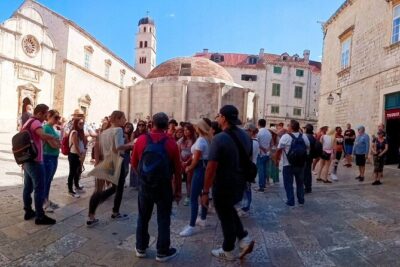

Plitvice Lakes with Boat Ride and Zadar Old Town Tour
Read our review →
Plitvice Lakes with Boat Ride & Zadar Old town tour
Read our review →
Dubrovnik Combo: Old Town & Ancient City Walls
Read our review →
Browse the lists this tour appears in