Reviewed · PRIVATE
Dubrovnik Homeland War Private Tour
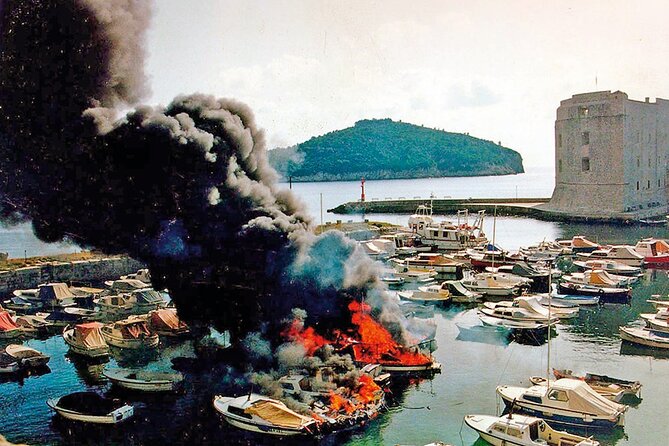
History here still has a pulse. This private Dubrovnik walk links the city’s grand squares and churches with the 1991 to 1992 Homeland War, often through personal stories from guides who lived through it. I especially like the intimate format and the visit to the Homeland War Memorial Room in Sponza Palace. I also like that the route covers the Old Town from the eastern gate to Pile, rather than stopping at one postcard view.
The main consideration is its serious subject matter. This is not a light sightseeing stroll, and personal accounts of the siege may be emotional. At about $120.16 per person for two and a half hours, it offers strong value for history-minded visitors, but it may feel expensive if you only want Dubrovnik’s architecture or a quick introduction to the city.
In This Review
- Key points to know before you book
- Why this tour adds a modern layer to Dubrovnik
- Starting at Revelin Fortress and the eastern entrance
- City walls, the harbor, and the defensive story
- Luža Square and the most important indoor stop
- Stradun, Buža Gate, and the city’s public face
- Gundulić Square and the everyday city
- Rector’s Palace and the old republic
- The Cathedral, Treasury, and Ponta Gate
- Jesuit Staircase and the quieter streets
- St. Joseph, Placeta, and Ivo Grbić’s house
- Franciscan Monastery and the western approach
- Finishing at Pile Gate and Kolorina Bay
- What the $120.16 price really buys you
- Who should book this private walk?
- Should you book the Dubrovnik Homeland War Private Tour?
- FAQ
- Where does the Dubrovnik Homeland War Private Tour start?
- Where does the tour finish?
- How long does the tour last?
- Is this a private tour?
- What language is offered?
- Is entry to the Homeland War Memorial Room included?
- Are food and drinks included?
- Can most people participate?
- Can I cancel for a full refund?
Key points to know before you book
- Personal wartime perspective: Guides such as Mato and Vlaho share firsthand knowledge of the conflict and its effect on soldiers and civilians.
- A full Old Town crossing: The walk begins near Ploče Gate and finishes by Pile Gate, passing major landmarks along the way.
- Memorial room included: Your ticket covers entry to the Homeland War Memorial Room inside Sponza Palace.
- More than a battlefield tour: You also see Luža Square, Stradun, Rector’s Palace, the Cathedral, Jesuit Staircase, and Franciscan Monastery.
- Private and flexible in feel: Only your group takes part, making it easier to ask questions and shape the conversation around your interests.
- Plan for a walking route: Food, drinks, and personal purchases are not included, and the tour needs good weather.
Why this tour adds a modern layer to Dubrovnik
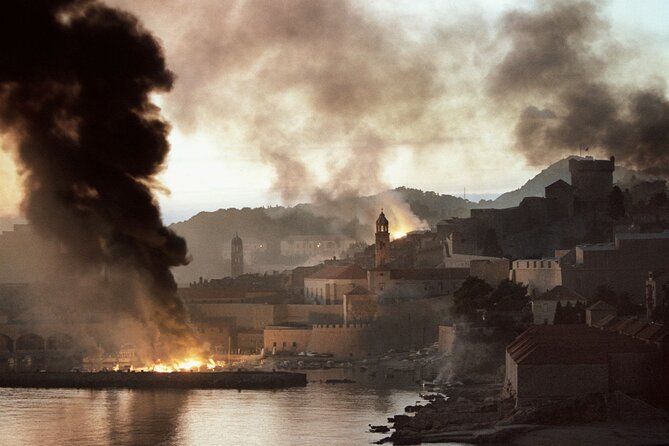
Dubrovnik is easy to admire at a distance. You see pale stone, polished streets, church towers, and fortress walls. Yet the city’s recent past can disappear beneath the medieval scenery unless someone explains where the shelling happened, how residents lived through it, and why the war still matters to local people.
That is the purpose of this tour. It places the Homeland War within the older story of Dubrovnik, the former Republic of Ragusa, and the city’s long tradition of self-rule. You are not simply taken from one landmark to another. The route gives the Old Town a second reading.
A veteran guide can add something a standard city walk cannot. Mato has shared personal stories about his own experience and about friends and family during the war. Vlaho has explained the complicated political situation, as well as the effect of the conflict on both soldiers and civilians. Those accounts are direct and human, not just a list of dates.
The tour also remains broad enough for visitors who do not want a full military history lesson. It includes Dubrovnik’s main square, famous religious buildings, city gates, fountains, and harbor views. One guide even adjusted the conversation to include interests such as Game of Thrones, showing that the experience can cover more than one side of the city.
A few more Dubrovnik trips worth comparing
- Blue Cave Small-Group Boat Tour from Dubrovnik
★ 5.0 · 9,360 reviews - Full-Day Dubrovnik Elaphite Islands Cruise with Lunch and Drinks
★ 5.0 · 8,823 reviews - Dubrovnik: Epic Game of Thrones Tour + Lokrum & Saver Option
★ 4.9 · 5,995 reviews
Starting at Revelin Fortress and the eastern entrance
The meeting point is on Ulica Vrata od Ploča, by the eastern side of the Old Town, near Revelin Fortress. This is a useful place to begin because it puts you beside one of Dubrovnik’s major defensive approaches.
The first ten minutes are for introductions and orientation. Your guide welcomes you to Dubrovnik and sets out the shape of the walk. Since the tour is private, you can use this opening to explain whether you are most interested in military history, architecture, local life, or the city’s wider past.
Revelin is also a sensible reminder that Dubrovnik was built to protect itself. The fortress and gate are not isolated sights. They are part of a defensive system that becomes easier to understand as you look toward the walls, harbor, and neighboring fortifications.
City walls, the harbor, and the defensive story
The next stop takes about 20 minutes near Dubrovnik’s city walls. You hear about the city’s history while looking toward the old harbor, Fortress of St. John, St. Luke’s fortifications, and the Dominican Monastery.
The supplied details do not indicate that you walk on top of the city walls, so do not book this as a city-wall admission tour. The walls are used as a viewpoint and a way to explain Dubrovnik’s defenses. That distinction matters because a separate wall walk can take much longer and requires its own ticket.
This portion should help you picture how exposed or protected different parts of the city were. The harbor, gates, towers, and monasteries are not just attractive backdrops. They help explain the physical setting of the 1991 to 1992 attacks and the practical challenges faced by people inside the Old Town.
If you enjoy military sites, this is one of the strongest early sections. If you prefer art and architecture, the Dominican complex and harbor views keep it from feeling too technical.
Luža Square and the most important indoor stop

Luža Square gathers several of Dubrovnik’s best-known buildings in a small area. You see the Clock Tower, Small Onofrio’s Fountain, City Hall, and the Church of St. Blaise. The square is a good place for your guide to connect civic life, religion, and the city’s old government.
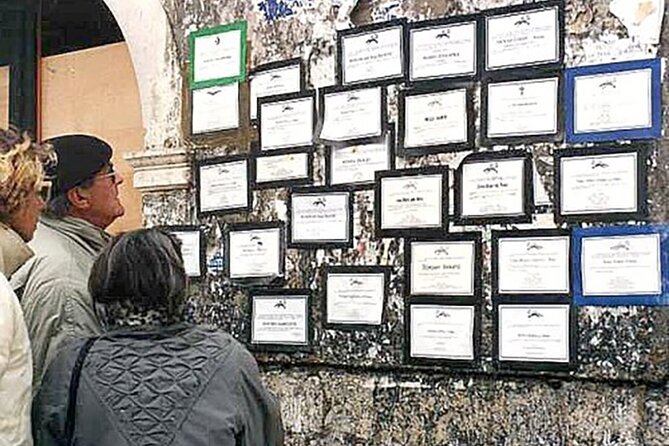
The key visit here is the Homeland War Memorial Room in Sponza Palace. Entry is included, and you can see photographs and videos connected with the war. This is the one clearly identified indoor memorial visit, so allow it proper attention rather than treating it as a quick extra.
Sponza Palace itself carries a lot of historical weight as one of Dubrovnik’s finest old buildings. Inside, the memorial material changes the mood. Instead of seeing the city only as an ancient monument, you are confronted with its very recent damage and the people who defended and endured it.
This is likely to be the most affecting part of the tour. A 14-year-old participant was able to follow the material and respond strongly to the human side of the story, but parents should decide if the subject suits their child. The tour deals with war plainly, not as a theatrical attraction.
Still Dubrovnik, at a slower pace:
- Dubrovnik: Elaphiti Islands Full-Day Cruise with Lunch
★ 5.0 · 5,938 reviews - Dubrovnik: Old Town Walking Tour
★ 4.8 · 5,174 reviews - Dubrovnik: The Original Game of Thrones Tour & Lokrum Option
★ 4.8 · 5,064 reviews - Dubrovnik Game of Thrones Tour & Optional Lokrum Island Visit
★ 5.0 · 4,702 reviews
Stradun, Buža Gate, and the city’s public face
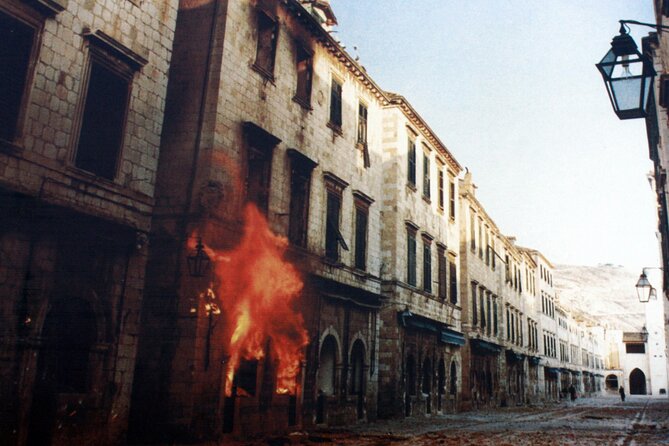
The walk continues along Stradun, Dubrovnik’s main street, and toward Ruđera Boškovića Street and Buža Gate. Stradun is the city’s social and visual center, but on this tour it becomes part of a larger story about movement through the Old Town.
Buža Gate opens the conversation toward the edge of the city and its defensive position. The ten-minute stop is brief, so do not expect a long architectural lecture at every doorway. The value comes from the way the guide keeps connecting ordinary streets to the city’s wartime experience.
This is also a good point to ask questions. A private tour works best when you are willing to interrupt politely and pursue details. Guides have spent extra time answering questions, and that personal exchange is one of the main reasons to choose this format over a large group walk.
Gundulić Square and the everyday city
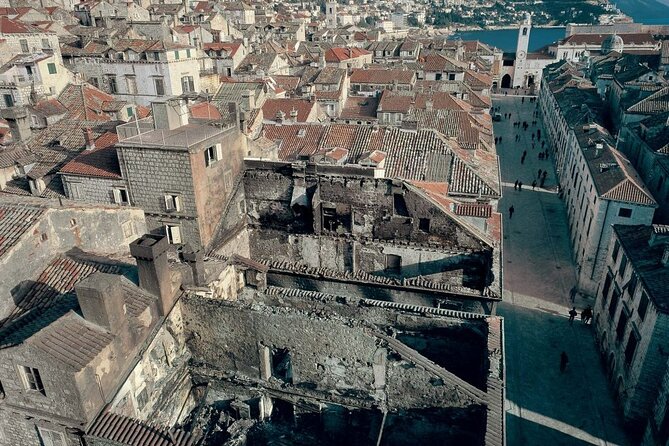
At the monument to poet Ivan Gundulić, the route reaches the green market, Pucić Palace, and a small fountain. The stop lasts about ten minutes and offers a change of pace from fortifications and memorial material.
A market square helps you see Dubrovnik as a lived-in place. The city is not only a historic shell, and the market brings attention back to local routines. The presence of the Pucić Palace and fountain also shows how civic and residential buildings sit close together in the compact Old Town.
This is not a food tour, and no food or drinks are included. You may see places to buy refreshments, but personal purchases are your responsibility. If the weather is warm, plan to carry water before you start, since the route moves through stone streets with several uphill or stair sections later on.
Rector’s Palace and the old republic
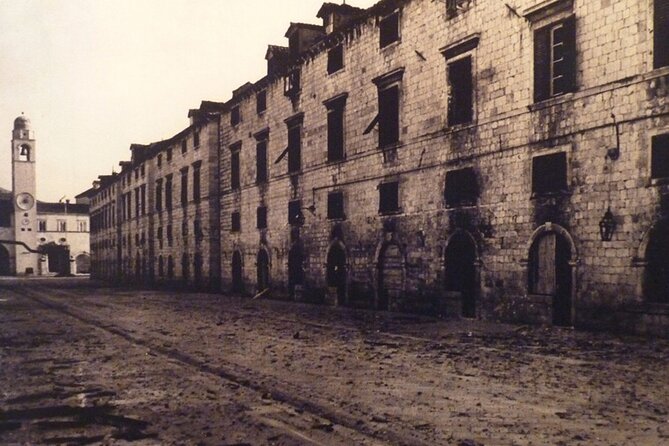
Rector’s Palace was the seat of government for the Republic of Dubrovnik. The 15-minute stop gives your guide a chance to explain the political identity that shaped the city long before modern Croatia.
This context is valuable because the Homeland War did not happen in a vacuum. Dubrovnik’s sense of independence, diplomacy, and self-government reaches back centuries. The palace helps connect those older civic traditions with the modern struggle for Croatian independence.
The information provided describes this as an exterior stop rather than a paid palace visit. If entering the palace is a priority, ask before booking, since the included admission specifically applies to the memorial room, not to every building along the route.
The Cathedral, Treasury, and Ponta Gate
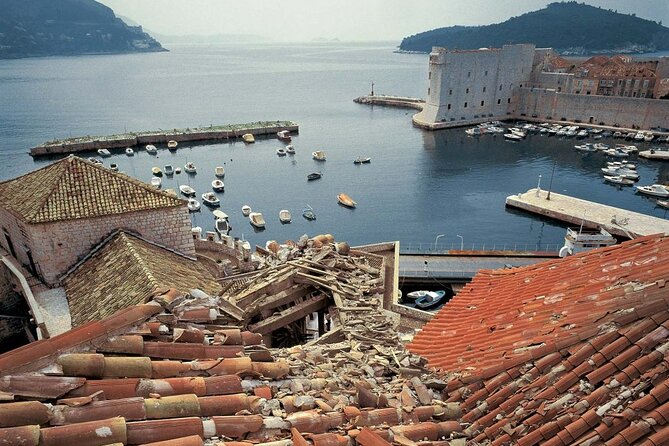
The Cathedral of the Assumption of the Virgin Mary is another ten-minute stop. You see the cathedral, the Treasury of the Republic, the Bishop’s Palace, and Ponta Gate.
This section adds religious and economic context to the tour. Dubrovnik’s churches and treasury reflect the wealth, faith, and careful civic organization of the old republic. Ponta Gate brings you back toward the waterfront and the city’s edge.
Again, the itinerary lists these sights as part of the guided walk, not as separate admissions. The tour gives you a useful orientation and explanation, but it is not designed as a series of long interior visits. That keeps the route moving and makes it possible to cover much of the Old Town in two and a half hours.
Jesuit Staircase and the quieter streets
The Church of St. Ignatius of Loyola and its stairway are among the route’s most atmospheric sections. The tour also passes hidden streets, the Great Granary, and the Tower of Minčeta.
The Jesuit Staircase is a memorable change from the broad, busy center. Its steps and surrounding streets show how quickly Dubrovnik shifts from grand public spaces to tight lanes and steep passages. If you have seen the steps in Game of Thrones, your guide can add that connection, but the place has a real local and architectural story beyond television.
This is one of the points where comfortable shoes matter. The tour is not a mountain hike, but it includes stairs, uneven stone, and changes in grade. The route may be manageable for most participants, yet anyone with mobility concerns should consider the stairways before booking.
Minčeta Tower helps return the discussion to defense. Seen from the old streets, it becomes part of the city’s protective ring rather than just a scenic tower on a skyline.
St. Joseph, Placeta, and Ivo Grbić’s house
The 15-minute section around the Church of St. Joseph includes the Placeta, Wide Street, and the House of Ivo Grbić. This part of the route is less famous than Stradun or Rector’s Palace, which is precisely why it can feel useful.
You get a closer look at the smaller-scale Old Town, where churches, homes, and narrow streets sit side by side. The House of Ivo Grbić adds a personal and local point to the route, keeping the tour from becoming a parade of only official monuments.
The timing here is enough for explanation and questions, but not for a long visit inside each building. Think of the walk as a guided framework. You can return later to the places that catch your interest.
Franciscan Monastery and the western approach
The Franciscan Church and Monastery, Large Onofrio’s Fountain, and the Church of the Holy Saviour fill another 15-minute stop. This is a strong architectural finish before the final walk to Pile Gate.
Large Onofrio’s Fountain is one of the Old Town’s familiar landmarks, but a guide can give it a place within the city’s water system and public life. The Franciscan complex adds a religious dimension, while the nearby Holy Saviour Church helps you read the surrounding buildings as a connected historic quarter.
The route has now moved from the east side of Dubrovnik to the west. That structure is practical: you are not repeatedly retracing the same streets, and the final position is useful for continuing your day near Pile.
Finishing at Pile Gate and Kolorina Bay
The tour ends at Pile Gate, by the west entrance and near Brsalje. You see St. Lawrence and Bokar Fortresses and look toward Kolorina Bay. The final ten minutes bring the defensive story back into view.
Pile is one of Dubrovnik’s busiest access points, so the end location is easy to recognize. The stated endpoint is near Nautika on Brsalje ul. 3. From there, you can continue sightseeing, find a meal, or arrange your next activity without needing a transfer back to the starting point.
Ending at Pile also creates a satisfying geographic arc. You begin by the eastern gate and finish at the western gate, crossing the historic center along the way. That makes the walk feel like a city orientation as well as a focused history experience.
What the $120.16 price really buys you
At $120.16 per person, this is not the cheapest way to see Dubrovnik. The value depends on your group size and your interest in the subject.
You are paying for a private experience, professional guidance, and admission to the Homeland War Memorial Room. Only your group participates, so you can ask more questions than you usually can on a large scheduled walk. The guide can also spend more time on personal stories, family experiences, military details, or the city’s older history depending on your interests.
The price makes more sense for couples, families, and small groups who want a serious, tailored conversation. Group discounts may improve the cost for larger parties. For someone who only wants a quick introduction to Stradun and the main churches, a standard city tour will probably offer better value.
The highest praise for this experience centers on the guides’ personal approach. Mato is described as open about difficult memories and skilled at making the whole city part of the story. Vlaho is praised for explaining the conflict clearly and professionally, including its effect on civilians. Those qualities matter more here than a long list of sights.
Who should book this private walk?
I would recommend it most strongly to you if:
- You want to understand Dubrovnik’s recent past, not only its medieval buildings.
- You value firsthand stories and are comfortable with a serious wartime subject.
- You are visiting with family members or friends who ask many questions.
- You have already seen the main postcard sights and want more meaning behind them.
- You enjoy battlefield, political, or modern European history.
- You want a private guide rather than a large group.
It can also suit families with older children and teenagers. One 14-year-old followed the subject closely, but the material is emotionally heavier than a typical sightseeing tour.
I would be more cautious if you dislike war history, want lots of free time for photographs, or need a fully step-free route. The tour covers many places in 150 minutes, so the pace is purposeful. You will see much, but you will not linger at every landmark.
Confirmation is sent at booking, and the activity is near public transportation. Most people can participate, but the route includes Old Town streets and the Jesuit Staircase. Since good weather is required, you can cancel at least 24 hours before the start for a full refund, or receive a different date or full refund if poor weather cancels the experience.
Should you book the Dubrovnik Homeland War Private Tour?
Book it if you want Dubrovnik explained by someone who can connect its stone walls to lived experience. The memorial room, the old harbor views, and the personal accounts give the city a human scale that a normal architecture walk may miss.
The best reason to choose it is not the number of stops. It is the quality of the conversation, especially with a guide such as Mato or Vlaho who can discuss the war from close knowledge while still showing you the wider city.
Skip it if your time is very limited or if you want a carefree introduction with no difficult subject matter. But if you have two and a half hours, can manage the walking and stairs, and want to understand what Dubrovnik endured during the Croatian War of Independence, this private tour earns its price.
FAQ
Where does the Dubrovnik Homeland War Private Tour start?
It starts on Ulica Vrata od Ploča, near the eastern entrance to Dubrovnik’s Old Town and Revelin Fortress.
Where does the tour finish?
The tour ends near the west gate of Pile, in the Brsalje area, at Nautika, Brsalje ul. 3.
How long does the tour last?
The experience lasts approximately 2 hours and 30 minutes.
Is this a private tour?
Yes. Only your group participates in the activity.
What language is offered?
The tour is offered in English.
Is entry to the Homeland War Memorial Room included?
Yes. Admission to the Homeland War Memorial Room in Sponza Palace is included.
Are food and drinks included?
No. Food, beverages, personal purchases, and other personal expenses are not included.
Can most people participate?
The tour information says most people can participate. You should also note that the route includes Old Town streets and the stairway by the Church of St. Ignatius of Loyola.
Can I cancel for a full refund?
Yes, if you cancel at least 24 hours before the scheduled start time. Changes or cancellations made less than 24 hours in advance are not accepted for a refund.
Just added around Dubrovnik
- Elaphiti Islands Private Dubrovnik Boat Unique Experience★ 5.0 · 10 reviews
- Full- Day Private Speedboat Tour in Dubrovnik on Elaphiti Islands★ 5.0 · 21 reviews
- PRIVATE Wine Tour to Konavle country side★ 5.0 · 11 reviews
- Wine Lover’s Tour of Peljesac Peninsula★ 5.0 · 150 reviews
- Wine tour peninsula Pelješac★ 5.0 · 3 reviews
- Parasailing in Cavtat★ 5.0 · 62 reviews
- Welcome to Dubrovnik Walking Tour★ 5.0 · 36 reviews
- Walls of Liberty: A Self-Guided Audio Tour of Dubrovnik★ 3.5 · 3 reviews
Private, compared.
Mostar and Kravice Waterfalls Tour from Dubrovnik (Semi-Private)
Read our review →
Blue & Green Caves Private Boat Tour with Drinks
Read our review →
Dubrovnik Private Speedboat Tour to Elaphite Islands with Drinks
Read our review →
Private Tour: Montenegro Day Trip from Dubrovnik
Read our review →
PRIVATE Walking Tour of Diocletian’s Palace & Old Town
Read our review →
Tour The Game of Thrones – Private Walking Tour
Read our review →
Private Krka Waterfalls tour with 30min Boat Cruse
Read our review →