Reviewed · GUIDED
2 hrs Guided Tour to CAVTAT a Small Place for Great Art
Cavtat rewards a slower look. This two-hour walk makes a small coastal town feel much larger, linking Roman Epidaurum, local artists, seafaring tales, and the Račić family mausoleum. I like the way the route mixes history with open-air scenery, rather than keeping you indoors for a long lecture.
I also like the thoughtful pace. You visit St. Roch Cemetery, walk the mostly shaded Rat Peninsula, and stop often for views and stories. The main consideration is that this is still a walking tour with a climb to the cemetery and mausoleum, so sturdy shoes and reasonable mobility will help.
In This Review
- Five things that make this Cavtat walk worthwhile
- Why Cavtat deserves two hours of your time
- Starting beside the remains of ancient Epidaurum
- St. Roch Cemetery and the Račić mausoleum
- Cavtat Old Town, artists, and a vanished Roman colony
- Kari’s Walking Path and the sea-facing finish
- The guide makes the difference
- Is $60.21 a fair price?
- Who should book this walk?
- Practical details before you go
- Should you book the Cavtat guided tour?
- FAQ
- How long does the Cavtat tour last?
- Where does the tour start?
- What time does the tour begin?
- Where does the tour end?
- Is admission included?
- How many people can join the tour?
Five things that make this Cavtat walk worthwhile
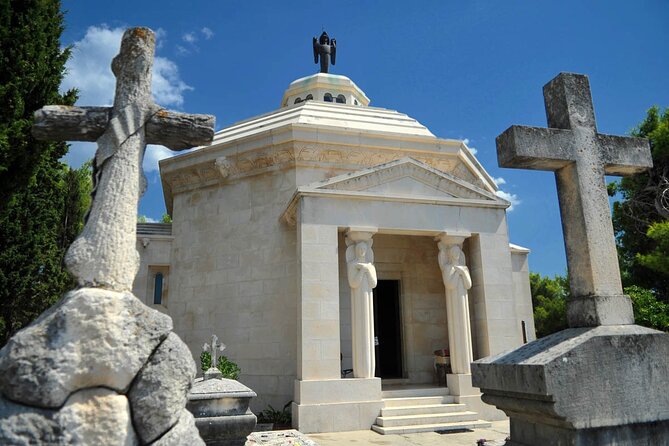
- A cemetery with a remarkable view: St. Roch Cemetery sits at the highest point of the Rat Peninsula and includes Ivan Meštrović’s Račić family mausoleum.
- Two artists at the center: The old town story includes a Croatian painter with more than 1,000 works and a sculptor whose work shaped Cavtat’s cultural identity.
- Two thousand years in one hour: You hear how Cavtat began as the Roman colony of Epidaurum, and why so little of the ancient settlement remains.
- Seafaring stories by the port: Shipwrecks and Cavtat’s long connection with Dubrovnik add a practical, human side to the town’s past.
- A shaded coastal path: Kari’s Walking Path gives you sea views, access to the mausoleum, and a more relaxed finish than a standard town-center tour.
Why Cavtat deserves two hours of your time
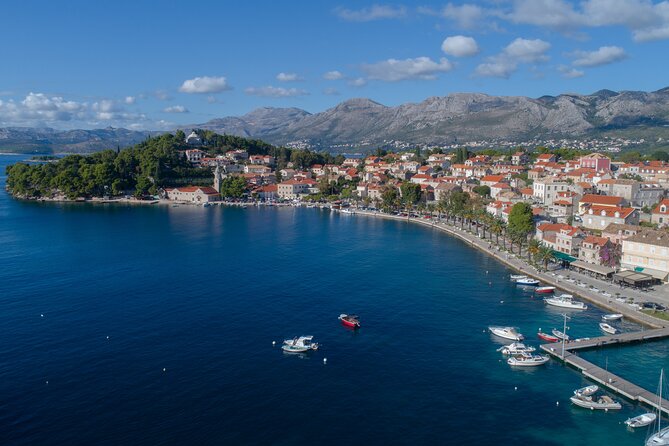
Cavtat is close to Dubrovnik, but it has a different feel. The town is compact, wrapped around the Rat Peninsula, and easy to cover on foot. That size can fool you. A quick stroll might show you the waterfront and a few attractive streets, but it will not explain why this place mattered to Roman settlers, sailors, artists, and the Dubrovnik area.
This tour gives you that missing context. In two hours, you move from a high cemetery to the old town and then along the sea. The route is not built around a long list of monuments. Instead, it connects places with stories, which is exactly what helps a small town stay memorable.
I especially like the combination of subjects. You are not hearing only about churches or rulers. You get art, death, trade, shipwrecks, colonial connections, ancient settlement, and present-day Cavtat. That mix gives the walk more life and keeps the history from becoming a string of dates.
The group can include up to 30 people. That is not a tiny private walk, so the experience may feel less personal at full capacity. Still, the short route and several natural stopping points should make it manageable for most people who can take part in ordinary walking activities.
A few more Dubrovnik trips worth comparing
- Blue Cave Small-Group Boat Tour from Dubrovnik
★ 5.0 · 9,360 reviews - Full-Day Dubrovnik Elaphite Islands Cruise with Lunch and Drinks
★ 5.0 · 8,823 reviews - Dubrovnik: Epic Game of Thrones Tour + Lokrum & Saver Option
★ 4.9 · 5,995 reviews
Starting beside the remains of ancient Epidaurum
The tour begins at 10:00 am on Šetalište Rat 2 in Cavtat. More precisely, the meeting place is in the garden on the north side of Hotel Croatia, beside the remains of ancient Epidaurus. That detail matters because it places you near one of the central ideas of the tour from the first minute: modern Cavtat grew over an older settlement.
Cavtat was known in Roman times as Epidaurum. The town’s ancient past is not presented as a fully preserved archaeological site, because very few visible traces remain. That absence becomes part of the story. You learn about the Roman colony, its decline, and the reasons the old settlement did not survive in the same clear form as some better-preserved Roman towns.
This is a good meeting point for anyone staying in Cavtat, since the walk starts right in town. The location is also near public transportation. The tour ends at Spinaker Restaurant & Lounge Bar on Frankopanska ul. 10, so you do not return to the starting point. That is useful if you want to continue with lunch or a waterfront stop, but plan your next move around the finish rather than assuming you will end where you began.
St. Roch Cemetery and the Račić mausoleum
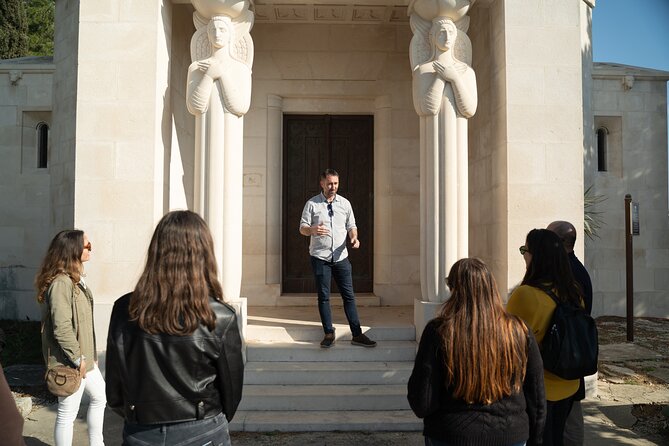
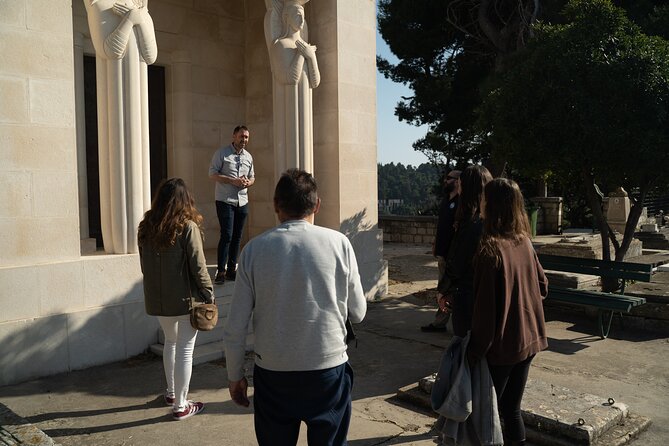
The first half-hour takes you to St. Roch Cemetery, the highest point on the Rat Peninsula. The reward is immediate: you get a broad view of Cavtat from above, a helpful introduction to the town’s shape and setting.
A cemetery may sound like an unusual first stop on a coastal walk, but this one gives you more than a view. It is the final resting place of prominent Cavtat citizens, so the guide can use the graves to introduce local families and the people who helped shape the town. This makes the past feel personal rather than remote.
The major feature here is the Račić family mausoleum, created by Ivan Meštrović, one of Croatia’s best-known sculptors. The building is described as an architectural work centered on love and death, and it gives the cemetery a strong artistic focus. You are not simply looking at an old burial site. You are seeing how a family memorial became one of Cavtat’s defining works.
The stop lasts about 30 minutes, with admission included. You should expect some uphill walking, although the route to the mausoleum is described as leisurely. The exact walking effort will depend on your pace and mobility, so anyone concerned about hills should keep this section in mind before booking.
The high point also gives the guide room to explain Cavtat’s relationship with the sea. From above, the peninsula and harbor make more sense. You can see why seafaring shaped local life and why the town’s position mattered to its long connection with Dubrovnik.
Cavtat Old Town, artists, and a vanished Roman colony
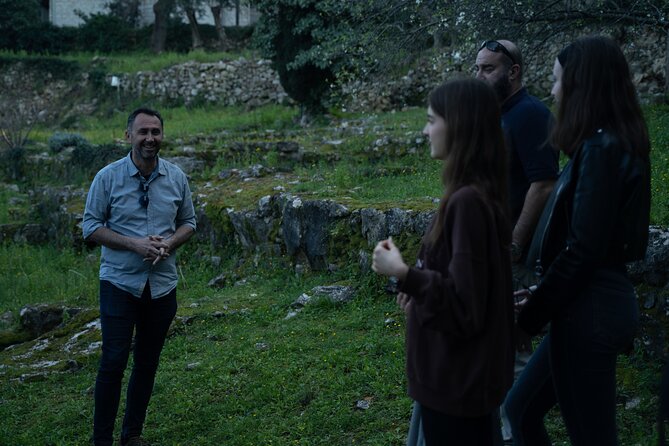
The old town section lasts about an hour, making it the longest part of the experience. This is where the tour moves beyond scenery and gives Cavtat its cultural identity.
Two Croatian artists are central to the story. One was a distinctive painter who produced more than 1,000 works. The other was a sculptor connected to the mausoleum you have already seen. Together, they helped turn a small town into an important creative center in Croatia’s national cultural life.
That pairing gives the tour a useful structure. You see the sculptor’s work in person, then hear how artists connected Cavtat to a wider cultural world. The town is not treated as a pretty stop between Dubrovnik and the airport. Its artistic story becomes one of the main reasons to pay attention.
The old town also takes you back roughly 2,000 years to Roman Epidaurum. You learn about the settlement’s decline and why only limited remains are visible today. This is valuable context because it prevents a common mistake: judging a place’s ancient importance by how many ruins are left above ground.
Cavtat’s port adds another layer. The guide discusses shipwrecks in front of the harbor, along with the town’s colonial history and its long ties to Dubrovnik. These subjects help explain the risks and opportunities of living on the coast. The port was not merely a scenic backdrop. It was part of the town’s working life and a route for contact, trade, danger, and change.
The hour should suit people who enjoy stories with several threads. If you want a tour focused only on famous buildings or a fast overview for taking photographs, the historical detail may feel like more than you need. If you like understanding how a town developed, this is the part that gives the walk its value.
Still Dubrovnik, at a slower pace:
- Dubrovnik: Elaphiti Islands Full-Day Cruise with Lunch
★ 5.0 · 5,938 reviews - Dubrovnik: Old Town Walking Tour
★ 4.8 · 5,174 reviews - Dubrovnik: The Original Game of Thrones Tour & Lokrum Option
★ 4.8 · 5,064 reviews - Dubrovnik Game of Thrones Tour & Optional Lokrum Island Visit
★ 5.0 · 4,702 reviews
Kari’s Walking Path and the sea-facing finish

The final 30 minutes follow Kari’s Walking Path around the Rat Peninsula. This is the easiest-going section of the route, with a mostly shaded promenade beside the sea. After the cemetery and the old town stories, the path gives you time to take in Cavtat without rushing.
The walk helps explain seafaring in a direct way. You can see how closely the town is tied to the water, and the guide connects that setting to Cavtat’s centuries-old relationship with Dubrovnik. The path is not just a pleasant ending. It reinforces one of the tour’s central ideas: Cavtat’s identity has always been shaped by the coast.
The route also provides the easiest access to the mausoleum, reached by a leisurely climb. If you visited the cemetery earlier, this part helps you understand how the memorial fits into the peninsula rather than viewing it as an isolated building.
The shade is a welcome feature, especially on a warm day. Even so, you should bring water and wear shoes suited to a walking route. The tour is only about two hours, but the combination of a high point, old streets, and a peninsula path means you will be on your feet for most of it.
I like that the walk ends at Spinaker Restaurant & Lounge Bar. You can stop for food or a drink after the tour, though the experience itself does not state that refreshments are included. Ending in a restaurant area also makes it easy to continue exploring Cavtat on your own.
The guide makes the difference
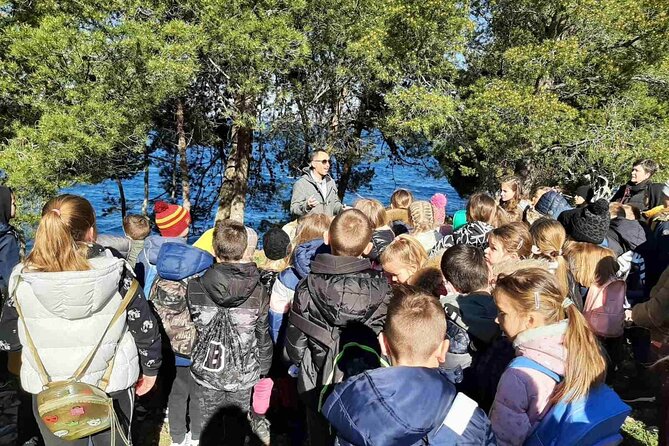
The most warmly praised part of this experience is the guiding. Vedran Mezei is described as passionate about the area around his home in Mlini and about Croatia more broadly. His approach combines local knowledge, humor, historical detail, and attention to the pace of the people in his group.
That last point is especially useful. The tour includes uphill sections and a peninsula walk, but Vedran is described as stopping for photographs, questions, and changes in walking pace. You should not treat that as a guarantee of a private tour, particularly with a possible group of 30, but it suggests a considerate style rather than a rigid march from one stop to the next.
The same guide has also led walks around Mlini, which may suit you if you want to add another local experience near Dubrovnik. For this Cavtat tour, his personal connection to the region appears to be a major part of the appeal.
The available feedback includes several unrelated business and attraction comments that do not concern this tour. Those comments should not influence your decision. The useful pattern comes from the comments about Vedran’s Cavtat and Mlini walks: clear explanations, enthusiasm, humor, patience, and regular stops.
Is $60.21 a fair price?
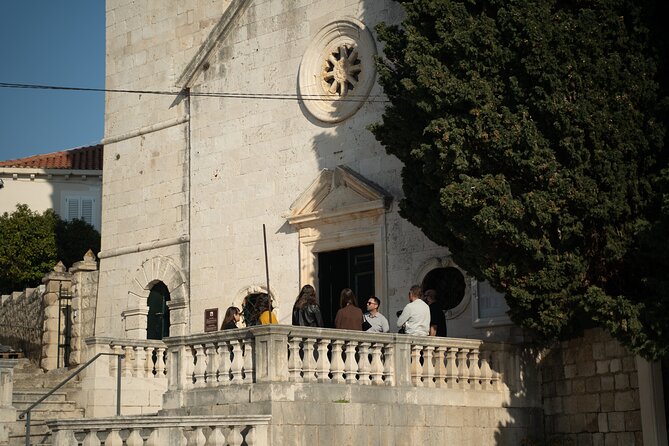
At $60.21 per person, this is not the cheapest way to see Cavtat. You can walk around the peninsula without a guide and see the harbor, cemetery area, and old town at no admission cost for the main route.
The price makes more sense if you value interpretation. You are paying for a two-hour guided route that connects Roman Epidaurum, local artists, Meštrović’s mausoleum, shipwrecks, seafaring, and Dubrovnik ties. Without that explanation, several of these places could look pleasant but disconnected.
Admission to St. Roch Cemetery is included, while the old town and Kari’s Walking Path have no additional admission charge. There is no mention of meals, drinks, or transportation being included, so budget for those separately.
I would call the price reasonable for a visitor who wants a focused introduction and does not want to research Cavtat in advance. It is less compelling if you only want a free walk, prefer exploring alone, or already know the town’s Roman and artistic background.
Who should book this walk?
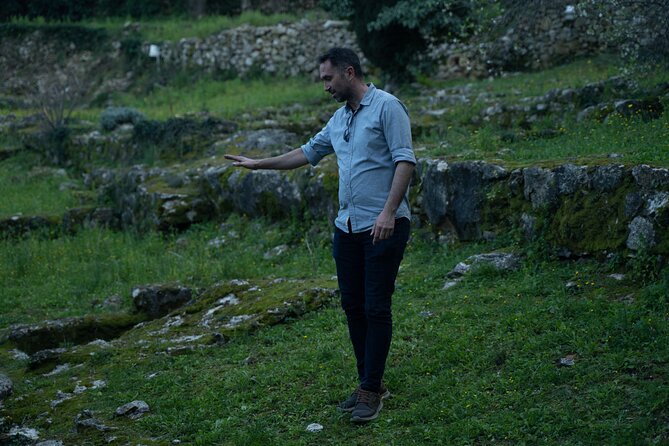
I would recommend it most strongly to first-time visitors to Cavtat, art lovers, history fans, and anyone staying near Dubrovnik who wants a smaller-scale experience. The route gives you a clear sense of place without taking up a full day.
It also suits people who like a guide with personality. Vedran’s warmth, humor, and willingness to stop can make a difference when the subject includes cemeteries, shipwrecks, and the decline of a Roman colony. Those topics could feel heavy in a rushed presentation, but the walk appears designed to keep them approachable.
Families with older children may enjoy the stories about shipwrecks and Roman Cavtat, though the tour is not specifically described as child-focused. Service animals are allowed, and most people can participate, but the uphill walk means you should consider your own mobility before booking.
This may not be the right pick for someone seeking a full archaeological tour, a private art tour, or a completely flat route. It is also not a substitute for a full-day Dubrovnik history tour. Its strength is concentration: a small area, a short time, and several connected stories.
Practical details before you go
The experience is offered in English and uses a mobile ticket. Confirmation is provided at booking, and the group size can reach 30 people.
The start time is 10:00 am. Arrive with enough time to find the garden on the north side of Hotel Croatia, since the meeting point is more specific than simply saying Hotel Croatia or Cavtat waterfront.
Wear comfortable shoes and expect a mix of old-town walking, a climb to the cemetery, and a mostly shaded coastal path. You may want water, especially in warm weather, and a camera for the elevated view over Cavtat.
The tour ends at Spinaker Restaurant & Lounge Bar rather than at the original meeting point. Free cancellation is available if you cancel at least 24 hours before the local start time. Changes or cancellations made within 24 hours are not accepted for a refund.
Should you book the Cavtat guided tour?
Book it if you want Cavtat to make sense, not just look attractive. The best reasons are the high view from St. Roch Cemetery, the Račić mausoleum by Ivan Meštrović, the story of two important Croatian artists, and the explanation of Roman Epidaurum and Cavtat’s seafaring ties.
Skip it if your plan is simply to stroll the waterfront at no cost or if hills and extended walking are a concern. At $60.21, the value depends on how much you want the stories. For most first-time visitors who appreciate a friendly local guide and a compact cultural introduction, this is a worthwhile two-hour addition to a Dubrovnik-area trip.
FAQ
How long does the Cavtat tour last?
The tour lasts approximately two hours. It includes 30 minutes at St. Roch Cemetery, one hour in Cavtat Old Town, and 30 minutes on Kari’s Walking Path.
Where does the tour start?
It starts at Šetalište Rat 2 in Cavtat, in the garden on the north side of Hotel Croatia, near the remains of ancient Epidaurus.
What time does the tour begin?
The tour starts at 10:00 am.
Where does the tour end?
It ends at Spinaker Restaurant & Lounge Bar, Frankopanska ul. 10, Cavtat.
Is admission included?
Admission to St. Roch Cemetery is included. The Old Town and Kari’s Walking Path have no additional admission charge according to the tour information.
How many people can join the tour?
The maximum group size is 30 people. The tour is offered in English, uses a mobile ticket, allows service animals, and most people can participate.
Just added around Dubrovnik
- Elaphiti Islands Private Dubrovnik Boat Unique Experience★ 5.0 · 10 reviews
- Full- Day Private Speedboat Tour in Dubrovnik on Elaphiti Islands★ 5.0 · 21 reviews
- PRIVATE Wine Tour to Konavle country side★ 5.0 · 11 reviews
- Wine Lover’s Tour of Peljesac Peninsula★ 5.0 · 150 reviews
- Wine tour peninsula Pelješac★ 5.0 · 3 reviews
- Parasailing in Cavtat★ 5.0 · 62 reviews
- Welcome to Dubrovnik Walking Tour★ 5.0 · 36 reviews
- Dubrovnik at War 1991-1992 Private Walking Tour★ 5.0 · 4 reviews
Guided, compared.


Plitvice & Rastoke Guided Day Trip with Ticket
Read our review →
Plitvice Lakes Guided Tour with Entry Tickets
Read our review →
Plitvice Lakes National Park Guided Day Tour from Split
Read our review →
Rastoke & Plitvice Lakes Guided Tour with Ticket
Read our review →